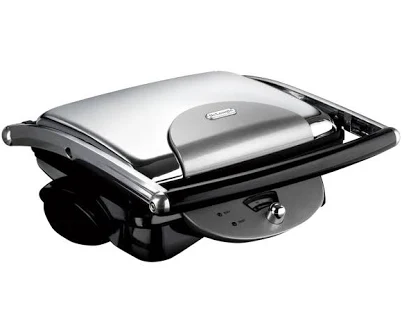
De'Longhi CGH800 Retro Contact Grill and Panini Press
Don't buy until De'Longhi reveals the nonstick coating material.
This grill features nonstick cooking plates with undisclosed coating. Common nonstick materials often contain PFAS, and De'Longhi has made no public statement about the risk.
Still want this one anyway? Check the price on Amazon. We’d swap it.
Material
Non-stick coated cooking plates (composition unspecified)
Brand disclosure
Brand is silent on PFAS
Lab data
No public lab test
You may also be interested in
Top-graded picks in the categories readers replace first, every one scored on the same rubric.

- polypropylene filter housing, carbon/sediment cartridge
- We found no PFAS statement from the brand
- Bacterial growth in spent cartridges
3 hazards checked on this product, all on its full breakdown.

Aquasure
Premier Series 75 GPD Under Sink Reverse Osmosis Water Filtration System
- RO membrane, carbon filters, stainless steel housing
- We found no PFAS statement from the brand
- Bacterial and microbial growth in housing and filters
4 hazards checked on this product, all on its full breakdown.

Avocado
Vegan Mattress
- organic cotton, natural latex, coconut coir, recycled steel coils
- The brand calls it PFAS-free, which we have not verified
- Heavy metals
2 hazards checked on this product, all on its full breakdown.
What De'Longhi CGH800 Retro Panini Press is made of, ingredients and materials
The CGH800 features non-stick coated cooking plates, but De'Longhi has not publicly disclosed whether the coating is Teflon-type coating-based (Teflon-type) or a fluorine-free alternative. The heating element and housing are standard stainless steel and plastic components. Without coating specification, you cannot definitively rule out Teflon-type coating or PFAS-containing chemistries, which is the critical gap for this product.
What’s concerning
Category baseline
The starting point for this type of product, before anything specific to this product is counted.
No PFAS disclosure
No public statement from the brand about PFAS in this product.
Non-stick, chemistry undisclosed
Marketed as non-stick without stating the coating chemistry.
Teflon-type coating thermal decomposition and fume release
If the non-stick coating is Teflon-type coating-based, heating above 500F can cause polymer fume fever (flu-like symptoms). The CGH800 is typically used below 400F, reducing but not eliminating this risk if coating composition is confirmed to be Teflon-type coating.
Non-stick coating degradation and microparticle shedding
Contact grill non-stick coatings are prone to peeling or flaking with repeated use and cleaning. Ingestion of coating particles is the main concern; this is a wear-out issue rather than acute toxicity, but replacement is warranted when visible damage occurs.
PFAS
De'Longhi's silence on coating material makes it impossible to rule out legacy Teflon-type coating or PFAS-containing alternatives. Fluorochemical non-stick coatings of all types carry PFAS concerns; fluorine-free coatings exist but are not confirmed for this model.
Source, ATSDR ↗What’s reassuring
Plastic housing leachables under heat
The CGH800 housing is plastic but is not in direct contact with food during normal use; no specific recalls or warnings have been issued for leaching from De'Longhi small-appliance housings of this type.
Aluminum substrate corrosion and leaching
If the plates are aluminum under the non-stick coating, corrosion risk exists only if the coating is breached. Acid foods on damaged plates could cause minor aluminum migration, but this is secondary to coating integrity.
How is this PFAS grade calculated?
The brand's record and disclosure
De'Longhi is a major small-appliance manufacturer with no known public commitments to PFAS-free cookware or detailed chemical disclosures for non-stick coatings. The company has not faced major recalls or lawsuits specific to non-stick coatings, but silence on PFAS and coating chemistry is itself a red flag in the current market. Consumers must contact the brand directly for coating composition; this information is not readily available in product documentation or safety datasheets reviewed in public sources.
How it compares in its category
Panini presses and contact grills with unspecified non-stick coatings are common in this price range. Higher-end or eco-conscious brands (e.g., some ceramic-coated alternatives) publish coating details upfront. Budget models from De'Longhi typically do not, putting this unit in the middle of the transparency spectrum. Comparable Breville or Cuisinart models may offer slightly better disclosure, though not universally.
If you buy it
Keep the grill below 400F (204C) to avoid thermal degradation of the non-stick coating, which accelerates release of any coating particles or volatiles. Inspect plates regularly for peeling, scratching, or discoloration; replace the grill if the coating shows visible wear. Hand-wash plates with soft sponges, never use metal utensils or high-abrasion scouring. Contact De'Longhi in writing to request the coating material safety data sheet (SDS) before purchase if PFAS disclosure matters to your household.
What is not known about PFAS in this product?
- Basis
- Model estimate, 35% confidence, not a lab result
- Lab test
- None on record for this exact product
- Brand statement
- Delonghi has made none
Formulations change between production runs, so check the current label. How we grade.
What are the PFAS-free alternatives to De'Longhi CGH800 Retro Contact Grill and Panini Press?
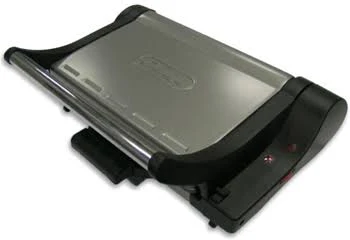
- stainless steel cooking plates
- We found no PFAS statement from the brand
- Thermal burn hazard (housing and handles)
3 hazards checked on this product, all on its full breakdown.
Find an alternative on AmazonMore panini presses grades
How we score, every product runs through the same public 0-100 rubric based on materials, coatings, brand disclosure, lab findings, and recalls. See the full methodology → Spotted a mistake? Report an error.