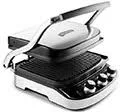
De'Longhi CGH902 5-in-1 Grill and Griddle
Don't buy until De'Longhi reveals the nonstick coating material.
This grill has nonstick plates, but De'Longhi won't say what the coating is or whether it contains PFAS. You can't know the risk without that information.
Still want this one anyway? Check the price on Amazon. We’d swap it.
Material
nonstick-coated cooking surfaces, unspecified polymer
Brand disclosure
Brand is silent on PFAS
Lab data
No public lab test
You may also be interested in
Top-graded picks in the categories readers replace first, every one scored on the same rubric.

- polypropylene filter housing, carbon/sediment cartridge
- We found no PFAS statement from the brand
- Bacterial growth in spent cartridges
3 hazards checked on this product, all on its full breakdown.

Aquasure
Premier Series 75 GPD Under Sink Reverse Osmosis Water Filtration System
- RO membrane, carbon filters, stainless steel housing
- We found no PFAS statement from the brand
- Bacterial and microbial growth in housing and filters
4 hazards checked on this product, all on its full breakdown.

Avocado
Vegan Mattress
- organic cotton, natural latex, coconut coir, recycled steel coils
- The brand calls it PFAS-free, which we have not verified
- Heavy metals
2 hazards checked on this product, all on its full breakdown.
What De'Longhi CGH902 5-in-1 Grill and Griddle is made of, ingredients and materials
The CGH902 uses an unspecified nonstick polymer coating on the cooking surfaces, typical of consumer grill-griddle hybrids in this price segment. De'Longhi has not publicly disclosed whether this coating is Teflon-type coating-based (traditional Teflon-class) or a newer fluorine-free alternative. The base appears to be aluminum or aluminum composite. Nonstick coating composition directly determines both acute heat-damage risks and chronic PFAS leaching potential, making disclosure critical for informed safety assessment.
What’s concerning
Category baseline
The starting point for this type of product, before anything specific to this product is counted.
No PFAS disclosure
No public statement from the brand about PFAS in this product.
Non-stick, chemistry undisclosed
Marketed as non-stick without stating the coating chemistry.
Teflon-type coating thermal decomposition (acute fume risk)
If the undisclosed coating is Teflon-type coating-based and overheated above 260°C, it may emit fumes causing polymer fume fever (reversible but acute). The CGH902 manual should specify max operating temperature; staying within limits mitigates this, but lack of coating disclosure prevents definitive risk assessment.
Nonstick coating degradation and microparticle release
Consumer reports and general appliance data indicate that nonstick coatings on budget grill-griddle units can flake or scratch with normal use over 2-4 years. Ingestion of coating particles is generally considered low-risk, but mechanical integrity loss triggers replacement advisories.
Aluminum base material leaching
If the underlying base is uncoated or thin-coated aluminum, direct contact with acidic foods (tomato, citrus, wine) can promote aluminum migration into food. The nonstick coating should provide a barrier, but damage or gaps increase exposure potential.
What’s reassuring
Electrical safety (heating element insulation)
No specific recalls or documented failures for the CGH902 heating circuit have been recorded. De'Longhi small appliances generally meet EU and North American electrical safety standards, though used units or those with water exposure carry standard risk.
Formaldehyde / VOCs
Plastic housing and any silicone seals are not documented as sources of volatile organic compounds or formaldehyde off-gassing in this model. Standard consumer appliance air-circulation during use (kitchen ventilation) is sufficient for typical exposure profiles.
Source, ATSDR ↗How is this PFAS grade calculated?
The brand's record and disclosure
De'Longhi does not maintain a published position on PFAS avoidance or nonstick coating chemistry for its small appliances. No regulatory recalls specific to this model for coating degradation or chemical leaching have been documented in major databases. The company's general approach to small-appliance safety standards is met, but proactive transparency on fluorinated polymers is absent, creating a disclosure gap shared by many budget-to-mid-tier appliance makers.
How it compares in its category
Among 5-in-1 grill-griddle units, the CGH902 is typical in leaving nonstick chemistry unspecified. Premium competitors (e.g., Breville) sometimes disclose Teflon-type coating-free coatings; budget alternatives offer similar opacity. In the panini-press subcategory, ceramic or uncoated cast-iron options exist but sacrifice convenience. This unit trades transparency for affordability and ease of use, positioning it mid-range on both price and disclosure standards.
If you buy it
Keep the unit below manufacturer's stated max temperature (typically 180-200°C for nonstick presses); exceeding this voids coating safety margins. Clean after each use with soft brushes or sponges to avoid scrubbing off the nonstick layer. Replace the unit if coating visibly flakes, peels, or discolors after 3-5 years of regular use, as degradation increases leaching risk. Store in a dry place and avoid harsh scouring pads; hand-washing extends coating life.
What is not known about PFAS in this product?
- Basis
- Model estimate, 42% confidence, not a lab result
- Lab test
- None on record for this exact product
- Brand statement
- Delonghi has made none
Formulations change between production runs, so check the current label. How we grade.
What are the PFAS-free alternatives to De'Longhi CGH902 5-in-1 Grill and Griddle?
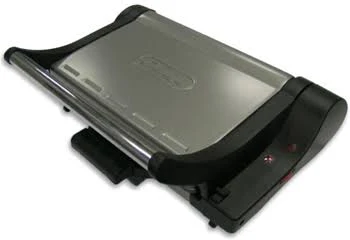
- stainless steel cooking plates
- We found no PFAS statement from the brand
- Thermal burn hazard (housing and handles)
3 hazards checked on this product, all on its full breakdown.
Find an alternative on AmazonMore panini presses grades
How we score, every product runs through the same public 0-100 rubric based on materials, coatings, brand disclosure, lab findings, and recalls. See the full methodology → Spotted a mistake? Report an error.