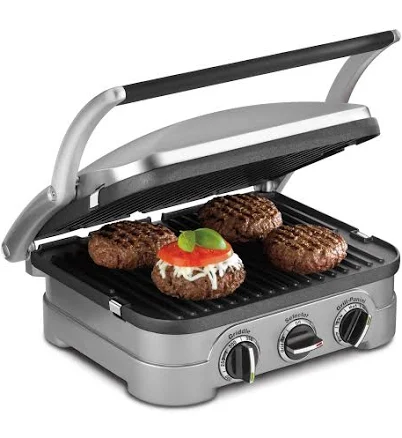
Cuisinart 5-in-1 Indoor Grill, Panini Press, and Griddler GR-4NNAS
Skip until Cuisinart discloses nonstick chemistry, PFAS risk in coating unknown.
The Cuisinart GR-4NNAS has nonstick cooking surfaces, but the brand won't disclose what coating chemistry is used, whether Teflon-type coating, silicone, ceramic, or alternative. Without transparent material specification or third-party testing, PFAS status cannot be verified.
Still want this one anyway? Check the price on Amazon. We’d swap it.
Material
Nonstick-coated cooking surfaces (type unspecified)
Lab data
No public lab test
You may also be interested in
Top-graded picks in the categories readers replace first, every one scored on the same rubric.

- polypropylene filter housing, carbon/sediment cartridge
- We found no PFAS statement from the brand
- Bacterial growth in spent cartridges
3 hazards checked on this product, all on its full breakdown.

Aquasure
Premier Series 75 GPD Under Sink Reverse Osmosis Water Filtration System
- RO membrane, carbon filters, stainless steel housing
- We found no PFAS statement from the brand
- Bacterial and microbial growth in housing and filters
4 hazards checked on this product, all on its full breakdown.

Avocado
Vegan Mattress
- organic cotton, natural latex, coconut coir, recycled steel coils
- The brand calls it PFAS-free, which we have not verified
- Heavy metals
2 hazards checked on this product, all on its full breakdown.
What Cuisinart 5-in-1 Indoor Grill GR-4NNAS is made of, ingredients and materials
The Cuisinart GR-4NNAS features nonstick-coated cooking surfaces, but Cuisinart has not publicly specified whether the coating is Teflon-type coating-based (traditional nonstick like Teflon) or a fluorine-free alternative. The heating element and housing are typically aluminum or steel. The nonstick coating is the primary point of chemical concern because it can degrade with use, scratching, or overheating, and older Teflon-type coating formulations release potentially harmful fumes at high temperatures (above 500°F).
What’s concerning
Category baseline
The starting point for this type of product, before anything specific to this product is counted.
No PFAS disclosure
No public statement from the brand about PFAS in this product.
Non-stick, chemistry undisclosed
Marketed as non-stick without stating the coating chemistry.
Teflon-type coating fume risk (thermal degradation)
If the nonstick coating is Teflon-type coating-based and used above 500°F, or if the coating is damaged and further heated, polymer fume fever (acute respiratory irritation) is a documented risk. Cuisinart has not confirmed coating composition, so risk cannot be ruled out.
Coating degradation and microparticle release
All nonstick coatings degrade with use, scratching, and thermal cycling. As the coating flakes or peels, microscopic particles may enter food or the air. The durability and degradation rate of this model's coating is not publicly documented.
Bacterial growth in crevices or housing if not dried thoroughly
Multi-function grills have complex hinges, crevices, and removable plates that can trap moisture and food residue if not cleaned and dried carefully. This is a maintenance and hygiene issue rather than a chemical hazard, but it is relevant to food-contact appliances.
What’s reassuring
Aluminum leaching from base plate or housing
If aluminum components contact acidic foods at high temperature, minimal leaching is theoretically possible, but this risk is not specific to this product and is not a documented concern in the panini press category. The nonstick coating typically acts as a barrier.
Lead
No recalls or reports of heavy-metal contamination in Cuisinart panini press seals or housing components are on record. This is not a known issue for the brand in this category.
Source, ATSDR ↗How is this PFAS grade calculated?
The brand's record and disclosure
Cuisinart has not issued public statements about the specific nonstick chemistry used in this model or broader PFAS management policies. The brand is silent on whether it has phased out legacy Teflon-type coating formulations in favor of newer nonstick alternatives with lower concern profiles. This lack of transparency is common in the cookware industry but limits consumer confidence in coating safety, especially for products marketed for high-heat use like panini presses and grills.
How it compares in its category
Multi-function griddle and panini press products typically use nonstick coatings to prevent sticking and ease cleanup. The GR-4NNAS is mid-range in the category; higher-end alternatives may use ceramic or seasoned-cast-iron cooking surfaces (avoiding nonstick entirely), while budget models often use thinner, less durable nonstick layers. Cast-iron or stainless steel alternatives eliminate nonstick coating hazards but require different care and offer less convenient cleanup.
If you buy it
Use the panini press at moderate temperatures, avoiding the highest heat settings for extended periods to minimize stress on the nonstick coating. Ensure good kitchen ventilation, especially when preheating. Hand-wash only; do not use abrasive scouring pads or place in the dishwasher, as mechanical damage accelerates coating breakdown. Inspect the cooking surfaces regularly for scratches, peeling, or visible wear; if coating degradation is significant, the appliance should be replaced to avoid potential fume release at high temperatures.
What is not known about PFAS in this product?
- Basis
- Model estimate, 35% confidence, not a lab result
- Lab test
- None on record for this exact product
- Brand statement
- Cuisinart has made a specific claim
Formulations change between production runs, so check the current label. How we grade.
What are the PFAS-free alternatives to Cuisinart 5-in-1 Indoor Grill, Panini Press, and Griddler GR-4NNAS?
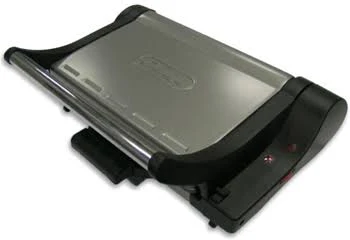
- stainless steel cooking plates
- We found no PFAS statement from the brand
- Thermal burn hazard (housing and handles)
3 hazards checked on this product, all on its full breakdown.
Find an alternative on AmazonMore panini presses grades
How we score, every product runs through the same public 0-100 rubric based on materials, coatings, brand disclosure, lab findings, and recalls. See the full methodology → Spotted a mistake? Report an error.