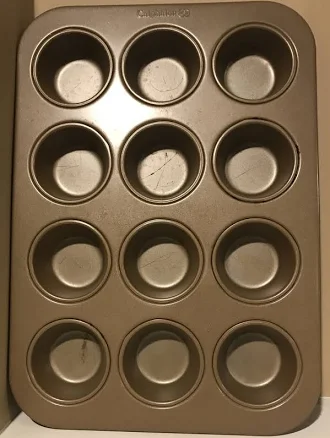
Simply Calphalon 12-Cup Cupcake Pan, Is It Non-Toxic?
Avoid unless Calphalon discloses nonstick chemistry; unspecified coatings carry PFAS uncertainty.
This hard-anodized aluminum pan has a nonstick coating, but Calphalon doesn't publicly confirm whether it contains Teflon-type coating or Teflon-family coating. No PFAS-free claim or third-party verification exists.
The better-graded swap
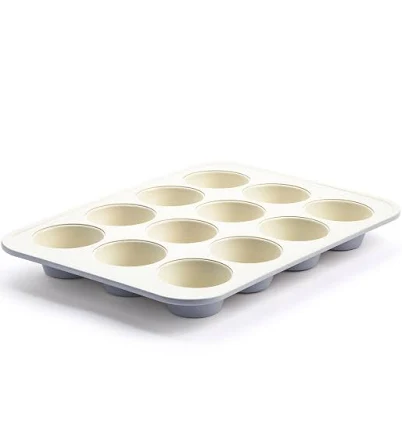
GreenPan
GreenPan GreenLife Ceramic Nonstick Muffin Pan
70/100 safety
Same rubric that flunked this product. The swap earned Good.
Still want this one anyway? Check the price on Amazon. We’d swap it.
Material
Hard-anodized aluminum with nonstick coating (type unspecified)
Lab data
No public lab test
You may also be interested in
Top-graded picks in the categories readers replace first, every one scored on the same rubric.

- polypropylene filter housing, carbon/sediment cartridge
- We found no PFAS statement from the brand
- Bacterial growth in spent cartridges
3 hazards checked on this product, all on its full breakdown.

Aquasure
Premier Series 75 GPD Under Sink Reverse Osmosis Water Filtration System
- RO membrane, carbon filters, stainless steel housing
- We found no PFAS statement from the brand
- Bacterial and microbial growth in housing and filters
4 hazards checked on this product, all on its full breakdown.

Avocado
Vegan Mattress
- organic cotton, natural latex, coconut coir, recycled steel coils
- The brand calls it PFAS-free, which we have not verified
- Heavy metals
2 hazards checked on this product, all on its full breakdown.
Is Simply Calphalon 12-Cup Cupcake Pan non-toxic? What it is made of
This pan combines hard-anodized aluminum (a dense oxide layer that seals the base metal) with an unspecified nonstick coating. Hard anodizing is more durable than regular anodizing and resists scratching better, which is the selling point for multi-use bakeware. The nonstick chemistry is the critical unknown, Calphalon has historically used both Teflon-type coating (Teflon) and proprietary alternatives, but this product's spec sheet does not disclose which. The coating type determines both fume risk at high heat and potential for particulate release if damaged.
What’s concerning
Category baseline
The starting point for this type of product, before anything specific to this product is counted.
No PFAS disclosure
No public statement from the brand about PFAS in this product.
Non-stick, chemistry undisclosed
Marketed as non-stick without stating the coating chemistry.
Teflon-type coating fume inhalation risk
If the nonstick coating contains Teflon-type coating, temperatures above 500 degrees F trigger thermal decomposition and fluorine gas release (polymer fume fever in humans). Since coating type is undisclosed and ovens can reach 450-500 F on broil or convection, risk is conditional but real if misused.
Coating degradation and microparticle shedding
Repeated washing, metal utensil use, or high-heat exposure can cause the nonstick coating to flake or wear, potentially releasing microscopic particles into food. Hard-anodized pans are more resistant than regular nonstick but not immune, especially over years of use.
PFAS
Calphalon's refusal to disclose coating chemistry leaves PFAS presence unconfirmed. Many nonstick bakeware products from major brands have used PFAS-containing chemistries; without a brand statement or third-party test, the risk cannot be ruled out.
Source, ATSDR ↗What’s reassuring
Aluminum leaching
Hard anodization chemically seals the aluminum base, preventing direct leaching into food. No published evidence of aluminum migration from intact hard-anodized cookware under normal baking conditions. Risk only emerges if the anodized layer is damaged by scratching or corrosion.
Lead
This product does not use ceramic glaze or enamel; it is bare hard-anodized aluminum with a synthetic nonstick top coat. Lead and cadmium contamination is not a hazard class for this material composition.
Source, ATSDR ↗How is this PFAS grade calculated?
The brand's record and disclosure
Calphalon (owned by Groupe SEB) has not publicly committed to PFAS-free manufacturing across its cookware line, and product-level coating chemistry is rarely disclosed on consumer packaging or websites. The brand has faced no major recalls specific to nonstick coatings on bakeware, but its silence on coating identity is a transparency gap. Calphalon does market some lines as Teflon-type coating-free, but the Simply line is not explicitly labeled as such, leaving composition ambiguous.
How it compares in its category
Muffin pans in this price tier typically use either hard-anodized aluminum with Teflon-type coating or ceramic/silicone nonstick alternatives. Calphalon's hard-anodized option is more durable than bare steel and performs better than ceramic for non-stick consistency, but transparency lags competitors like OXO and GreenPan, which disclose coating type. Stainless steel or uncoated cast iron alternatives eliminate nonstick coating uncertainty entirely but require greasing.
If you buy it
Keep oven temperatures at or below 350 degrees F to avoid fume risk from unknown coatings. Hand wash only; do not use high-heat broilers or dishwashers, which degrade the anodized layer and nonstick finish. Inspect the pan regularly for chipping, discoloration, or flaking, and replace if coating damage appears. Avoid metal utensils and abrasive sponges. Do not preheat empty; always add batter or a small amount of oil to prevent accelerated coating wear.
What is not known about PFAS in this product?
- Basis
- Model estimate, 35% confidence, not a lab result
- Lab test
- None on record for this exact product
- Brand statement
- Calphalon has made a specific claim
Formulations change between production runs, so check the current label. How we grade.
What are the PFAS-free alternatives to Simply Calphalon 12-Cup Cupcake Pan?
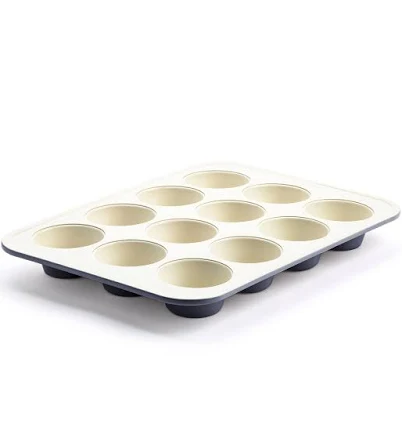
- Ceramic non-stick coating (proprietary GreenPan Thermolon)
- The brand calls it PFAS-free, which we have not verified
- Ceramic coating degradation and particle ingestion
3 hazards checked on this product, all on its full breakdown.
- Ceramic nonstick coating (proprietary blend)
- The brand calls it PFAS-free, which we have not verified
- Ceramic coating degradation and substrate exposure
2 hazards checked on this product, all on its full breakdown.
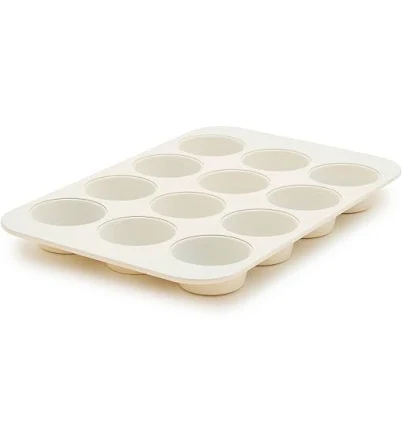
- Hard-anodized aluminum with proprietary thermolon nonstick coating
- The brand calls it PFAS-free, which we have not verified
- Aluminum leaching
4 hazards checked on this product, all on its full breakdown.
More muffin tins grades
How we score, every product runs through the same public 0-100 rubric based on materials, coatings, brand disclosure, lab findings, and recalls. See the full methodology → Spotted a mistake? Report an error.