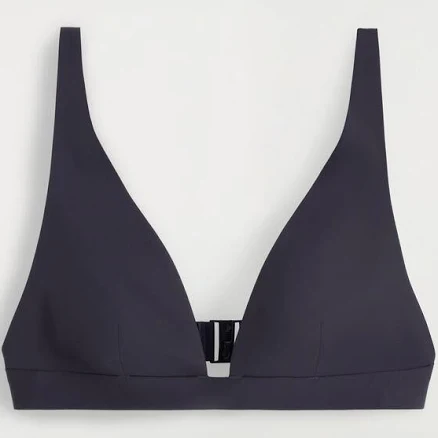
COS Women's Bonded-Scuba V-Neck Bikini Top
Lower PFAS concern, but COS offers no transparency about their practices.
This bonded-scuba bikini top is a nylon-blend textile with no marketed waterproofing, stain resistance, or nonstick coating that would require PFAS. COS provides no public statement on PFAS in manufacturing or finishes.
The better-graded swap
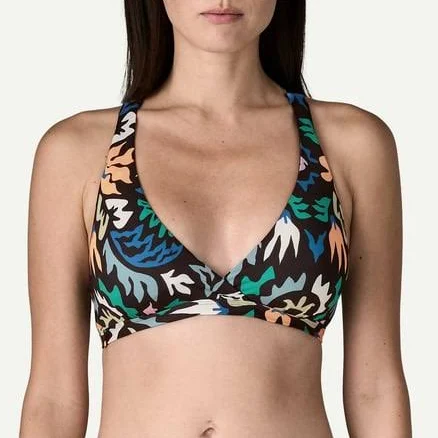
Patagonia
Patagonia Women's Bottom Turn Racerback Bikini Top
90/100 safety
Same rubric that flunked this product. The swap earned Excellent.
Still want this one anyway? Check the price on Amazon. We’d swap it.
Material
Nylon/polyamide blend (bonded-scuba knit)
Brand disclosure
Brand is silent on PFAS
Lab data
No public lab test
What COS Women's Bonded-Scuba V-Neck Bikini Top is made of, ingredients and materials
This bikini top is nylon/polyamide bonded-scuba knit, a synthetic fabric engineered for stretch, durability, and chlorine/saltwater resistance. Nylon does not naturally repel water, so swimwear nylon is typically treated with a water-resistant finish, historically PFAS-based but increasingly non-PFAS alternatives are available. The bonded construction (nylon laminated to a backing layer) improves structure and reduces transparency. Unlike polyester, nylon has lower thermal sensitivity and does not shed microplastics as readily during normal wear or washing.
What’s concerning
Category baseline
The starting point for this type of product, before anything specific to this product is counted.
No PFAS disclosure
No public statement from the brand about PFAS in this product.
Azo dyes
COS nylon swimwear may use azo dye colorants; while bluesign-certified facilities restrict problematic azo dyes, no product-specific test data is public. Risk is low in swimwear since minimal skin contact occurs on finished garment, but workers in dyeing steps face higher exposure.
Formaldehyde / VOCs
Bonded nylon may include formaldehyde-based adhesives or wrinkle-resist treatments; COS manufacturing is governed by REACH/ZDHC standards which limit but do not eliminate formaldehyde residues. Levels in finished swimwear are typically well below regulatory thresholds, and off-gassing is negligible after first wash.
Source, ATSDR ↗water-repellent coating (water-repellent coating) finish toxicity
Swimwear nylon requires water-repellent coating treatment. Historically PFAS-based; COS does not disclose replacement chemistry. Some alternative water-repellent coating systems (e.g., wax-based) are less persistent in environment but equally effective on fabric. Skin absorption through a finished bikini top is extremely low.
Microplastic shedding
Nylon fibers can shed during washing; however, bonded-scuba knit is tightly constructed and sheds less than loose weaves. The amount released per garment wash is on the order of micrograms to low milligrams, lower than polyester fleece but present. Wear a lint-catch filter or wash in a microfiber net to reduce release.
What’s reassuring
Base material not linked to PFAS
The main material recorded for this product is not one associated with PFAS.
Antimony in polyamide
Antimony trioxide is sometimes used as a catalyst in polyamide synthesis, but finished nylon fiber contains only trace residual antimony tightly bound in polymer chains. Leaching into skin or sweat from a finished garment is not documented and considered negligible risk.
The full breakdown
The brand's record and disclosure
COS (a Inditex subsidiary, parent of Zara) has committed to bluesign certification and restricted substance lists for apparel, but does not publicly detail PFAS replacement strategies or post individual product test reports. The brand maintains general sustainability standards but remains silent on water-repellent coating (water-repellent coating) treatments applied to swimwear specifically. No recalls or documented contamination incidents are on record for COS swimwear.
How it compares in its category
Standard swimwear (nylon, polyester, or poly-blend) typically uses water-repellent coating finishes; COS occupies the mainstream middle ground with no transparency advantage or disadvantage versus competitors like Speedo or Nike. Some premium brands now advertise PFAS-free finishes, but COS does not market this distinction. The bonded-scuba construction is common and poses no additional chemical risk versus unlined nylon.
If you buy it
Rinse after every saltwater or chlorinated pool use to remove salt and oxidizers; air-dry away from direct heat or sunlight to preserve elastic fibers and water-repellent coating. Hand wash in cool water with mild detergent every 3-5 wears; avoid fabric softener and bleach, which degrade water repellency. Replace when seams fray, elastic loses recovery, or pilling becomes excessive (typically 1-2 years with regular use). Do not expose to prolonged heat (sauna, dryer) as this can degrade both the nylon and any water-repellent coating treatment.
What we don’t know
- Basis
- Model estimate, 72% confidence, not a lab result
- Lab test
- None on record for this exact product
- Brand statement
- COS has made none
Formulations change between production runs, so check the current label. How we grade.
Better-graded alternatives in Swimwear
Patagonia
Women's Bottom Turn Racerback Bikini Top
- Nylon/polyester blend with elastane (standard swimwear)
- The brand calls it PFAS-free, which we have not verified
- Elastane (spandex) degradation under heat or chlorine
More swimwear grades
How we score, every product runs through the same public 0-100 rubric based on materials, coatings, brand disclosure, lab findings, and recalls. See the full methodology → Spotted a mistake? Report an error.