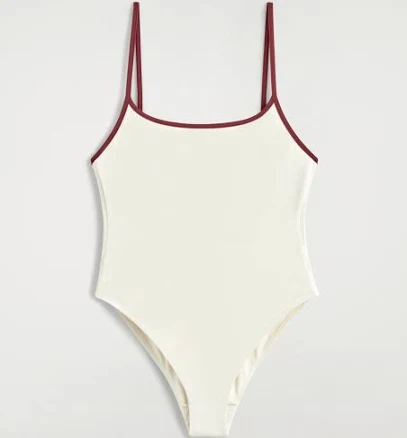
COS Women's Contrast-Trim Swimsuit
Lower concern without water-repellent claims, though COS lacks PFAS disclosure.
Nylon-elastane swimsuit has no claimed waterproofing or stain treatment. COS makes no PFAS supply-chain or testing statements public.
The better-graded swap
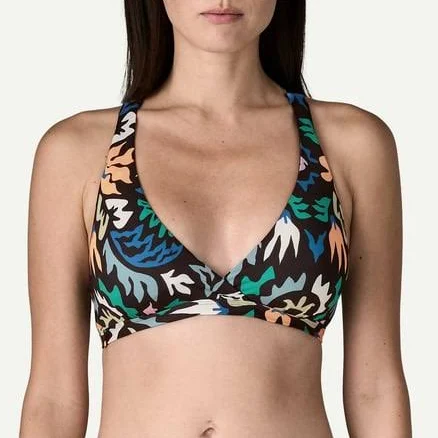
Patagonia
Patagonia Women's Bottom Turn Racerback Bikini Top
90/100 safety
Same rubric that flunked this product. The swap earned Excellent.
Still want this one anyway? Check the price on Amazon. We’d swap it.
Material
nylon/elastane blend swimsuit fabric
Brand disclosure
Brand is silent on PFAS
Lab data
No public lab test
What COS Women's Contrast-Trim Swimsuit is made of, ingredients and materials
This swimsuit is a nylon and elastane (spandex) blend, the industry standard for swimwear. Nylon itself is a synthetic polyamide with no established leaching risk in aquatic or skin-contact use at normal temperatures. Elastane provides stretch and recovery but contains no documented hazardous residues in finished garments. The contrast-trim construction likely uses the same base materials or cotton-blend bindings, posing no additional chemical concern.
What’s concerning
Category baseline
The starting point for this type of product, before anything specific to this product is counted.
No PFAS disclosure
No public statement from the brand about PFAS in this product.
Microplastic shedding during use and laundering
Elastane-blended swimwear sheds microfibers, particularly when aged or washed frequently. This is a general concern for all synthetic textiles, not specific to COS, and accumulates over the garment's lifecycle rather than from new product.
What’s reassuring
Base material not linked to PFAS
The main material recorded for this product is not one associated with PFAS.
Azo dyes (in contrast trim)
No recalls or reports of restricted azo dyes in COS swimwear. Nylon accepts both azo and non-azo dyes; no evidence this brand uses banned amines. Standard nylon dyeing poses no established skin hazard.
Formaldehyde / VOCs
Nylon and elastane do not require formaldehyde-releasing resins for crease-resistance or sizing. No formaldehyde hazard is inherent to this material class or documented for COS swimwear.
Source, ATSDR ↗Heavy metals
No recalls or third-party testing results have flagged lead, cadmium, or other metals in COS nylon garments. Contrast trims typically use standard acid or disperse dyes without heavy metal catalysts in modern production.
Source, FDA ↗Contact allergens (dyes, finish residues)
No documented cases of allergic contact dermatitis from COS swimwear. Residual dye or finish chemistry could theoretically irritate sensitive skin, but pre-wash before wearing minimizes exposure to loose residues.
The full breakdown
The brand's record and disclosure
COS (a subsidiary of H&M Group) does not publicly disclose PFAS use or avoidance in swimwear despite parent company H&M's broader sustainability commitments. The brand has not faced major chemical safety recalls or public allegations tied to swimwear formulations. No third-party certifications (OEKO-TEX, GOTS) appear on product listings, indicating limited independent chemical verification. Silence on PFAS in water-repellent textiles is a minor transparency gap but not unusual for non-premium brands.
How it compares in its category
Nylon/elastane blends are the baseline for commercial swimwear; COS uses the same chemistry as competitors from Speedo to Target-brand suits. This product makes no water-repellent, stain-guard, or moisture-wicking claims that would trigger PFAS use. Mid-market positioning means less rigorous testing than luxury brands (Onia, Solid & Striped) but similar material safety to mass-market alternatives (H&M, Uniqlo swim lines).
If you buy it
Rinse immediately after saltwater or chlorine exposure to remove residues and extend fabric life. Wash in cool water, air-dry flat, and avoid direct heat (dryer, radiators). Replace when elastic loses recovery (typically 1-2 years with regular use), as degraded elastane may shed microfibers. Do not bleach, as oxidants degrade synthetic fibers and may interact with dye systems.
What we don’t know
- Basis
- Model estimate, 72% confidence, not a lab result
- Lab test
- None on record for this exact product
- Brand statement
- COS has made none
Formulations change between production runs, so check the current label. How we grade.
Better-graded alternatives in Swimwear
Patagonia
Women's Bottom Turn Racerback Bikini Top
- Nylon/polyester blend with elastane (standard swimwear)
- The brand calls it PFAS-free, which we have not verified
- Elastane (spandex) degradation under heat or chlorine
More swimwear grades
How we score, every product runs through the same public 0-100 rubric based on materials, coatings, brand disclosure, lab findings, and recalls. See the full methodology → Spotted a mistake? Report an error.