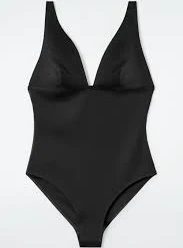
Scuba Swimsuit
Lower concern with no known PFAS triggers, but COS offers no public transparency.
COS scuba swimsuits typically use standard nylon or polyester blends without advertised water-repellent or stain-resistant finishes suggesting PFAS use. COS does not publicly disclose PFAS or water-resistant treatment policy.
The better-graded swap
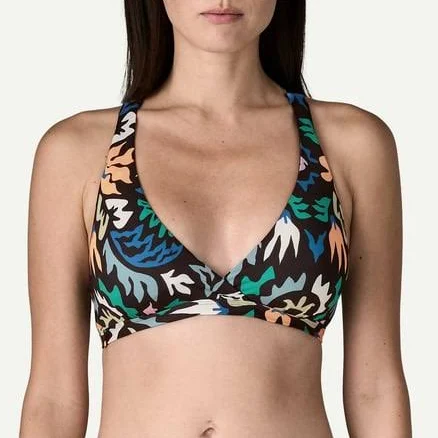
Patagonia
Patagonia Women's Bottom Turn Racerback Bikini Top
90/100 safety
Same rubric that flunked this product. The swap earned Excellent.
Still want this one anyway? Check the price on Amazon. We’d swap it.
Material
polyamide (nylon) or polyester blend
Brand disclosure
Brand is silent on PFAS
Lab data
No public lab test
What Scuba Swimsuit is made of, ingredients and materials
COS scuba swimsuits are constructed from polyamide (nylon) or polyester blends, both synthetic polymers chosen for elasticity, chlorine resistance, and durability in wet environments. Neither material is inherently hazardous when properly formulated. The coating or finish applied during manufacture (e.g., for water-shedding or stretch recovery) is the primary exposure point; nylon and polyester do not naturally leach toxic compounds into skin during normal wear, unlike some ceramics or metals.
What’s concerning
Category baseline
The starting point for this type of product, before anything specific to this product is counted.
No PFAS disclosure
No public statement from the brand about PFAS in this product.
Azo dyes in synthetic textiles
Polyamide and polyester both commonly accept azo-based reactive dyes during manufacture. These can degrade into aromatic amines under sweat and UV exposure, though risk is low in finished garments with standard EU/US dye regulations. COS does not disclose dye chemistry for this product.
Formaldehyde / VOCs
Elasticity and wrinkle-resistance finishes sometimes use formaldehyde-releasing resins in synthetic blends. Scuba suits with stretch recovery or water-shedding treatments may contain trace amounts; off-gassing risk is minimal after manufacturing and first wash. No specific testing data available for COS swimwear.
Source, ATSDR ↗Microplastics
Water-repellent or elasticity-boosting coatings on polyamide can wear away with friction, chlorine, and UV, potentially releasing microplastic particles into water. Frequency depends on care and use intensity; standard washing and air-drying minimizes this.
Source, EPA ↗What’s reassuring
Base material not linked to PFAS
The main material recorded for this product is not one associated with PFAS.
Antimony in polyester
Polyester can contain antimony as a catalyst residue from polymerization. Leaching into skin or sweat is negligible in finished textiles and not documented as a risk in swimwear. COS polyester blends are not known to have elevated antimony.
Fragrance and allergenic additives in elastic or dye
COS swimwear is not marketed with fragrance, and no documented contact dermatitis incidents are on record. Residual dyes or processing chemicals can trigger sensitivity in rare cases, but this is not a known issue for this brand or product.
The full breakdown
The brand's record and disclosure
COS, owned by H&M Group, does not publish detailed chemical or PFAS transparency reports specific to individual garments. The parent company has committed to phasing out certain chemicals but provides no itemized disclosure for this product line. No recalls or documented chemical safety incidents are on record for COS swimwear. Absence of controversy does not equal verification of safety; it reflects limited public scrutiny rather than confirmed clean testing.
How it compares in its category
Polyamide and polyester swimwear are industry standard and pose lower chemical risk than vintage or bargain elastane-heavy alternatives. Most mainstream brands (Speedo, ROXY, Patagonia) use identical base polymers. COS positioning in the mid-market means formulation is unlikely to include experimental or cost-cutting additives that trigger hazards, but also means no premium-tier chemical verification is guaranteed. Compared to niche eco-brands offering GOTS certification or chemical testing, COS offers no differentiation in safety documentation.
If you buy it
Rinse immediately after saltwater or chlorinated pool use to remove residual chemicals and salts that can degrade elasticity and finishes. Wash separately in cool water without fabric softener, which can compromise stretch. Air-dry away from direct heat and sunlight; tumble drying accelerates polymer breakdown. Replace every 12-18 months of regular use (twice weekly or more) as elastic fibers fatigue and coating may thin. Do not expose to solvents or prolonged heat over 40°C (104°F).
What we don’t know
- Basis
- Model estimate, 72% confidence, not a lab result
- Lab test
- None on record for this exact product
- Brand statement
- COS has made none
Formulations change between production runs, so check the current label. How we grade.
Better-graded alternatives in Swimwear
Patagonia
Women's Bottom Turn Racerback Bikini Top
- Nylon/polyester blend with elastane (standard swimwear)
- The brand calls it PFAS-free, which we have not verified
- Elastane (spandex) degradation under heat or chlorine
More swimwear grades
How we score, every product runs through the same public 0-100 rubric based on materials, coatings, brand disclosure, lab findings, and recalls. See the full methodology → Spotted a mistake? Report an error.