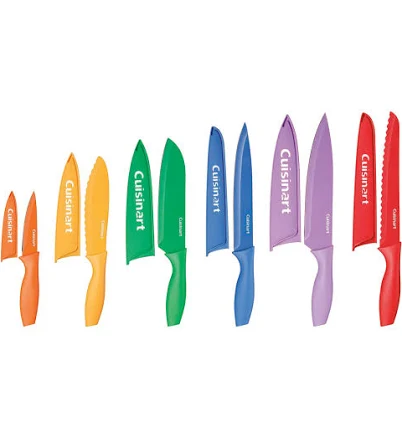
Cuisinart · Non-Stick Knife Sets
Cuisinart Advantage Knife Set, Is It Non-Toxic?
Lower PFAS concern, stainless steel knives carry minimal inherent risk, but Cuisinart provides no public PFAS transparency.
Stainless steel blades carry no known PFAS coating risk. Cuisinart makes no PFAS claims or disclosures, but knives face lower risk than nonstick cookware.
Still want this one anyway? Check the price on Amazon. We’d swap it.
Material
Stainless steel blades
Lab data
No public lab test
You may also be interested in
Top-graded picks in the categories readers replace first, every one scored on the same rubric.

- polypropylene filter housing, carbon/sediment cartridge
- We found no PFAS statement from the brand
- Bacterial growth in spent cartridges
3 hazards checked on this product, all on its full breakdown.

Aquasure
Premier Series 75 GPD Under Sink Reverse Osmosis Water Filtration System
- RO membrane, carbon filters, stainless steel housing
- We found no PFAS statement from the brand
- Bacterial and microbial growth in housing and filters
4 hazards checked on this product, all on its full breakdown.

Avocado
Vegan Mattress
- organic cotton, natural latex, coconut coir, recycled steel coils
- The brand calls it PFAS-free, which we have not verified
- Heavy metals
2 hazards checked on this product, all on its full breakdown.
Is Cuisinart Advantage Knife Set non-toxic? What it is made of
Cuisinart Advantage knives use stainless steel blades, which do not leach heavy metals under normal cutting use and resist corrosion without requiring Teflon-type coating or ceramic coatings. The handles are typically polypropylene or similar food-contact plastics, chosen for durability and dishwasher compatibility. Stainless steel is inert in the food chain, meaning no lead, cadmium, or aluminum migration occurs during typical meal preparation. The material combination prioritizes functionality over cost-cutting, with no known coating degradation pathway unique to this product line.
What’s concerning
Category baseline
The starting point for this type of product, before anything specific to this product is counted.
No PFAS disclosure
No public statement from the brand about PFAS in this product.
Allergen or contaminant introduction via manufacturing residues
Industrial knife manufacturing may leave trace machining oils or metal particles on blades before shipping. A thorough hand wash before first use eliminates this minor, non-specific risk common to all new cutlery.
What’s reassuring
Bare uncoated material
Recorded as a bare, uncoated material with no surface coating or treatment.
Handle material off-gassing or leaching
Polypropylene handles in food-contact knife sets are not documented to leach BPA, phthalates, or volatile organics during normal use. No established pathway exists for handle-to-food migration in cutting applications.
Blade coating degradation and inhalation risk
Stainless steel blades are uncoated, eliminating Teflon-type coating fume risk from overheated non-stick surfaces or peeling ceramic layers reported in some cookware. This product category does not involve heat exposure that would trigger coating breakdown.
Heavy metals
Stainless steel is iron-chromium-nickel alloy; no lead or cadmium is intentionally added. No recalls or independent testing of this specific Cuisinart set has identified heavy metal leaching into food.
Source, FDA ↗Microplastic or particle shedding from blade use
Stainless steel does not fragment or shed particles during normal cutting of food. Wear occurs via dulling (material loss too small to ingest), not cracking or spalling.
How is this PFAS grade calculated?
The brand's record and disclosure
Cuisinart has not published specific PFAS testing data or transparency statements for its knife sets, which is standard industry silence rather than a flag. The brand has no documented safety recalls linked to knife composition, and it maintains FDA compliance for food-contact materials in the United States. No independent investigations or retailer warnings specific to this product have been recorded. Cuisinart's parent company (Conair Corporation) operates under mainstream manufacturing standards without known chemical disclosure controversies in the cookware space.
How it compares in its category
Non-stick knife sets as a category often use polymer coatings (sometimes Teflon-type coating-based) to reduce stiction and improve blade glide; Cuisinart's Advantage line appears to use uncoated stainless steel, eliminating coating-off-gassing risk that affects some competitors. Compared to budget knife sets with unknown metal sources, stainless steel is a known-safe baseline. Higher-end German and Japanese brands typically offer similar material profiles without additional documented safety advantages. The Advantage line trades premium aesthetics for reliable material safety at a mid-market price point.
If you buy it
Hand wash or place on the top rack of the dishwasher to avoid prolonged moisture exposure on handles and blade edges, which can degrade attachment points over years. Stainless steel blades do not require seasoning or special oil care, unlike carbon steel. Replace knives if handles crack or blades show persistent pitting, as these signal material failure rather than coating breakdown. Store in a knife block or on a magnetic strip to prevent dulling and accidental cross-contamination in drawers.
What is not known about PFAS in this product?
- Basis
- Model estimate, 78% confidence, not a lab result
- Lab test
- None on record for this exact product
- Brand statement
- Cuisinart has made a specific claim
Formulations change between production runs, so check the current label. How we grade.
More non-stick knife sets grades
How we score, every product runs through the same public 0-100 rubric based on materials, coatings, brand disclosure, lab findings, and recalls. See the full methodology → Spotted a mistake? Report an error.