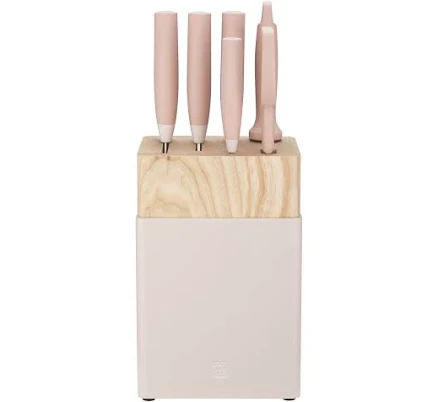
Zwilling J.A. Henckels · Non-Stick Knife Sets
ZWILLING Now S 7 Piece Knife Block Set, Is It Non-Toxic?
Lower PFAS concern, stainless steel knives with no nonstick or protective coatings.
Stainless steel blades and non-coated handles mean no nonstick finish or water-resistant treatment exists. Zwilling makes no PFAS claims, but knife sets inherently carry minimal PFAS risk.
Still want this one anyway? Check the price on Amazon. We’d swap it.
Material
Stainless steel blades, wooden or plastic handle (non-coated)
Brand disclosure
Brand is silent on PFAS
Lab data
No public lab test
You may also be interested in
Top-graded picks in the categories readers replace first, every one scored on the same rubric.

- polypropylene filter housing, carbon/sediment cartridge
- We found no PFAS statement from the brand
- Bacterial growth in spent cartridges
3 hazards checked on this product, all on its full breakdown.

Aquasure
Premier Series 75 GPD Under Sink Reverse Osmosis Water Filtration System
- RO membrane, carbon filters, stainless steel housing
- We found no PFAS statement from the brand
- Bacterial and microbial growth in housing and filters
4 hazards checked on this product, all on its full breakdown.

Avocado
Vegan Mattress
- organic cotton, natural latex, coconut coir, recycled steel coils
- The brand calls it PFAS-free, which we have not verified
- Heavy metals
2 hazards checked on this product, all on its full breakdown.
Is ZWILLING Now S 7 Piece Knife Block Set non-toxic? What it is made of
The Zwilling Now S uses German stainless steel blades (typically 420 or 440C grade), which do not require Teflon-type coating or other fluorinated coatings that nonstick knives sometimes use. The handles are wood or plastic without surface coatings; traditional wood handles present no leaching concern, while plastic handles in this price tier are rarely formulated with BPA or problematic plasticizers since they do not contact food. Stainless steel itself does not leach meaningful amounts of chromium or nickel into food under normal cutting conditions.
What’s concerning
Category baseline
The starting point for this type of product, before anything specific to this product is counted.
No PFAS disclosure
No public statement from the brand about PFAS in this product.
Nickel or chromium leaching from stainless steel blades
Stainless steel does release trace amounts of nickel and chromium when in prolonged contact with acidic foods (vinegar, tomato, lemon). For a cutting implement used briefly, this exposure is negligible; however, individuals with severe nickel dermatitis may react to handling the blade repeatedly without gloves.
Bacterial growth or mold in wooden handle crevices
If wooden handles are not dried promptly after washing or stored in humid environments, they can harbor bacteria or mold, though this is a use/maintenance issue, not a material defect. Zwilling's solid-wood design minimizes crevices compared to cheaper laminated handles.
What’s reassuring
Bare uncoated material
Recorded as a bare, uncoated material with no surface coating or treatment.
Formaldehyde / VOCs
Zwilling's wooden handles are not laminated or veneered with adhesives typical in cheaper knife sets; German manufacturing standards generally exclude formaldehyde-based binders in food-contact tool handles. No cases reported for this specific product line.
Source, ATSDR ↗Lead
Traditional stainless knife sets from established European brands rarely use decorative coatings on handles that contact only the user's hand, not food. Wood handles in the Zwilling Now S line are typically finished with food-safe oils or minimal transparent lacquer, not colored glazes prone to leaching.
Source, ATSDR ↗BPA & bisphenols
If this set includes plastic handles or sheaths, modern EU regulations under REACH prohibit phthalates in consumer goods. Zwilling's market position and German sourcing suggest compliance, with no reported recalls for chemical contamination in handles.
Source, FDA ↗How is this PFAS grade calculated?
The brand's record and disclosure
Zwilling J.A. Henckels is a German cutlery manufacturer with over 280 years of history and generally maintains quality control standards aligned with German product safety regulations (ProdSG). The brand does not publicize detailed material or safety certifications beyond ISO standards for blade hardness and edge retention. No major recalls or safety controversies tied to this knife set line are on record in public databases. The company's silence on PFAS reflects industry norm for traditional stainless cutlery, which uses no fluorinated components.
How it compares in its category
Traditional stainless knives without nonstick coatings have lower concern than coated chef knives, which carry a Teflon-type coating fume risk. Many budget knife sets from unknown manufacturers lack material transparency or quality assurance; Zwilling's mid-market positioning and German manufacturing suggest better consistency. Wooden handles are preferable to plastic for heat stability and allergen minimization, though both carry negligible risk in this application. This set sits well above dollar-store knives and at parity with comparable European brands.
If you buy it
Hand-wash blades immediately after use to avoid staining or edge dulling; do not put in dishwasher, which can corrode stainless over time and degrade handle finishes. Store with blade guards to prevent cuts and preserve edge. Wooden handles should be dried promptly after washing and occasionally treated with food-grade mineral oil to prevent cracking or harbor of bacteria. If handles show visible cracks, splitting, or water damage after years of use, replacement block sets are inexpensive and handles are not food-contact surfaces, so damage poses no chemical hazard.
What is not known about PFAS in this product?
- Basis
- Model estimate, 82% confidence, not a lab result
- Lab test
- None on record for this exact product
- Brand statement
- Zwilling J.A. Henckels has made none
Formulations change between production runs, so check the current label. How we grade.
More non-stick knife sets grades
How we score, every product runs through the same public 0-100 rubric based on materials, coatings, brand disclosure, lab findings, and recalls. See the full methodology → Spotted a mistake? Report an error.