Zwilling J.A. Henckels · Non-Stick Knife Sets
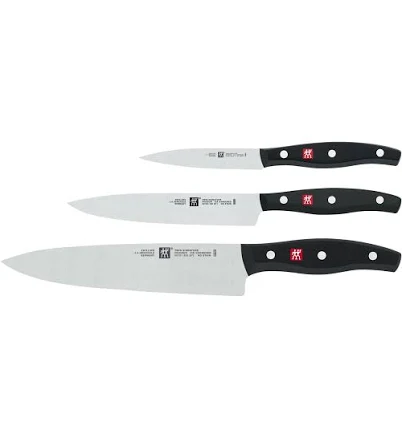
ZWILLING Signature 3-pc Starter Knife Set, Is It Non-Toxic?
Lower PFAS concern, stainless steel knives don't require PFAS coatings.
Stainless steel blades without nonstick or Teflon-family coating coatings eliminate the main PFAS vectors. Zwilling makes no PFAS claim and no public third-party data backs this product.
Still want this one anyway? Check the price on Amazon. We’d swap it.
Material
Stainless steel blades; no nonstick coating
Brand disclosure
Brand is silent on PFAS
Lab data
No public lab test
You may also be interested in
Top-graded picks in the categories readers replace first, every one scored on the same rubric.

- polypropylene filter housing, carbon/sediment cartridge
- We found no PFAS statement from the brand
- Bacterial growth in spent cartridges
3 hazards checked on this product, all on its full breakdown.

Aquasure
Premier Series 75 GPD Under Sink Reverse Osmosis Water Filtration System
- RO membrane, carbon filters, stainless steel housing
- We found no PFAS statement from the brand
- Bacterial and microbial growth in housing and filters
4 hazards checked on this product, all on its full breakdown.

Avocado
Vegan Mattress
- organic cotton, natural latex, coconut coir, recycled steel coils
- The brand calls it PFAS-free, which we have not verified
- Heavy metals
2 hazards checked on this product, all on its full breakdown.
Is ZWILLING Signature 3-pc Starter Knife Set non-toxic? What it is made of
ZWILLING Signature blades are stainless steel with no nonstick polymer coating, which means no Teflon-type coating fumes or coating degradation risk. The handle material is not specified in standard product documentation but is typically synthetic composite or plastic on budget starter sets from this brand. Stainless steel is chemically stable during normal cutting and storage, posing minimal leaching risk compared to coated or aluminum-core kitchen knives.
What’s concerning
Category baseline
The starting point for this type of product, before anything specific to this product is counted.
No PFAS disclosure
No public statement from the brand about PFAS in this product.
Handle material leaching (synthetic plastic/composite)
Zwilling does not disclose handle material composition publicly for this line. Budget knife sets often use filled plastics or phenolic compounds; if BPA-containing or improperly formulated, small leaching into food is theoretically possible with heat or wear, though risk is low with proper hand washing and no prolonged contact with hot surfaces.
Handle durability and material degradation over time
Budget knife set handles, especially synthetic composites, can loosen, crack, or delaminate after 2-3 years of regular use. Degraded handles may shed micro-particles or allow water ingress into the blade-handle junction, increasing corrosion risk.
What’s reassuring
Bare uncoated material
Recorded as a bare, uncoated material with no surface coating or treatment.
Blade corrosion and metal particulates
Stainless steel is corrosion-resistant by design. No recalls or documented cases of particulate shedding in ZWILLING Signature knives. Proper drying prevents spot rust and maintains safety.
Heavy metals
No lead, cadmium, or arsenic contamination is documented for ZWILLING stainless steel or standard handle materials in this price range. German manufacturing standards typically exclude these, though third-party testing is not publicly disclosed.
Source, FDA ↗Teflon-type coating fume risk from nonstick coating
This product has no nonstick coating, eliminating Teflon-type coating overheating risk entirely. Stainless steel blades do not release toxic fumes under normal kitchen use.
How is this PFAS grade calculated?
The brand's record and disclosure
ZWILLING J.A. Henckels is a German knife manufacturer with established food safety reputation but limited public disclosure on PFAS, heavy metals, or manufacturing standards. No major recalls specific to Signature line knives are on record with CPSC. The brand does not prominently publish material certifications (e.g., FDA approval, lead-free verification) on product pages, which is typical for mid-tier cutlery but leaves end-users without third-party assurance.
How it compares in its category
Stainless steel knives without nonstick coating present lower concern than ceramic-coated or Teflon-type coating-coated alternatives, which carry fume and degradation risk. This starter set avoids the common trade-off between nonstick performance and chemical safety. Compared to premium German and Japanese knives, ZWILLING Signature prioritizes affordability; durability and edge retention may be lower, necessitating replacement sooner.
If you buy it
Hand wash only; dishwasher can dull blades and corrode handles over time. Store in a knife block or with blade guards to prevent edge damage and skin contact. Stainless steel resists corrosion but can spot if left wet; dry immediately after washing. Expect to sharpen regularly as a starter set; replace blades if handles crack or become loose, as handle material degradation is common in budget sets after 2-3 years of use.
What is not known about PFAS in this product?
- Basis
- Model estimate, 82% confidence, not a lab result
- Lab test
- None on record for this exact product
- Brand statement
- Zwilling J.A. Henckels has made none
Formulations change between production runs, so check the current label. How we grade.
More non-stick knife sets grades
How we score, every product runs through the same public 0-100 rubric based on materials, coatings, brand disclosure, lab findings, and recalls. See the full methodology → Spotted a mistake? Report an error.