Victorinox · Non-Stick Knife Sets
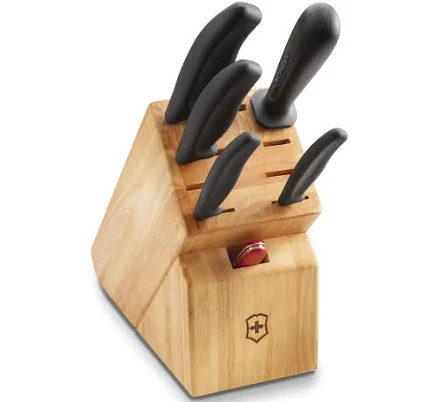
Victorinox Swiss Classic 7-Piece Block Set, Is It Non-Toxic?
Lower concern. Stainless steel blades and hardwood handles present no coating concerns.
This knife set has stainless steel blades and hardwood handles with no water-repellent finish on record. Victorinox has no PFAS statement on record for this product.
Still want this one anyway? Check the price on Amazon. We’d swap it.
Material
Stainless steel blades, hardwood handles
Brand disclosure
Brand is silent on PFAS
Lab data
No public lab test
You may also be interested in
Top-graded picks in the categories readers replace first, every one scored on the same rubric.

- polypropylene filter housing, carbon/sediment cartridge
- We found no PFAS statement from the brand
- Bacterial growth in spent cartridges
3 hazards checked on this product, all on its full breakdown.

Aquasure
Premier Series 75 GPD Under Sink Reverse Osmosis Water Filtration System
- RO membrane, carbon filters, stainless steel housing
- We found no PFAS statement from the brand
- Bacterial and microbial growth in housing and filters
4 hazards checked on this product, all on its full breakdown.

Avocado
Vegan Mattress
- organic cotton, natural latex, coconut coir, recycled steel coils
- The brand calls it PFAS-free, which we have not verified
- Heavy metals
2 hazards checked on this product, all on its full breakdown.
Is Victorinox Swiss Classic 7-Piece Block Set non-toxic? What it is made of
This set uses stainless steel blades (typically 420-grade or higher in Victorinox lines) and hardwood handles, avoiding the coating-dependent risks of non-stick knife sets. Stainless steel is inherently corrosion-resistant and does not shed particles with normal use. Hardwood handles are dimensionally stable and do not leach endocrine disruptors like plastic or composite alternatives might, though they do require hand-washing to prevent wood swelling and microbial growth.
What’s concerning
Category baseline
The starting point for this type of product, before anything specific to this product is counted.
No PFAS disclosure
No public statement from the brand about PFAS in this product.
Wood handle microbial contamination and moisture damage
Hardwood handles are susceptible to water absorption, mold, and bacterial colonization if not dried immediately after washing. This is a use-and-care issue rather than manufacturing defect, but represents the primary material vulnerability in this set.
Protective coating or finish toxicity on handles
Victorinox Swiss Classic handles are typically treated with mineral oil or food-safe wax finishes, which pose minimal ingestion risk. However, specific finish composition is not publicly detailed; if concerned, mineral-oil treatment is standard and low-hazard.
What’s reassuring
Bare uncoated material
Recorded as a bare, uncoated material with no surface coating or treatment.
Lead
Victorinox stainless steel blades and hardwood handles do not use glazes, enamels, or ceramic coatings where lead/cadmium contamination typically occurs. No recalls or test failures documented for this product.
Source, ATSDR ↗Stainless steel blade leaching (chromium, nickel)
Food-grade stainless steel does not leach chromium or nickel under normal kitchen use or contact with acidic foods. Victorinox 420-grade steel meets European food contact regulations. Risk applies only if blade is severely corroded or pitted, which would be visible.
Formaldehyde / VOCs
Solid hardwood handles do not contain formaldehyde-release adhesives typical of composite woods or veneers. Natural wood does emit trace volatile compounds, but at negligible levels compared to other kitchen materials.
Source, ATSDR ↗How is this PFAS grade calculated?
The brand's record and disclosure
Victorinox is a Swiss manufacturer with ISO 9001 certification and long-standing food-safety compliance in Europe and North America; no recalls or safety controversies are on record for this product line. The brand maintains silent public stance on PFAS in manufacturing, typical of knife manufacturers who do not use fluorinated coatings. Their stainless steel sourcing and hardness standards are well-documented in commercial and home kitchens.
How it compares in its category
Non-stick knife sets typically carry Teflon-type coating or ceramic coating risks; this set avoids that hazard entirely by using uncoated stainless steel. Compared to German brands (Wusthof, Henckels) or Japanese alternatives, Victorinox Swiss Classic offers similar material safety at a lower price point. The trade-off is that you lose non-stick convenience but gain durability and zero coating degradation concerns.
If you buy it
Hand-wash immediately after use and dry promptly to prevent water spotting and wood swelling. Do not soak handles or run through dishwashers, as prolonged moisture accelerates wood fiber breakdown and can harbor mold. Hone blades regularly on a steel and sharpen annually; dull blades require more pressure and are more likely to slip. Replace handles only if visible cracking or splintering develops, typically after 5-10 years of home use.
What is not known about PFAS in this product?
- Basis
- Model estimate, 82% confidence, not a lab result
- Lab test
- None on record for this exact product
- Brand statement
- Victorinox has made none
Formulations change between production runs, so check the current label. How we grade.
More non-stick knife sets grades
How we score, every product runs through the same public 0-100 rubric based on materials, coatings, brand disclosure, lab findings, and recalls. See the full methodology → Spotted a mistake? Report an error.