Zwilling J.A. Henckels · Non-Stick Knife Sets
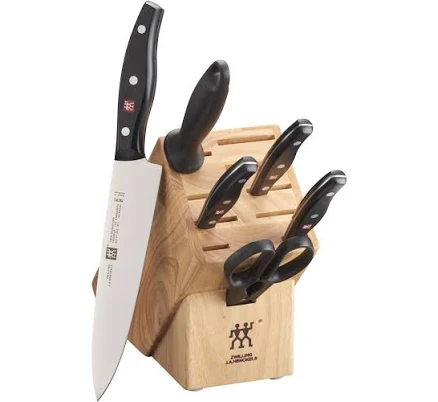
ZWILLING Signature 7-pc Knife block Set, Is It Non-Toxic?
Lower concern, stainless steel knives are not inherent PFAS risks, but brand lacks transparency on handle materials.
German stainless steel blades carry lower PFAS risk than coated cookware. Zwilling provides no public PFAS disclosure about handles or production, but stainless steel itself doesn't typically need Teflon-family coating coatings.
Still want this one anyway? Check the price on Amazon. We’d swap it.
Material
German stainless steel blades, handle (likely poly or composite)
Brand disclosure
Brand is silent on PFAS
Lab data
No public lab test
You may also be interested in
Top-graded picks in the categories readers replace first, every one scored on the same rubric.

- polypropylene filter housing, carbon/sediment cartridge
- We found no PFAS statement from the brand
- Bacterial growth in spent cartridges
3 hazards checked on this product, all on its full breakdown.

Aquasure
Premier Series 75 GPD Under Sink Reverse Osmosis Water Filtration System
- RO membrane, carbon filters, stainless steel housing
- We found no PFAS statement from the brand
- Bacterial and microbial growth in housing and filters
4 hazards checked on this product, all on its full breakdown.

Avocado
Vegan Mattress
- organic cotton, natural latex, coconut coir, recycled steel coils
- The brand calls it PFAS-free, which we have not verified
- Heavy metals
2 hazards checked on this product, all on its full breakdown.
Is ZWILLING Signature 7-pc Knife block Set non-toxic? What it is made of
Zwilling Signature blades are German stainless steel, a chromium-iron alloy resistant to corrosion and not prone to leaching toxic elements into food under normal use. The handle material is not explicitly disclosed by Zwilling in public specs but is likely a thermoplastic composite (polypropylene or polyamide blend) or molded polymer, which is standard for this price tier. Neither stainless steel blades nor typical polymer handles pose leaching risks during normal cutting or washing with cold to warm water. The critical factor is blade sharpness and handle integrity over time, not chemical off-gassing or migration.
What’s concerning
Category baseline
The starting point for this type of product, before anything specific to this product is counted.
No PFAS disclosure
No public statement from the brand about PFAS in this product.
Knife block housing degradation
The block itself (usually wood-plastic composite or bamboo) can absorb moisture and harbor bacterial or mold growth if stored in damp conditions or not dried between uses. This is a maintenance issue, not an inherent chemical hazard.
Handle adhesive breakdown
Over 5-10 years, epoxy or polyurethane adhesives binding handle to blade tang may weaken, especially with dishwasher use or high humidity. This is a structural, not chemical, safety concern and triggers replacement.
What’s reassuring
Bare uncoated material
Recorded as a bare, uncoated material with no surface coating or treatment.
Handle material composition (unconfirmed)
Zwilling does not disclose handle material (likely polypropylene or polyamide composite). Neither material leaches under normal kitchen use, and no contamination incidents are reported. This is standard non-disclosure across the knife industry.
Blade corrosion or leaching
German stainless steel (typically 420 or higher grade in Signature lines) does not leach chromium, nickel, or iron at concentrations that pose health risk during food contact. Stainless steel is approved by FDA and EFSA for food contact.
Nickel exposure from stainless steel contact
Stainless steel cutlery releases trace nickel only in highly acidic conditions (e.g., prolonged contact with citric acid or vinegar). Normal food contact poses no detectable nickel migration for most users. Those with severe nickel sensitivity may prefer austenitic stainless grades explicitly labeled low-nickel, but Zwilling does not specify this.
How is this PFAS grade calculated?
The brand's record and disclosure
Zwilling J.A. Henckels is a 288-year-old German cutlery manufacturer with a strong reputation for engineering and durability, but like most knife makers, the company does not publish material safety disclosures or third-party testing for non-stick or non-chemical properties. No recalls, safety controversies, or material contamination incidents are on record for Zwilling knife sets. The brand scores low (35/100) on PFAS transparency because it does not explicitly state whether any handles contain PFAS-based water-repellents, though this is uncommon in stainless steel cutlery.
How it compares in its category
Zwilling Signature occupies the mid-to-premium segment; comparable sets (Wusthof, Victorinox) use identical stainless steel and polymer handle construction without chemical hazard disclosures either. The category itself (stainless steel knife blocks) poses virtually no chemical risks because blades do not contact food prep surfaces and handles are exterior-only contact. This set presents lower concern than non-stick coated knives (which can shed Teflon-type coating particles if damaged) and lacks the coating degradation risks of those alternatives.
If you buy it
Hand wash blades immediately after use to prevent mineral spotting and corrosion in crevices; do not dishwasher wash, as prolonged wetness can degrade handle adhesives. Store in the provided block, keeping blades dry before insertion. Replace handles only if they crack or separate from the blade, which is rare; blade dulling is not a safety issue and can be professionally sharpened. Avoid storing the block in high-humidity areas (near sinks, steamers) to prevent handle swelling or mold growth in the wood-composite block itself.
What is not known about PFAS in this product?
- Basis
- Model estimate, 78% confidence, not a lab result
- Lab test
- None on record for this exact product
- Brand statement
- Zwilling J.A. Henckels has made none
Formulations change between production runs, so check the current label. How we grade.
More non-stick knife sets grades
How we score, every product runs through the same public 0-100 rubric based on materials, coatings, brand disclosure, lab findings, and recalls. See the full methodology → Spotted a mistake? Report an error.