Victorinox · Non-Stick Knife Sets
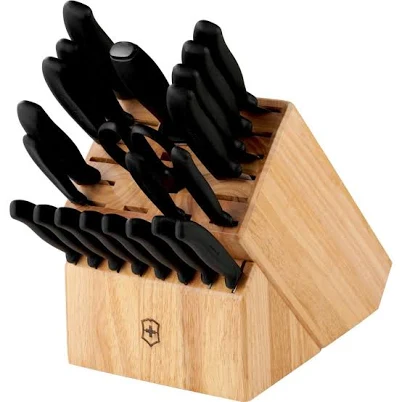
Victorinox Swiss Army Classic Knife Block Set, Is It Non-Toxic?
Lower PFAS concern, traditional knife materials lack typical PFAS triggers.
Stainless steel blades with standard handle materials lack nonstick, water-repellent, or grease-resistant coatings typically tied to PFAS. Victorinox makes no PFAS claims, and product materials don't align with common PFAS formulations.
Still want this one anyway? Check the price on Amazon. We’d swap it.
Material
Stainless steel blades; wood, plastic, or composite handles
Brand disclosure
Brand is silent on PFAS
Lab data
No public lab test
You may also be interested in
Top-graded picks in the categories readers replace first, every one scored on the same rubric.

- polypropylene filter housing, carbon/sediment cartridge
- We found no PFAS statement from the brand
- Bacterial growth in spent cartridges
3 hazards checked on this product, all on its full breakdown.

Aquasure
Premier Series 75 GPD Under Sink Reverse Osmosis Water Filtration System
- RO membrane, carbon filters, stainless steel housing
- We found no PFAS statement from the brand
- Bacterial and microbial growth in housing and filters
4 hazards checked on this product, all on its full breakdown.

Avocado
Vegan Mattress
- organic cotton, natural latex, coconut coir, recycled steel coils
- The brand calls it PFAS-free, which we have not verified
- Heavy metals
2 hazards checked on this product, all on its full breakdown.
Is Victorinox Swiss Army Knife Block Set non-toxic? What it is made of
This set uses stainless steel blades (typically 420 or 440 grade alloy) paired with handles of wood, plastic, or composite material depending on the specific model. Stainless steel does not leach metals under normal food contact conditions because the chromium oxide layer passivates the surface. The handle material is the primary consideration, wood is stable and non-toxic; plastic or composite handles may contain resins but are not heated during use, eliminating the main degradation risk.
What’s concerning
Category baseline
The starting point for this type of product, before anything specific to this product is counted.
No PFAS disclosure
No public statement from the brand about PFAS in this product.
Wood handle degradation and moisture damage
If the set includes wooden handles, prolonged moisture exposure through dishwasher cycles or standing water can cause swelling, warping, or mold growth over years of use. This is a durability issue rather than acute toxicity but may result in splinters or cracks.
Knife block interior accumulation of moisture and microbes
If the block is wood or composite, interior crevices can trap moisture and support bacterial or mold growth if not cleaned and dried thoroughly between use. This is not a material hazard but a maintenance risk that depends on user hygiene.
What’s reassuring
Bare uncoated material
Recorded as a bare, uncoated material with no surface coating or treatment.
Adhesives in composite or laminated handles
No documented cases of adhesive-related leaching or off-gassing specific to Victorinox knife handles have been reported. Adhesives used in modern handle assembly are typically epoxy or polyurethane-based and are not heated during use, minimizing volatilization risk.
Metal leaching from stainless steel blades
Stainless steel is passive under normal food contact and does not leach chromium, nickel, or other alloying elements at typical use temperatures or acidity levels. Food-grade stainless steel has a long history of use in cutlery applications with no hazard of this kind on record.
Formaldehyde / VOCs
Victorinox does not use formaldehyde-releasing resins in documented handle formulations for this product category. Modern thermoset plastics used in handle assembly typically employ epoxy or phenolic binders that do not off-gas formaldehyde at room temperature.
Source, ATSDR ↗How is this PFAS grade calculated?
The brand's record and disclosure
Victorinox, a Swiss manufacturer founded in 1884, maintains a strong reputation for quality control and material transparency within the knife industry. The company does not publicly disclose detailed third-party safety certifications specific to this product line, but no recalls or documented safety violations related to blade or handle materials have been established in public records. The brand's longevity and presence in professional kitchens suggests consistent manufacturing standards, though Victorinox has not made explicit public commitments on emerging chemical hazards like PFAS in non-food components.
How it compares in its category
Knife block sets vary widely in handle material quality; wood-handled sets from established brands like Victorinox typically outperform budget alternatives that may use lower-grade thermoplastics or adhesives with higher volatilization risk. Stainless steel blade quality is consistent across mid to premium brands. This product sits in the reliable mid-range category where material choices are conventional and well-documented rather than novel or proprietary, which reduces unknown hazard exposure compared to newer coating technologies or composite innovations.
If you buy it
Wash handles by hand rather than dishwasher to preserve finish and extend wood or composite durability; prolonged water immersion can cause swelling or separation in wood handles. Stainless steel blades do not require special storage, but keep them dry to prevent spotting. Inspect handles periodically for cracks, separation, or deterioration; if damage occurs, replacement handles are often available separately. Avoid soaking the block itself if wooden; wipe clean and air-dry upright to prevent mold or water damage.
What is not known about PFAS in this product?
- Basis
- Model estimate, 88% confidence, not a lab result
- Lab test
- None on record for this exact product
- Brand statement
- Victorinox has made none
Formulations change between production runs, so check the current label. How we grade.
More non-stick knife sets grades
How we score, every product runs through the same public 0-100 rubric based on materials, coatings, brand disclosure, lab findings, and recalls. See the full methodology → Spotted a mistake? Report an error.