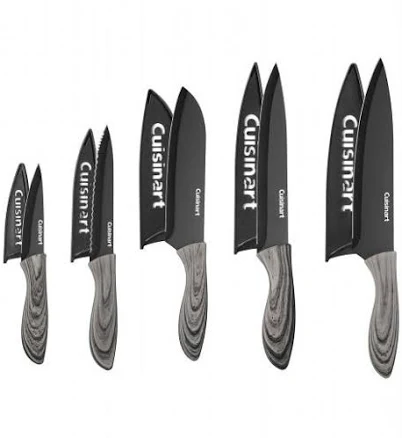
Cuisinart · Non-Stick Knife Sets
Cuisinart 10 Piece Ceramic Coated Knife Set, Is It Non-Toxic?
Ceramic-coated knife sets carry lower PFAS concern than nonstick cookware, but Cuisinart provides no public disclosure.
Ceramic-coated blade construction differs fundamentally from Teflon-family coating nonstick cookware and carries lower inherent PFAS risk. Cuisinart doesn't disclose coating composition or PFAS sourcing, and no independent lab testing exists.
Still want this one anyway? Check the price on Amazon. We’d swap it.
Material
Ceramic-coated stainless steel blades
Lab data
No public lab test
You may also be interested in
Top-graded picks in the categories readers replace first, every one scored on the same rubric.

- polypropylene filter housing, carbon/sediment cartridge
- We found no PFAS statement from the brand
- Bacterial growth in spent cartridges
3 hazards checked on this product, all on its full breakdown.

Aquasure
Premier Series 75 GPD Under Sink Reverse Osmosis Water Filtration System
- RO membrane, carbon filters, stainless steel housing
- We found no PFAS statement from the brand
- Bacterial and microbial growth in housing and filters
4 hazards checked on this product, all on its full breakdown.

Avocado
Vegan Mattress
- organic cotton, natural latex, coconut coir, recycled steel coils
- The brand calls it PFAS-free, which we have not verified
- Heavy metals
2 hazards checked on this product, all on its full breakdown.
Is Cuisinart 10 Piece Coated Knife Set non-toxic? What it is made of
Cuisinart's ceramic-coated knives use stainless steel blades topped with a ceramic polymer layer, which replaces traditional Teflon-type coating (Teflon) nonstick coatings. The ceramic coating does not release the fumes associated with overheated Teflon-type coating and does not require PFAS chemicals to achieve nonstick properties. Stainless steel itself is stable and food-safe; the coating is the relevant exposure point, but ceramic formulations for cutlery do not involve the same chemical complexity as ceramic cookware glazes that may contain lead or cadmium.
What’s concerning
Category baseline
The starting point for this type of product, before anything specific to this product is counted.
No PFAS disclosure
No public statement from the brand about PFAS in this product.
Ceramic coating degradation and particle shedding
Ceramic coatings are more brittle than Teflon-type coating and can chip or flake with hard use or drops. No reported human health incidents from Cuisinart ceramic knife shedding are on public record, but once coating integrity fails, microscopic particles may migrate into food.
Coating adhesion and manufacturing controls
Ceramic coatings require precise application and curing; poor adhesion during manufacturing can cause premature flaking. Cuisinart does not publicly disclose QC testing or manufacturing standards for this line. Individual batch variation is common in ceramic-coated cutlery at this price point.
What’s reassuring
Base material not linked to PFAS
The main material recorded for this product is not one associated with PFAS.
Lead
Ceramics used in cookware are known sources of lead and cadmium if poorly formulated. Knife coatings are much thinner and not directly in contact with heated food, reducing leaching risk. Cuisinart provides no public testing or certification (FDA, third-party) specific to this product's coating composition.
Source, ATSDR ↗Stainless steel blade leaching (nickel, chromium)
High-quality stainless steel (typically 18/10 or 18/8 grade used in Cuisinart products) is stable and does not leach significant nickel or chromium under normal food-contact conditions. Cuisinart does not specify grade; nickel-sensitive individuals should confirm specifications with the brand if concerned.
How is this PFAS grade calculated?
The brand's record and disclosure
Cuisinart is a major cookware and kitchen tool manufacturer owned by Groupe SEB (France). The company has not published detailed PFAS phase-out commitments or ingredient disclosure statements for knife sets specifically. Cuisinart has faced no major public recalls related to ceramic knife coatings or chemical leaching. The brand's silence on fluorochemical use in small wares reflects wider industry opacity rather than a known compliance failure.
How it compares in its category
Ceramic-coated knife sets occupy a middle ground, lower concern than traditional nonstick knives (which may shed Teflon-type coating particles with use and dulling) but with less established long-term data than plain stainless steel blades. Most budget ceramic knife sets do not disclose manufacturing or coating chemistry; Cuisinart's reputation for durability is above typical discount retailers. Plain stainless steel remains the lowest-chemical-concern alternative, though ceramic coatings here reduce friction and improve ergonomics without the fluorochemical burden of cookware.
If you buy it
Hand wash ceramic-coated knives and avoid dishwashers, which accelerate coating wear and may void warranty. Store blades separately (use a knife block or blade guards) to prevent chipping of the ceramic layer; once chipped, the coating's protective function degrades. Do not use these knives on very hard materials (bone, frozen foods) as ceramic coating brittleness can cause flaking. Expect to replace the set in 5-10 years if used frequently; the ceramic coating is not indefinitely durable and Cuisinart does not offer blade re-coating services.
What is not known about PFAS in this product?
- Basis
- Model estimate, 78% confidence, not a lab result
- Lab test
- None on record for this exact product
- Brand statement
- Cuisinart has made a specific claim
Formulations change between production runs, so check the current label. How we grade.
What are the PFAS-free alternatives to Cuisinart 10 Piece Ceramic Coated Knife Set?
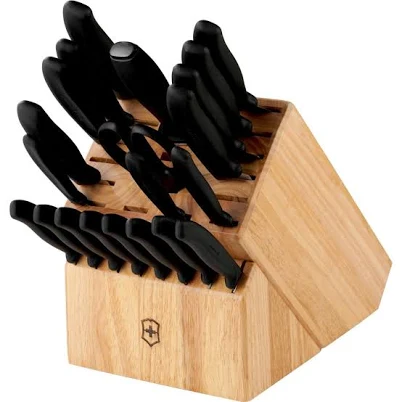
- Stainless steel blades; wood, plastic, or composite handles
- We found no PFAS statement from the brand
- Wood handle degradation and moisture damage
2 hazards checked on this product, all on its full breakdown.
Find an alternative on Amazon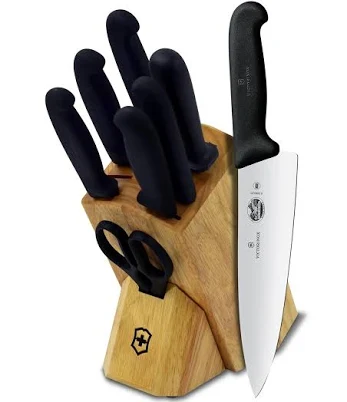
- Stainless steel blades, Fibrox composite handles
- We found no PFAS statement from the brand
- Polymer leaching (Fibrox composite)
3 hazards checked on this product, all on its full breakdown.
Find an alternative on Amazon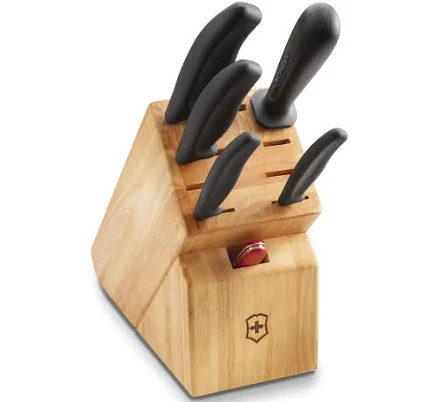
- Stainless steel blades, hardwood handles
- We found no PFAS statement from the brand
- Wood handle microbial contamination and moisture damage
2 hazards checked on this product, all on its full breakdown.
Find an alternative on AmazonMore non-stick knife sets grades
How we score, every product runs through the same public 0-100 rubric based on materials, coatings, brand disclosure, lab findings, and recalls. See the full methodology → Spotted a mistake? Report an error.