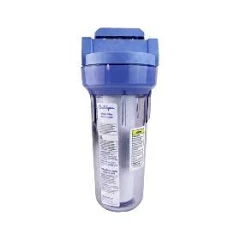
Culligan · Whole-House Filters
Culligan Whole House Water Filter System
Lower PFAS concern for the filter media itself, but housing materials leave moderate uncertainty.
Culligan's whole-house filters use activated carbon and ion-exchange resins, materials with lower inherent PFAS risk. However, the brand does not disclose PFAS status or provide third-party verification.
We flunk more products than we pass. This one earned its grade. How we grade
Material
Activated carbon and ion-exchange resin filter media; plastic/polymer housing
Lab data
No public lab test
You may also be interested in
Top-graded picks in the categories readers replace first, every one scored on the same rubric.

Aquasure
Premier Series 75 GPD Under Sink Reverse Osmosis Water Filtration System
- RO membrane, carbon filters, stainless steel housing
- We found no PFAS statement from the brand
- Bacterial and microbial growth in housing and filters
4 hazards checked on this product, all on its full breakdown.

Avocado
Vegan Mattress
- organic cotton, natural latex, coconut coir, recycled steel coils
- The brand calls it PFAS-free, which we have not verified
- Heavy metals
2 hazards checked on this product, all on its full breakdown.

- polyurethane foam
- We found no PFAS statement from the brand
- Volatile Organic Compound (VOC) Off-Gassing
4 hazards checked on this product, all on its full breakdown.
What Culligan Whole House Water Filter System is made of, ingredients and materials
Culligan whole-house filters use activated carbon (porous form of carbon that traps contaminants via adsorption) and ion-exchange resin (plastic beads that swap dissolved minerals and ions). Both are inert, non-leaching materials when functioning as intended. The housing is thermoplastic polymer (typically polypropylene or polyethylene). Activated carbon does not release harmful compounds into water under normal conditions; ion-exchange resin is food-contact approved in the US but can shed microscopic resin particles if the unit is old or pressurized beyond specification.
What’s concerning
No PFAS disclosure
No public statement from the brand about PFAS in this product.
Plastic housing leachables
Thermoplastic polymer housing can leach trace amounts of residual monomers or additives (e.g., BPA from polycarbonate, phthalates from PVC) under prolonged water contact or elevated temperature, though Culligan's standard PP/PE housing is lower-risk than older polycarbonate designs. No recalls or complaints specific to Culligan housing leaching have been documented in public records.
Ion-exchange resin shedding
Aged or overpressurized resin can fragment and release microscopic particles into treated water. This is a systemic risk in all ion-exchange systems, not specific to Culligan, but occurs more rapidly if cartridges are not replaced on schedule or if inlet water pressure exceeds specifications.
Bacterial regrowth in filter media
Stagnant activated carbon and resin cartridges can harbor biofilm and bacterial colonies between replacement cycles, particularly if the system sits unused for weeks. This is a maintenance hazard rather than a manufacturing defect; it is mitigated by timely cartridge changes and system flushing.
Contaminant breakthrough if filter is undersized or clogged
If a Culligan system is undersized for household flow rate or cartridge replacement is delayed, treated water may bypass filtration without adequate contact time with carbon/resin. This is not a design flaw but a usage error; proper system sizing and maintenance windows minimize this risk.
PFAS
Culligan does not publicly disclose whether its standard carbon cartridges remove PFOA, PFOS, or other PFAS "forever chemicals". Carbon can remove some PFAS if the resin is specifically engineered for it, but generic activated carbon performance is unpredictable. Homeowners concerned about PFAS exposure should request performance data or opt for a system with certified PFAS removal clai
Source, ATSDR ↗What’s reassuring
Base material not linked to PFAS
The main material recorded for this product is not one associated with PFAS.
How is this PFAS grade calculated?
The brand's record and disclosure
Culligan is a privately held water treatment company with no major product recalls related to housing toxicity or resin shedding on public record. The brand does not publish detailed third-party testing results or transparency reports on housing polymer composition or PFOA/PFOS removal rates. Culligan markets systems as NSF/ANSI 42 (aesthetic) and NSF/ANSI 53 (health claims) certified in many models, but certification applies to filtration performance, not housing safety. No documented brand position on PFAS removal.
How it compares in its category
Whole-house filters typically use similar carbon and resin technology; Culligan is a mainstream provider with broad availability. Competitors (3M Aqua-Pure, GE, Pentair) follow comparable material standards. Key differentiator is filter replacement frequency and housing durability; Culligan's modular design allows cartridge swaps without full system replacement, reducing waste. No evidence that Culligan's housing or media degrades faster or slower than peer brands under normal residential use.
If you buy it
Replace filter cartridges every 6 to 12 months depending on water quality and household usage; delayed replacement increases bacterial growth risk in spent media and can allow resin shedding if pressure ratings are exceeded. Inspect the plastic housing annually for cracks, discoloration, or mineral buildup; degraded housing can allow bypass or leaching of breakdown products. Ensure water pressure entering the system does not exceed the unit's rating (typically 80 to 100 psi), as overpressure degrades resin integrity and seals. Request NSF certification documentation at purchase to confirm the model covers contaminants of concern in your area.
What is not known about PFAS in this product?
- Basis
- Model estimate, 62% confidence, not a lab result
- Lab test
- None on record for this exact product
- Brand statement
- Culligan has made a specific claim
Formulations change between production runs, so check the current label. How we grade.
More whole-house filters grades
How we score, every product runs through the same public 0-100 rubric based on materials, coatings, brand disclosure, lab findings, and recalls. See the full methodology → Spotted a mistake? Report an error.