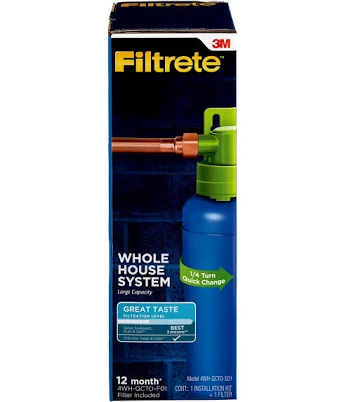
Filtrete · Whole-House Filters
Filtrete 4WH-QCTO-S01 Whole House Filter System
Lower-concern filter type, but 3M's PFAS silence on water filtration products warrants caution.
The Filtrete whole-house system uses standard activated carbon and sediment filtration, materials not typically associated with intentional PFAS use. However, 3M makes no public PFAS commitment for this line.
We flunk more products than we pass. This one earned its grade. How we grade
Material
Activated carbon and sediment filter media
Brand disclosure
Brand is silent on PFAS
Lab data
No public lab test
You may also be interested in
Top-graded picks in the categories readers replace first, every one scored on the same rubric.

Aquasure
Premier Series 75 GPD Under Sink Reverse Osmosis Water Filtration System
- RO membrane, carbon filters, stainless steel housing
- We found no PFAS statement from the brand
- Bacterial and microbial growth in housing and filters
4 hazards checked on this product, all on its full breakdown.

Avocado
Vegan Mattress
- organic cotton, natural latex, coconut coir, recycled steel coils
- The brand calls it PFAS-free, which we have not verified
- Heavy metals
2 hazards checked on this product, all on its full breakdown.

- polyurethane foam
- We found no PFAS statement from the brand
- Volatile Organic Compound (VOC) Off-Gassing
4 hazards checked on this product, all on its full breakdown.
What Filtrete 4WH-QCTO-S01 Whole Filter System is made of, ingredients and materials
The Filtrete 4WH-QCTO-S01 uses activated carbon and sediment filter media, which are inert, non-leaching materials designed to trap contaminants rather than release them. Activated carbon is a processed form of charcoal with high porosity, stable at room temperature and in contact with water; sediment media (typically spun polypropylene) do not degrade into the water stream under normal residential pressure. This product class has no documented history of leaching heavy metals, BPA, or volatile organic compounds into filtered water.
What’s concerning
No PFAS disclosure
No public statement from the brand about PFAS in this product.
Bacterial biofilm growth in filter housing
If cartridges are not replaced on schedule or if the system sits unused for extended periods, stagnant water in the housing can support microbial growth; regular maintenance and prompt replacement prevent this.
Activated carbon dust or fines entering water
A new or damaged cartridge may shed fine carbon particles initially; flushing the system for 5-10 minutes before use mitigates this minor aesthetic issue, which poses no health hazard.
Pressure vessel structural failure or seal degradation
Over time, seals and gaskets in the housing can wear; inspect visibly for leaks or reduced pressure annually and replace seals if needed to prevent water bypass around the filter media.
PFAS
3M has not published removal rates for PFOA/PFOS or other PFAS compounds for the 4WH-QCTO-S01; activated carbon can adsorb some PFAS, but without third-party validation, effectiveness is uncertain.
Source, ATSDR ↗What’s reassuring
Base material not linked to PFAS
The main material recorded for this product is not one associated with PFAS.
Polypropylene housing leachables under elevated temperature or pressure
The filter housing is typically polypropylene, which is stable at standard residential water temperatures (below 140F) and pressures. No documented cases of BPA or phthalate leaching from Filtrete housings in normal use.
How is this PFAS grade calculated?
The brand's record and disclosure
3M manufactures the Filtrete line and has NSF/ANSI certification for sediment and chlorine reduction on many models, which is a positive third-party validation. However, 3M has faced scrutiny over PFAS manufacturing legacy and has not published transparent claims about PFAS removal rates for this specific whole-house model, which creates ambiguity for consumers concerned about emerging contaminants. The brand's silence on PFAS performance is a disclosure weakness, not evidence of failure, but it contrasts with competitors who explicitly test for PFOA/PFOS.
How it compares in its category
Whole-house activated carbon filters have lower concern for leaching compared to reverse osmosis membranes (which can accumulate bacterial biofilm) or ion-exchange resins (which require regeneration chemicals) because the media itself is inert. The Filtrete system sits mid-range in the category, NSF certified, widely available, but less transparent on emerging contaminant removal than premium brands like Aquasana or Whole House Water Filter. Replacement cartridge availability and cost are typical for 3M products, making long-term maintenance easier than boutique systems.
If you buy it
Replace filter cartridges every 6-12 months depending on water quality and household use; activated carbon becomes saturated and loses effectiveness, and delayed replacement increases risk of bacterial biofilm in the housing. Ensure installation by a qualified plumber to avoid cross-contamination or back-pressure issues that stress seals. Monitor water flow and pressure; a drop signals cartridge saturation. Store unused cartridges in a dry, cool place; exposure to humidity can compromise carbon's absorption capacity.
What is not known about PFAS in this product?
- Basis
- Model estimate, 72% confidence, not a lab result
- Lab test
- None on record for this exact product
- Brand statement
- Filtrete has made none
Formulations change between production runs, so check the current label. How we grade.
More whole-house filters grades
How we score, every product runs through the same public 0-100 rubric based on materials, coatings, brand disclosure, lab findings, and recalls. See the full methodology → Spotted a mistake? Report an error.