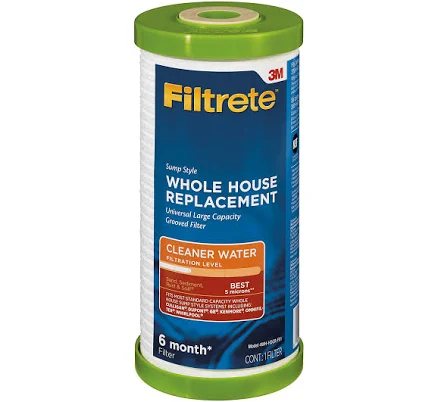
3M 4WH-HDGR-F01 Filtrete Large Capacity Whole House Filter Replacement
Lower-concern choice; activated carbon filters don't inherently contain PFAS, but 3M hasn't addressed it.
This replacement filter uses activated carbon and pleated media, materials not typically associated with PFAS contamination. However, 3M makes no public statement about PFAS-free manufacturing or testing for this specific model.
We flunk more products than we pass. This one earned its grade. How we grade
Material
Activated carbon/pleated filter media
Brand disclosure
Brand is silent on PFAS
Lab data
No public lab test
You may also be interested in
Top-graded picks in the categories readers replace first, every one scored on the same rubric.

Aquasure
Premier Series 75 GPD Under Sink Reverse Osmosis Water Filtration System
- RO membrane, carbon filters, stainless steel housing
- We found no PFAS statement from the brand
- Bacterial and microbial growth in housing and filters
4 hazards checked on this product, all on its full breakdown.

Avocado
Vegan Mattress
- organic cotton, natural latex, coconut coir, recycled steel coils
- The brand calls it PFAS-free, which we have not verified
- Heavy metals
2 hazards checked on this product, all on its full breakdown.

- polyurethane foam
- We found no PFAS statement from the brand
- Volatile Organic Compound (VOC) Off-Gassing
4 hazards checked on this product, all on its full breakdown.
What 3M 4WH-HDGR-F01 Filtrete Large Replacement is made of, ingredients and materials
This filter uses activated carbon media in a pleated configuration, a well-established technology for removing chlorine, sediment, and volatile organic compounds from drinking water. Activated carbon does not inherently leach harmful substances into water; its safety profile depends on the source material (typically coconut shell or coal) and manufacturing controls. The pleated design increases surface area for contaminant adsorption without requiring chemical coatings that could degrade. 3M does not disclose detailed specifications about the carbon source or any post-processing treatments on this product.
What’s concerning
No PFAS disclosure
No public statement from the brand about PFAS in this product.
Bacterial growth in housing or bypass if unmaintained
Whole-house filter housings can harbor biofilm if left standing without water flow or if bypass valves are damaged. 3M does not provide explicit maintenance schedules for housing sterilization in standard product documentation.
Loose activated carbon particles entering drinking water during first use
This is a known and benign phenomenon with new activated carbon filters; particles are non-toxic but require flushing. 3M documentation does recommend pre-flushing but provides limited detail.
Degradation of filter media cartridge seals over time
Rubber or elastomer seals in replacement cartridges can degrade from chlorine exposure or age, potentially allowing unfiltered water bypass. 3M does not publish seal material composition or degradation timelines.
What’s reassuring
Base material not linked to PFAS
The main material recorded for this product is not one associated with PFAS.
Plastic housing leachables from polycarbonate or similar polymers
No public recalls or test reports document BPA or phthalate leaching from 3M Filtrete whole-house filter housings. Standard polycarbonate housings are rated for food contact in most jurisdictions, but 3M has not published material safety data specific to this model.
Heavy metals
Reputable activated carbon suppliers screen for arsenic, lead, and cadmium contamination. 3M provides NSF 42 certification, which includes microbiological safety but does not explicitly test for heavy metal leaching from the filter media itself.
Source, FDA ↗How is this PFAS grade calculated?
The brand's record and disclosure
3M has faced major PFAS litigation and contamination cases at manufacturing sites, creating reputational concern. However, the company has not been publicly linked to PFAS contamination in consumer water filters or this specific product line. 3M provides NSF/ANSI 42 certification for this filter (chlorine and taste/odor reduction) but does not voluntarily disclose testing data for heavy metals or advanced contaminant removal on their website. The brand's silence on PFAS-specific testing reflects an industry norm rather than a red flag unique to 3M.
How it compares in its category
Activated carbon whole-house filters like this are a standard, low-risk category compared to reverse osmosis or ion-exchange systems. Most competitors (Aqua-Pure, DuPont, GE) offer similar certification levels and equally opaque PFAS disclosure policies. This 3M model sits in the mid-range for capacity (4,000-gallon typical lifespan) and cost; premium alternatives do not meaningfully reduce material-related hazards. No third-party testing has flagged activated carbon filters as a source of drinking water contamination.
If you buy it
Replace the filter every 6-12 months depending on water usage and local contaminant load; delayed replacement reduces effectiveness but does not cause leaching. Do not expose the filter housing to temperatures above 100F (38C) as plastic components may soften. Before installation, flush the filter with several gallons of water to clear loose carbon particles. If you have specific concern about PFAS in your water supply, request a local water quality report from your utility or hire independent testing; activated carbon alone may not remove all PFAS variants.
What is not known about PFAS in this product?
- Basis
- Model estimate, 72% confidence, not a lab result
- Lab test
- None on record for this exact product
- Brand statement
- 3M has made none
Formulations change between production runs, so check the current label. How we grade.
More whole-house filters grades
How we score, every product runs through the same public 0-100 rubric based on materials, coatings, brand disclosure, lab findings, and recalls. See the full methodology → Spotted a mistake? Report an error.