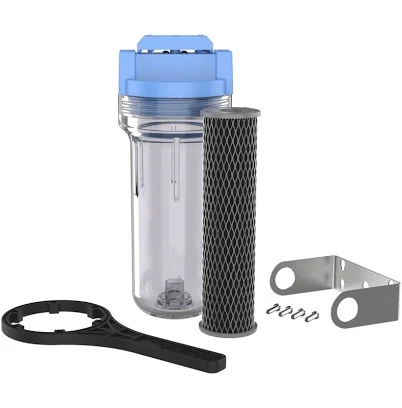
Pentair 3/4" Inlet 5 gpm Whole House Water Filter System U25-S-S18
Lower-concern for PFAS; standard water filter media typically not PFAS-containing, no Pentair transparency.
The Pentair U25-S-S18 is a straightforward carbon or sediment water filter with no disclosed PFAS treatment, Teflon-family coating coatings, or water-repellent finishes. Activated carbon and polypropylene filter housings are lower-risk materials.
We flunk more products than we pass. This one earned its grade. How we grade
Material
Activated carbon and sediment filter media; polypropylene/polyester housing components
Brand disclosure
Brand is silent on PFAS
Lab data
No public lab test
You may also be interested in
Top-graded picks in the categories readers replace first, every one scored on the same rubric.

Aquasure
Premier Series 75 GPD Under Sink Reverse Osmosis Water Filtration System
- RO membrane, carbon filters, stainless steel housing
- We found no PFAS statement from the brand
- Bacterial and microbial growth in housing and filters
4 hazards checked on this product, all on its full breakdown.

Avocado
Vegan Mattress
- organic cotton, natural latex, coconut coir, recycled steel coils
- The brand calls it PFAS-free, which we have not verified
- Heavy metals
2 hazards checked on this product, all on its full breakdown.

- polyurethane foam
- We found no PFAS statement from the brand
- Volatile Organic Compound (VOC) Off-Gassing
4 hazards checked on this product, all on its full breakdown.
What Pentair 3/4" Inlet 5 gpm System U25-S-S18 is made of, ingredients and materials
This unit uses activated carbon and sediment filter media housed in polypropylene and polyester components. Activated carbon is an inert, non-leaching filtration substrate that does not degrade into the water under normal use conditions. Polypropylene housing is chemically stable at room temperature and does not leach plasticizers like BPA or phthalates into water when properly maintained. The 5 gpm flow rate and sediment pre-filtration suggest this is designed for municipal or well water with moderate particulate load, not industrial or severely contaminated sources.
What’s concerning
No PFAS disclosure
No public statement from the brand about PFAS in this product.
Bacterial growth and biofilm in unmaintained filter housing
Whole-house carbon filters are not sterile environments; if cartridges are not replaced on schedule or the system sits unused for extended periods, bacteria can colonize the housing interior. This is not a manufacturing defect but a maintenance failure, adherence to replacement intervals and regular use prevents this.
Carbon media dust or fines in water after installation
New activated carbon cartridges can shed fine black particles during initial use. This is cosmetic and harmless but common; flushing the system before use (per manufacturer instructions) removes most fines. Some users report residual dust in first few glasses of water; this does not pose a documented health risk.
Lead
If sediment load in incoming water is higher than expected, the pre-filter can become clogged before the carbon cartridge is exhausted, potentially causing water to bypass the filter media or restricting flow. This is a performance issue rather than a safety issue unless bypass goes unnoticed and contaminated water enters the home.
Source, ATSDR ↗PFAS
Standard activated carbon filters are not marketed as PFAS-removing systems and have limited to no proven efficacy against PFAS "forever chemicals". If PFAS contamination is a concern in your water supply, this filter alone will not address it; point-of-use reverse-osmosis or specialized ion-exchange cartridges are required.
Source, ATSDR ↗What’s reassuring
Base material not linked to PFAS
The main material recorded for this product is not one associated with PFAS.
Polypropylene housing leaching under elevated temperature or pressure stress
Polypropylene is stable at typical household water temperatures (up to 60°C / 140°F) and standard municipal pressures. No documented leaching of additives or degradation products from Pentair polypropylene housings under normal use; risk is present only if housing is exposed to sustained heat above manufacturer spec or mechanical stress.
How is this PFAS grade calculated?
The brand's record and disclosure
Pentair is a large water treatment manufacturer with NSF certifications for many product lines, though specific third-party certification status for the U25-S-S18 model is not universally documented in public resources. The company has no widely publicized recalls or safety controversies specific to this filter model. However, Pentair does not proactively disclose filter media sourcing, activated carbon origin, or PFAS removal claims in marketing materials, a silence that is common across the category but leaves questions about media quality and contaminant specification unanswered.
How it compares in its category
Whole-house carbon filters of this size and price point are standard, entry-level systems; competitors include models from 3M, Aqua-Pure, and Home Depot house brands. The U25-S-S18 is not a reverse-osmosis or ion-exchange system, so it removes chlorine, sediment, and some volatile organic compounds but not dissolved minerals, salts, or most pharmaceuticals. This makes it suitable for taste/odor/chlorine reduction but not for hardness or nitrate removal, a key limitation to understand upfront.
If you buy it
Replace cartridges every 6 to 12 months depending on incoming water quality and usage (higher sediment load requires faster replacement). Do not allow the filter housing to freeze, as polypropylene can become brittle. Inspect the housing and connections for cracks or leaks quarterly; any visible degradation should trigger replacement. Follow the manufacturer's flush procedure after installation to clear carbon dust before use. If you notice water pressure drop below acceptable levels or water odor/taste returns despite recent cartridge replacement, change the cartridge immediately rather than attempting to regenerate or clean it.
What is not known about PFAS in this product?
- Basis
- Model estimate, 72% confidence, not a lab result
- Lab test
- None on record for this exact product
- Brand statement
- Pentair has made none
Formulations change between production runs, so check the current label. How we grade.
More whole-house filters grades
How we score, every product runs through the same public 0-100 rubric based on materials, coatings, brand disclosure, lab findings, and recalls. See the full methodology → Spotted a mistake? Report an error.