
Gap Women's Bandeau Bikini Top
Lower concern for basic swimwear without water-repellent, but no disclosure.
A basic bandeau in standard nylon/spandex typically requires no water-repellent coating for basic swimwear. Gap provides no public information about PFAS use or avoidance.
The better-graded swap
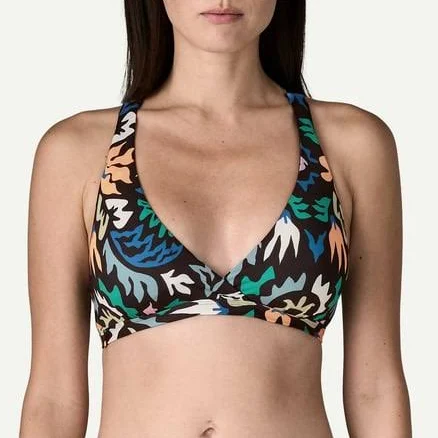
Patagonia
Patagonia Women's Bottom Turn Racerback Bikini Top
90/100 safety
Same rubric that flunked this product. The swap earned Excellent.
Still want this one anyway? Check the price on Amazon. We’d swap it.
Material
Nylon/spandex blend (typical swimwear)
Brand disclosure
Brand is silent on PFAS
Lab data
No public lab test
What Gap Women's Bandeau Bikini Top is made of, ingredients and materials
This bandeau top is a nylon and spandex (elastane) blend, the industry standard for swimwear construction. Nylon is a synthetic polymer with no inherent toxicity concerns at normal wear temperatures, and spandex provides stretch without chemical instability. The blend does not typically require water-repellent coatings, which is where PFAS contamination most commonly occurs in textiles. No evidence suggests Gap applies heavy chemical finishes to basic bandeau styles.
What’s concerning
Category baseline
The starting point for this type of product, before anything specific to this product is counted.
No PFAS disclosure
No public statement from the brand about PFAS in this product.
Azo dyes and colorfast stability
Nylon accepts azo dyes readily; Gap does not disclose dye supplier or compliance with restricted azo standards (GOTS, Oeko-Tex). Risk is primarily skin irritation in sensitive individuals or color bleeding in early washes, not systemic toxicity.
Spandex degradation products
Spandex breaks down under UV, chlorine, and heat into oligomers that may irritate skin in people with sensitivities. No documented recalls, but this is a known limitation of the material itself rather than Gap-specific manufacturing.
Allergic reaction to material or dyes
Spandex and synthetic dyes can trigger contact dermatitis in individuals with latex or synthetic sensitivities. This is material-class inherent rather than brand-specific; testing for personal fit is the only mitigation.
What’s reassuring
Base material not linked to PFAS
The main material recorded for this product is not one associated with PFAS.
Heavy metals
No recalls or testing available for Gap bandeau tops. Nylon and spandex dyes may contain trace metals (copper, chromium), but levels in finished swimwear are not documented as unsafe under normal use.
Source, FDA ↗Formaldehyde / VOCs
Gap does not apply formaldehyde-based wrinkle-resistant finishes to swimwear (irrelevant to this product category). No evidence of non-standard finishing processes.
Source, ATSDR ↗The full breakdown
The brand's record and disclosure
Gap Inc. does not publicly disclose chemical processing details or third-party testing for individual garment lines. The company has faced scrutiny over labor practices and sustainability reporting but has no established recalls or safety violations specific to chemical hazards in swimwear. Gap holds no prominent certifications (like Oeko-Tex or Bluesign) for this product line, reflecting an industry-wide norm for fast-fashion basics rather than a specific red flag.
How it compares in its category
Gap's bandeau sits in the mid-market swimwear segment. It offers no material advantage or disadvantage versus competitors like Target, Aerie, or H&M basics, which use identical nylon/spandex blends without disclosed chemical finishes. Premium brands (Lululemon, Summersalt) often provide greater transparency and stricter material standards, while discount fast-fashion may use more aggressive dye processes, though documented differences are limited.
If you buy it
Rinse thoroughly in fresh water after each saltwater or chlorine use to remove residues that degrade elastic fibers. Wash in cool water with mild detergent and air-dry flat; avoid high heat and direct sunlight, which weaken spandex. Replace when elastic loses tension (typically 1-2 years with regular use) rather than pushing degraded fabric. Do not tumble dry or use fabric softeners, which accelerate breakdown.
What we don’t know
- Basis
- Model estimate, 72% confidence, not a lab result
- Lab test
- None on record for this exact product
- Brand statement
- Gap has made none
Formulations change between production runs, so check the current label. How we grade.
Better-graded alternatives in Swimwear
Patagonia
Women's Bottom Turn Racerback Bikini Top
- Nylon/polyester blend with elastane (standard swimwear)
- The brand calls it PFAS-free, which we have not verified
- Elastane (spandex) degradation under heat or chlorine
More swimwear grades
How we score, every product runs through the same public 0-100 rubric based on materials, coatings, brand disclosure, lab findings, and recalls. See the full methodology → Spotted a mistake? Report an error.