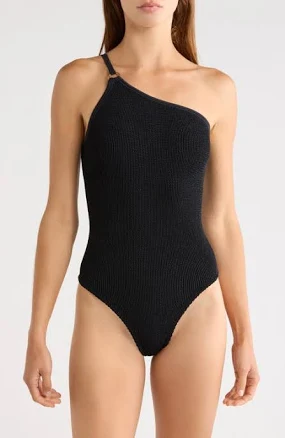
Hunza G Clara One-Shoulder Swimsuit
Reduced risk; standard synthetic swim fabric without reported water-repellent coating treatment.
Hunza G's Clara is a nylon-elastane blend with no disclosed stain or water-repellent treatment, reducing PFAS concern compared to technical apparel. Brand silence on PFAS mirrors typical swimwear industry practice.
The better-graded swap
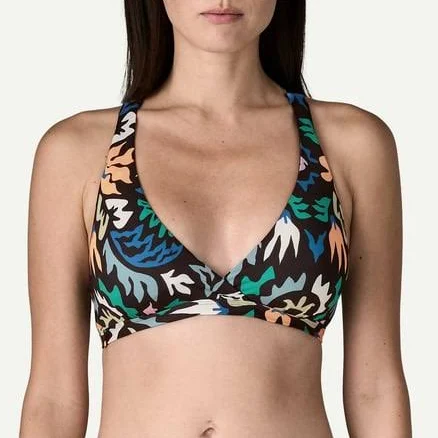
Patagonia
Patagonia Women's Bottom Turn Racerback Bikini Top
90/100 safety
Same rubric that flunked this product. The swap earned Excellent.
Still want this one anyway? Check the price on Amazon. We’d swap it.
Material
Nylon elastane blend (swimsuit fabric)
Brand disclosure
Brand is silent on PFAS
Lab data
No public lab test
What Hunza G Clara One-Shoulder Swimsuit is made of, ingredients and materials
The Clara One-Shoulder is constructed from nylon and elastane (spandex), a common high-performance swimwear blend. Nylon provides durability and water resistance; elastane adds stretch and recovery. Unlike some technical swimwear, there is no public record of this garment receiving water-repellent (water-repellent coating) finish, which would introduce PFAS or other chemical coatings. The weave is tightly engineered to reduce chlorine absorption and pilling, typical of premium swim fabric.
What’s concerning
Category baseline
The starting point for this type of product, before anything specific to this product is counted.
No PFAS disclosure
No public statement from the brand about PFAS in this product.
Elastane degradation and microfiber shedding
All elastane garments shed microscopic fibers with wear and washing; this is a material property, not a brand defect. Hunza G does not claim special anti-shedding treatment, so standard fiber release is expected.
Allergens in elastic components
Elastane itself is hypoallergenic, but synthetic rubber fillers or accelerants used in elastane production may trigger contact dermatitis in sensitive individuals. Hunza G does not disclose elastane supplier or accelerant chemistry.
What’s reassuring
Base material not linked to PFAS
The main material recorded for this product is not one associated with PFAS.
Azo dyes (colorfast release)
No public testing or recalls identify azo dyes or non-colorfast dyes in Hunza G swimwear. Nylon typically accepts dyes well, but brand does not disclose whether low-heavy-metal or restricted-substance dyes are used.
Heavy metals
No test data or recalls on file for lead, cadmium, or antimony in Hunza G swim fabric. The brand's premium positioning suggests responsible sourcing, but lack of OEKO-TEX or similar certification prevents independent confirmation.
Source, FDA ↗Formaldehyde / VOCs
Nylon-elastane blends rarely require formaldehyde resin cross-linking for durability. No public record of formaldehyde concerns in Hunza G swimwear; the risk is lower than in cotton or linen apparel.
Source, ATSDR ↗The full breakdown
The brand's record and disclosure
Hunza G does not publicly disclose detailed chemical composition, manufacturing standards, or third-party certifications (such as OEKO-TEX or GOTS). The brand markets sustainable practices but does not transparently detail testing for heavy metals, azo dyes, or restricted substances. No major chemical safety recalls or violations are recorded for Hunza G products in public databases. This silence on disclosure is typical of contemporary luxury swimwear brands but limits independent verification of lower-tier chemical hazards.
How it compares in its category
Most premium nylon-elastane swimwear (Eres, Solid and Striped, Lenny Niemeyer) operates under similar opacity regarding chemical testing. Hunza G's choice to avoid water-repellent coating treatment results in lower concern compared to technical/athletic swimwear that uses fluorinated coatings. The one-shoulder silhouette carries no additional chemical or durability risk compared to standard cuts. Price point and brand positioning suggest quality dyeing and finishing, though batch-to-batch variability in manufacture cannot be ruled out without testing.
If you buy it
Rinse the swimsuit in cold fresh water immediately after seawater or chlorine exposure to reduce salt and chlorine buildup, which accelerates elastane degradation. Wash by hand in cool water with gentle detergent; avoid bleach and fabric softener, which degrade the elastic fibers. Air dry flat or on a hanger; do not tumble dry or expose to direct heat, which weakens elastane recovery. Replace after 2 to 3 years of regular use, or sooner if elastane loses recovery (sagging, bagging at seams).
What we don’t know
- Basis
- Model estimate, 72% confidence, not a lab result
- Lab test
- None on record for this exact product
- Brand statement
- Hunza G has made none
Formulations change between production runs, so check the current label. How we grade.
Better-graded alternatives in Swimwear
Patagonia
Women's Bottom Turn Racerback Bikini Top
- Nylon/polyester blend with elastane (standard swimwear)
- The brand calls it PFAS-free, which we have not verified
- Elastane (spandex) degradation under heat or chlorine
More swimwear grades
How we score, every product runs through the same public 0-100 rubric based on materials, coatings, brand disclosure, lab findings, and recalls. See the full methodology → Spotted a mistake? Report an error.