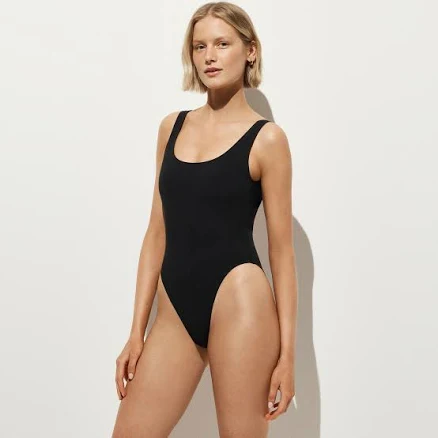
J.Crew Women's Claudia One-piece Swimsuit
High PFAS risk. Skip until J.Crew discloses water-repellent coating chemistry or commits to PFAS-free.
The Claudia swimsuit has synthetic textiles with a water-repellent coating treatment, a category historically tied to PFAS use. J.Crew doesn't disclose the water-repellent coating chemistry or make any PFAS commitment.
The better-graded swap
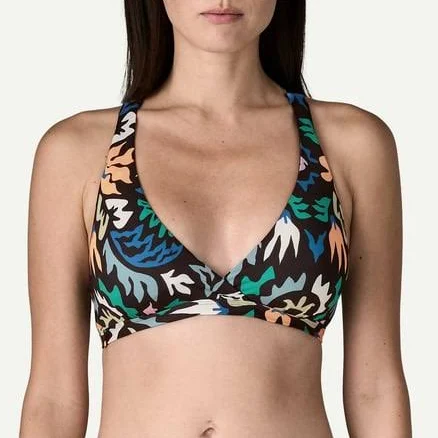
Patagonia
Patagonia Women's Bottom Turn Racerback Bikini Top
90/100 safety
Same rubric that flunked this product. The swap earned Excellent.
Still want this one anyway? Check the price on Amazon. We’d swap it.
Material
Nylon/polyester blend with water-repellent coating finish
Brand disclosure
Brand is silent on PFAS
Lab data
No public lab test
You may also be interested in
Top-graded picks in the categories readers replace first, every one scored on the same rubric.

- polypropylene filter housing, carbon/sediment cartridge
- We found no PFAS statement from the brand
- Bacterial growth in spent cartridges
3 hazards checked on this product, all on its full breakdown.

Aquasure
Premier Series 75 GPD Under Sink Reverse Osmosis Water Filtration System
- RO membrane, carbon filters, stainless steel housing
- We found no PFAS statement from the brand
- Bacterial and microbial growth in housing and filters
4 hazards checked on this product, all on its full breakdown.

Avocado
Vegan Mattress
- organic cotton, natural latex, coconut coir, recycled steel coils
- The brand calls it PFAS-free, which we have not verified
- Heavy metals
2 hazards checked on this product, all on its full breakdown.
What J.Crew Women's Claudia One-piece Swimsuit is made of, ingredients and materials
The Claudia swimsuit is a nylon/polyester blend, standard for athletic and one-piece construction because these synthetics are durable, stretch-resistant, and retain shape in chlorine and saltwater. The water-repellent coating (water-repellent coating) finish applied to the fabric is the chemical wildcard, water-repellent coating treatments historically relied on long-chain PFAS (perfluorooctane-based compounds) to create water beading. Nylon and polyester themselves are stable polymers with low leaching risk during normal wear, but the water-repellent coating degrades with washing and UV exposure, potentially shedding microfibers and any associated treatment chemicals into water.
What’s concerning
Category baseline
The starting point for this type of product, before anything specific to this product is counted.
No PFAS disclosure
No public statement from the brand about PFAS in this product.
Waterproof / stain-resistant treatment
Water-repellent coating treatments have historically used PFAS.
PFAS
Undisclosed water-repellent treatment likely contains fluorochemicals; J.J.Crew has made no public commitment to reducing PFAS in its products. Exposure during wear is minimal (dermal contact with finished fabric), but microfiber shedding during washing may transfer trace amounts to wastewater.
Source, ATSDR ↗Microplastic shedding
Nylon and polyester garments shed microfibers during washing; this is well-established for the material class but not unique to J.Crew. Frequency increases with machine washing and age. Shedding is not a direct health hazard to the wearer but contributes to aquatic microplastic pollution.
What’s reassuring
Azo dyes and color fastness
No specific recalls or test failures reported for J.Crew swimwear dyes. Nylon and polyester dyes are typically non-azo compliant in EU markets, but J.Crew does not publish dyestuff certifications. Risk is low in normal wear but increases if garment bleeds color excessively or is worn by individuals with severe dye sensitivities.
Formaldehyde / VOCs
No recalls or warnings issued for J.Crew swimwear formaldehyde. Nylon and polyester typically require minimal formaldehyde-releasing finishes compared to cotton, and any residual formaldehyde is usually removed in the first cold wash.
Source, ATSDR ↗Antimony in polyester
Polyester production sometimes involves antimony catalysts; residual antimony in finished garments is typically <0.5 ppm and is not classified as a concern during normal wear or laundering. J.Crew does not test for or disclose antimony content, but no health incidents are recorded for this brand's garments.
How is this PFAS grade calculated?
The brand's record and disclosure
J.Crew has not published a PFAS policy, chemical restriction list, or water-repellent coating chemistry disclosure for any garment as of available public records. The brand has not sought BLUESIGN, GOTS, or other textile certifications that typically include PFAS limits. J.Crew's parent company Tapestry Inc. has not committed to phasing PFAS from its supply chain, unlike competitors Patagonia and some Adidas lines. This silence means you cannot verify whether the Claudia uses legacy long-chain PFAS, newer but still persistent short-chain alternatives, or genuinely fluorine-free water repellents.
How it compares in its category
Most mainstream one-piece swimwear (Speedo, Land's End, Target athletic brands) carries identical water-repellent coating unknowns unless the brand specifies otherwise. Premium brands like Patagonia now market PFAS-free water-repellent coating or transparency on treatment. J.Crew's pricing (USD 78-98) sits mid-market but without the disclosure that justifies premium pricing. If water-repellent coating is critical for your use case (frequent saltwater, minimal wringing), the risk of hidden PFAS is higher here than with non-water-repellent alternatives or brands with published chemistry.
If you buy it
Wash in cool water (below 30 degrees Celsius) before first wear to remove loose finishing chemicals and excess dyes. Hand wash after each saltwater/chlorine exposure rather than machine wash, which degrades the water-repellent coating faster and releases more microfibers. Air dry away from direct heat or dryers, which can accelerate nylon and polyester degradation. Replace after 2-3 years or when the fabric loses elasticity or the water-repellent coating visibly stops beading water; do not attempt to re-treat at home with commercial water-repellent coating sprays, which often reintroduce PFAS.
What is not known about PFAS in this product?
- Basis
- Model estimate, 45% confidence, not a lab result
- Lab test
- None on record for this exact product
- Brand statement
- J.Crew has made none
Formulations change between production runs, so check the current label. How we grade.
What are the PFAS-free alternatives to J.Crew Women's Claudia One-piece Swimsuit?
- Nylon/polyester blend with elastane (standard swimwear)
- The brand calls it PFAS-free, which we have not verified
- Elastane (spandex) degradation under heat or chlorine
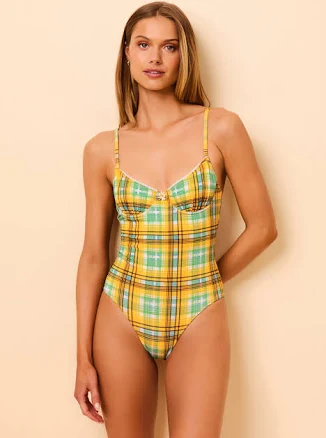
- Cotton/cotton-blend seersucker plaid
- We found no PFAS statement from the brand
- Azo dyes and colorfast stability
2 hazards checked on this product, all on its full breakdown.
Find an alternative on Amazon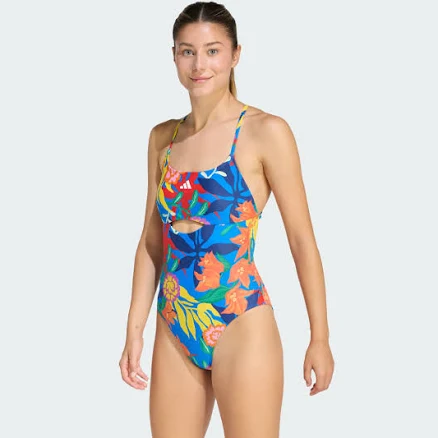
- Polyester/nylon swimsuit fabric, likely uncoated or standard finish
- Azo dyes and synthetic colorants
4 hazards checked on this product, all on its full breakdown.
Find an alternative on AmazonMore swimwear grades
How we score, every product runs through the same public 0-100 rubric based on materials, coatings, brand disclosure, lab findings, and recalls. See the full methodology → Spotted a mistake? Report an error.