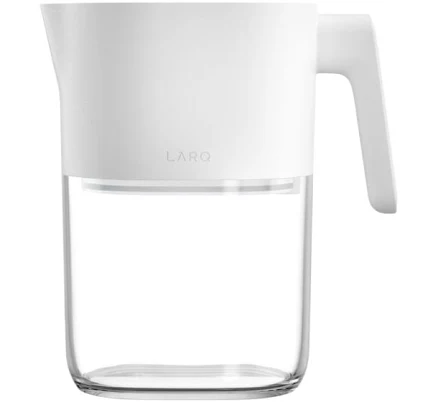
LARQ Pitcher
Low risk. Glass design avoids Teflon-family coating coatings entirely.
LARQ Pitcher features borosilicate glass with a replaceable carbon filter, materials less likely to contain PFAS than Teflon-family coating membranes. No brand PFAS testing disclosed.
We flunk more products than we pass. This one earned its grade. How we grade
Material
borosilicate glass pitcher, replaceable activated carbon filter
Lab data
No public lab test
You may also be interested in
Top-graded picks in the categories readers replace first, every one scored on the same rubric.

- polypropylene filter housing, carbon/sediment cartridge
- We found no PFAS statement from the brand
- Bacterial growth in spent cartridges
3 hazards checked on this product, all on its full breakdown.

Aquasure
Premier Series 75 GPD Under Sink Reverse Osmosis Water Filtration System
- RO membrane, carbon filters, stainless steel housing
- We found no PFAS statement from the brand
- Bacterial and microbial growth in housing and filters
4 hazards checked on this product, all on its full breakdown.

Avocado
Vegan Mattress
- organic cotton, natural latex, coconut coir, recycled steel coils
- The brand calls it PFAS-free, which we have not verified
- Heavy metals
2 hazards checked on this product, all on its full breakdown.
What LARQ Pitcher is made of, ingredients and materials
The LARQ Pitcher uses borosilicate glass, a chemically inert material that does not leach contaminants into water across normal temperature ranges. Borosilicate is specifically chosen for laboratory and food applications because of its thermal stability and resistance to corrosion. The replaceable activated carbon filter is the unknown component; LARQ does not publicly disclose the filter's binder materials, substrate composition, or whether it contains coconut shell, mineral, or synthetic carbon. No established data shows problematic leaching from typical activated carbon filters in this price category, but full transparency on filter composition remains absent.
What’s concerning
No PFAS disclosure
No public statement from the brand about PFAS in this product.
Bacterial growth in filter housing if unmaintained
Activated carbon filters in pitcher-style systems create moist chambers that harbor bacteria if not rinsed regularly. No recalls are on record for LARQ, but this is a category-wide hygiene risk inherent to all countertop pitchers.
Filter composition leachables (unspecified binders and media)
LARQ does not publicly disclose whether the activated carbon filter uses coal-based, coconut-based, or synthetic carbon, or what binders and substrate materials are present. Standard activated carbon has no hazard of this kind on record, but lack of transparency prevents independent assessment of filter quality.
Thermal shock cracking of borosilicate glass
While borosilicate is thermally resistant, rapid temperature swings (e.g., pouring boiling water into a cold pitcher) can initiate stress fractures. Broken glass poses laceration and ingestion risk.
Contaminant removal efficacy not independently verified
LARQ does not publish NSF certification or third-party testing results for contaminant removal rates. Activated carbon effectively removes chlorine and odor but effectiveness against heavy metals, bacteria, or emerging contaminants is unspecified and unverified.
What’s reassuring
Bare uncoated material
Recorded as a bare, uncoated material with no surface coating or treatment.
Microplastic shedding from filter media or gasket materials
No public reports of microplastics from LARQ pitchers or typical activated carbon filters in this category. However, replacement filters may contain small rubber or plastic gaskets whose durability under repeated use is not tested publicly.
How is this PFAS grade calculated?
The brand's record and disclosure
LARQ markets the pitcher as a sustainable alternative to bottled water and emphasizes the glass construction in product messaging. The company does not publicly disclose third-party NSF, WQA, or similar filtration certifications for this specific model, nor does it provide detailed testing reports on what contaminants the filter removes or to what standard. No major product recalls or contamination incidents are on public record. The brand's silence on filter material sourcing and manufacturing practices is consistent with many consumer filter brands but limits independent verification of supply-chain safety.
How it compares in its category
Countertop pitchers typically use plastic housings (polypropylene or similar) that can shed microplastics when heated or aged, or they employ borosilicate glass like LARQ. The glass design is a material advantage over plastic competitors, avoiding thermal leaching concerns. However, the activated carbon filter itself is not meaningfully different from standard replacement cartridges sold across brands; LARQ's main differentiation is aesthetic and marketing rather than filtration science. Pitchers in this segment rarely come with detailed contaminant-removal certifications, making performance claims difficult to independently validate.
If you buy it
Replace the activated carbon filter every 40-60 days or per manufacturer guidance, as exhausted carbon becomes a vector for bacterial growth and loses adsorption capacity. Rinse the glass pitcher and filter housing weekly with hot water to prevent mold accumulation in the filter chamber. Do not heat the pitcher on a stovetop; borosilicate glass is durable but thermal shock from rapid temperature changes can crack it. Store the pitcher in a cool, dry location away from direct sunlight to preserve filter effectiveness and prevent algal growth in standing water.
What is not known about PFAS in this product?
- Basis
- Model estimate, 72% confidence, not a lab result
- Lab test
- None on record for this exact product
- Brand statement
- LARQ has made a specific claim
Formulations change between production runs, so check the current label. How we grade.
More countertop filters grades
How we score, every product runs through the same public 0-100 rubric based on materials, coatings, brand disclosure, lab findings, and recalls. See the full methodology → Spotted a mistake? Report an error.