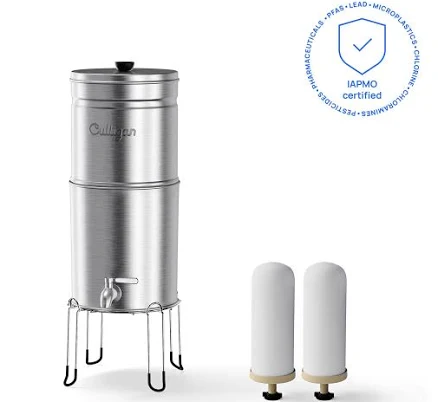
Culligan MaxClear Technology Gravity Countertop Water Filter System
Low risk. Standard filter materials, no known PFAS red flags.
Culligan's MaxClear uses standard activated carbon and ion-exchange media, materials with lower contamination risk than Teflon-family coating coatings. No PFAS disclosure exists.
We flunk more products than we pass. This one earned its grade. How we grade
Material
Activated carbon, ion exchange resin, polypropylene housing
Lab data
No public lab test
You may also be interested in
Top-graded picks in the categories readers replace first, every one scored on the same rubric.

- polypropylene filter housing, carbon/sediment cartridge
- We found no PFAS statement from the brand
- Bacterial growth in spent cartridges
3 hazards checked on this product, all on its full breakdown.

Aquasure
Premier Series 75 GPD Under Sink Reverse Osmosis Water Filtration System
- RO membrane, carbon filters, stainless steel housing
- We found no PFAS statement from the brand
- Bacterial and microbial growth in housing and filters
4 hazards checked on this product, all on its full breakdown.

Avocado
Vegan Mattress
- organic cotton, natural latex, coconut coir, recycled steel coils
- The brand calls it PFAS-free, which we have not verified
- Heavy metals
2 hazards checked on this product, all on its full breakdown.
What Culligan MaxClear Technology Filter System is made of, ingredients and materials
The MaxClear uses activated carbon and ion-exchange resin as the primary filtration media, housed in food-grade polypropylene. Activated carbon is inert and does not leach; ion-exchange resins (typically styrene-divinylbenzene polymers) are chemically stable when properly formulated and do not release monomers into water at neutral pH. Polypropylene housing is chemically resistant to cold water and does not migrate BPA or phthalates under normal use conditions. The gravity (non-pressurized) design eliminates mechanical stress that could accelerate polymer degradation.
What’s concerning
No PFAS disclosure
No public statement from the brand about PFAS in this product.
Bacterial growth in filter media and housing
All gravity filters rely on user maintenance; if cartridges are not replaced on schedule or the unit sits unused for extended periods, saprophytic bacteria (non-pathogenic but taste/odor forming) and rarely pathogenic organisms can colonize exhausted carbon. Polypropylene housing itself does not harbor pathogens but provides no antimicrobial barrier.
Activated carbon dust or fines in filtered water
New or recently replaced cartridges may release fine carbon particles for the first few uses; rinsing or discarding the first 1-2 pitchers of water after cartridge replacement is a common precaution. This is cosmetic and non-toxic but can affect taste and appearance.
Chlorine or chloramine taste/odor breakthrough
Activated carbon in gravity filters does not remove chloramine as effectively as chlorine; once carbon is exhausted, chloramine and some disinfection byproducts may pass through. This is a performance issue rather than a safety risk at municipal water levels, but signals that cartridge replacement is overdue.
What’s reassuring
Base material not linked to PFAS
The main material recorded for this product is not one associated with PFAS.
Polypropylene housing leachables (cold water only)
Polypropylene is chemically stable in cold water and does not release BPA, phthalates, or other endocrine disruptors under normal use. No documented incidents of leaching from Culligan gravity filter housings in the public record.
Ion-exchange resin breakdown or migration
High-quality ion-exchange resins used in certified filters do not break down or leach resin particles or monomers into treated water at neutral pH. The polypropylene housing and media containment screen prevent macro-particle escape. No recalls or complaints on record for this product line.
How is this PFAS grade calculated?
The brand's record and disclosure
Culligan is a large, established water-treatment company with NSF/ANSI certification claims on many products, though specific third-party certification status of this model should be verified on the product packaging or their website. The company does not publicly disclose PFAS testing data or remediation protocols for this gravity filter line, which is typical for consumer-grade filters but leaves uncertainty about influent PFAS screening. No major recalls or leaching incidents on record for this specific product or Culligan's gravity filter line.
How it compares in its category
Gravity countertop filters are among the lowest-risk filtration categories because they avoid pressurized plastic components and do not require electrical connections or heating. This model sits in the mid-to-standard tier of the gravity-filter market; it offers no special antimicrobial housing coating or specialty media claimed over typical Brita or Aquaphor designs. The polypropylene housing is standard across competitors; main differentiation is cartridge longevity and mineral-removal claims rather than material safety.
If you buy it
Replace the cartridge every 2-3 months or per manufacturer guidance to prevent bacterial biofilm accumulation inside depleted media; do not allow standing water in the unit for more than 48 hours. The filter is not rated for hot water; store and use only with cold tap water. Empty and rinse the housing weekly if used in warm environments (above 75F) to reduce algae or mold risk in the collection chamber. Do not attempt to clean or recharge the cartridge; disposable replacement is required for safety.
What is not known about PFAS in this product?
- Basis
- Model estimate, 72% confidence, not a lab result
- Lab test
- None on record for this exact product
- Brand statement
- Culligan has made a specific claim
Formulations change between production runs, so check the current label. How we grade.
What are the PFAS-free alternatives to Culligan MaxClear Technology Gravity Countertop Water Filter System?
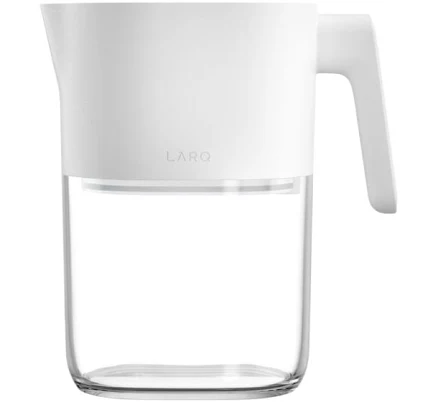
- borosilicate glass pitcher, replaceable activated carbon filter
- Bacterial growth in filter housing if unmaintained
4 hazards checked on this product, all on its full breakdown.
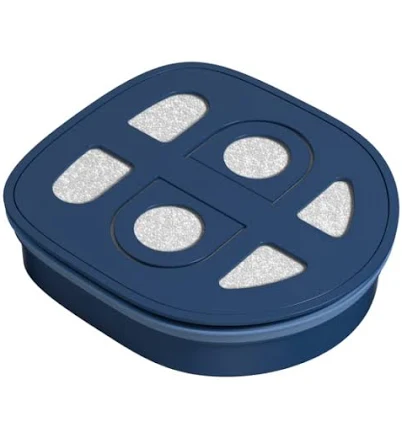
- Borosilicate glass pitcher, activated carbon filter cartridge
- Bacterial growth in filter cartridge
4 hazards checked on this product, all on its full breakdown.
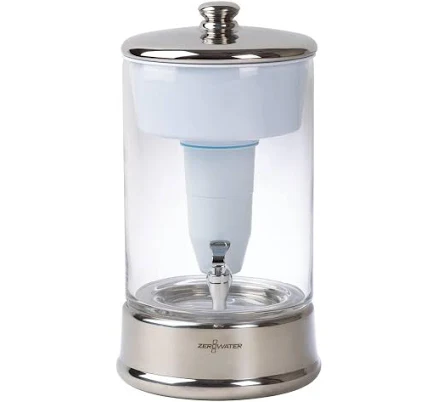
- borosilicate glass, plastic pitcher housing, ion-exchange resin cartridge
- Ion-exchange resin cartridge composition opacity
3 hazards checked on this product, all on its full breakdown.
More countertop filters grades
How we score, every product runs through the same public 0-100 rubric based on materials, coatings, brand disclosure, lab findings, and recalls. See the full methodology → Spotted a mistake? Report an error.