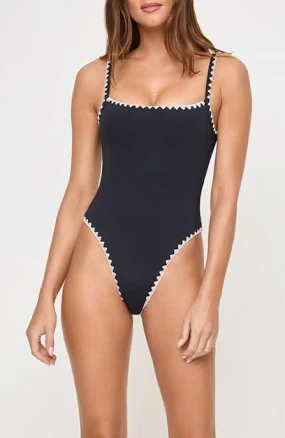
L*Space Nadia Blanket Stitch One Piece Swimsuit
Lower concern for typical swimwear; no PFAS-related treatments identified, but brand offers no transparency.
L*Space swimsuits are standard nylon/spandex blends without disclosed water-repellent coating or stain-resistant coatings, the primary PFAS exposure route in apparel. The brand makes no public claims about PFAS avoidance or testing.
The better-graded swap
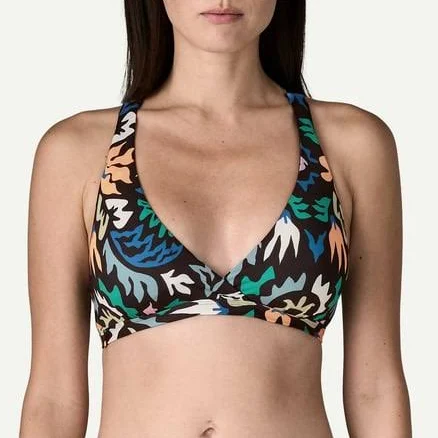
Patagonia
Patagonia Women's Bottom Turn Racerback Bikini Top
90/100 safety
Same rubric that flunked this product. The swap earned Excellent.
Still want this one anyway? Check the price on Amazon. We’d swap it.
Material
Nylon/polyamide blend (likely nylon 6 or nylon 6.6 base)
Brand disclosure
Brand is silent on PFAS
Lab data
No public lab test
What L*Space Nadia Blanket Stitch One Piece is made of, ingredients and materials
The Nadia is constructed from a nylon/polyamide blend (most likely nylon 6 or nylon 6.6), a thermoplastic polymer chosen for swimwear because of its durability, stretch recovery, and chlorine resistance compared to natural fibers. Nylon itself is chemically inert when properly stabilized and poses no known leaching hazard under normal wear and water exposure. The 'blanket stitch' construction refers to the seam finishing method, not a coating, so no additional topical treatments are typically applied that would introduce lead, cadmium, or heavy metal colorants.
What’s concerning
Category baseline
The starting point for this type of product, before anything specific to this product is counted.
No PFAS disclosure
No public statement from the brand about PFAS in this product.
Formaldehyde / VOCs
Nylon swimwear is typically dyed with reactive or acid dyes and may be treated with formaldehyde-based resin curing to improve color fastness and elasticity retention. LSpace does not disclose its dyeing or finishing process. No specific LSpace product recalls exist, but industry-standard nylon swimwear carries a low to moderate risk of residual formaldehyde and azo compound leaching into water
Source, ATSDR ↗Microplastic shedding
Nylon polyamide fibers shed microplastics during washing. Pilling and abrasion increase shedding rate over time. This is a material-class issue inherent to all nylon swimwear, not brand-specific; L*Space offers no innovation or statement on microfiber retention.
Allergic contact dermatitis from residual dyes or finishes
Individuals with sensitive skin may experience irritation from uncrosslinked formaldehyde, reactive dye residues, or optical brighteners applied during manufacture. The risk is reduced by thorough rinsing before first wear and is not specific to this brand but dependent on individual skin sensitivity.
What’s reassuring
Base material not linked to PFAS
The main material recorded for this product is not one associated with PFAS.
Heavy metals
No public reports or recalls document heavy metal accumulation (lead, cadmium, antimony) in L*Space swimwear. Reactive dyes used for nylon are not typically formulated with toxic metal salts, though informal testing by third parties has occasionally detected trace metals in imported textiles. Without independent lab data or certification, this cannot be ruled out entirely.
Source, FDA ↗The full breakdown
The brand's record and disclosure
LSpace maintains a silent stance on PFAS and does not publish material safety data sheets or third-party test results for this product line. The brand does not advertise certifications such as OEKO-TEX or Bluesign, which would indicate independent screening for restricted substances. No recalls, compliance failures, or documented chemical safety incidents have been publicly reported for LSpace swimwear. The lack of transparency is typical for mid-market swimwear brands but limits independent verification of dye and finishing process safety.
How it compares in its category
Standard nylon swimwear occupies a lower-risk position in the textile category because nylon does not readily absorb water or biologics and requires minimal water-resistant finishing compared to cotton or linen alternatives. L*Space competes at the contemporary market level, sitting between fast-fashion (lower accountability) and premium eco-certified brands (higher transparency). Typical nylon swimwear hazard profiles are dominated by azo dyes and formaldehyde resin finishes applied during dyeing and curing, not the base polymer.
If you buy it
Rinse thoroughly in fresh water after each saltwater or chlorinated use to extend dye stability and remove residual chemicals from manufacture. Wash in mild detergent at cool temperatures (not hot), and air-dry away from direct sunlight to prevent UV degradation of the nylon and color fading. Replace after 2-3 seasons of regular use or if seams show visible wear, pilling, or the fabric loses elasticity. Do not bleach, dry-clean, or use fabric softeners, as these can degrade the nylon and accelerate release of bound dyes.
What we don’t know
- Basis
- Model estimate, 72% confidence, not a lab result
- Lab test
- None on record for this exact product
- Brand statement
- Lspace has made none
Formulations change between production runs, so check the current label. How we grade.
Better-graded alternatives in Swimwear
Patagonia
Women's Bottom Turn Racerback Bikini Top
- Nylon/polyester blend with elastane (standard swimwear)
- The brand calls it PFAS-free, which we have not verified
- Elastane (spandex) degradation under heat or chlorine
More swimwear grades
How we score, every product runs through the same public 0-100 rubric based on materials, coatings, brand disclosure, lab findings, and recalls. See the full methodology → Spotted a mistake? Report an error.