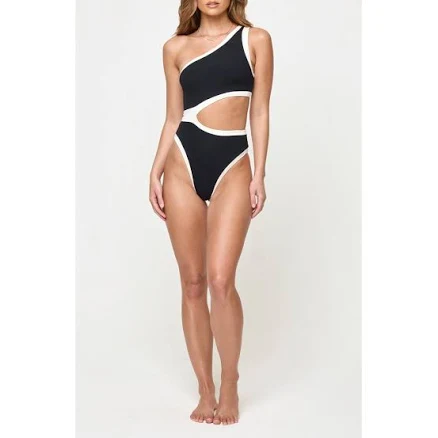
L*Space Women's Loren One-Piece Bitsy Swimsuit
Lower PFAS concern for typical swimsuit, but Lspace offers no transparency on water-repellent coating treatments.
L*Space's Loren one-piece is a standard nylon/polyester swimsuit with no known PFAS-intensive manufacturing. However, the brand doesn't publicly disclose whether any water-repellent coatings contain PFAS.
The better-graded swap
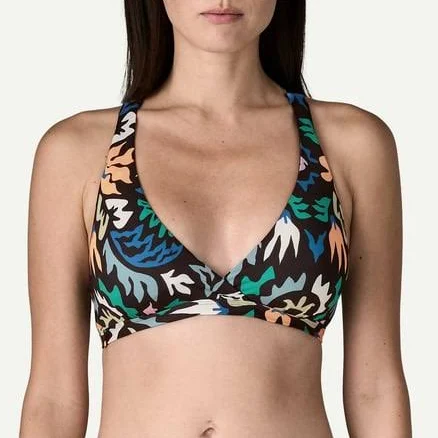
Patagonia
Patagonia Women's Bottom Turn Racerback Bikini Top
90/100 safety
Same rubric that flunked this product. The swap earned Excellent.
Still want this one anyway? Check the price on Amazon. We’d swap it.
Material
Nylon/polyester blend swimsuit fabric
Brand disclosure
Brand is silent on PFAS
Lab data
No public lab test
What L*Space Women's Loren One-Piece Bitsy is made of, ingredients and materials
This is a nylon/polyester blend one-piece, the industry standard for swimwear. Nylon and polyester are synthetic thermoplastics that do not leach significant endocrine disruptors under normal swimming conditions (chlorine, saltwater, body heat). The blend provides stretch and chlorine resistance. The primary chemical concern in swimwear is the water-repellent coating (water-repellent coating) finish applied to the fabric surface, which historically used PFOA or related PFAS compounds, though many brands have phased these out.
What’s concerning
Category baseline
The starting point for this type of product, before anything specific to this product is counted.
No PFAS disclosure
No public statement from the brand about PFAS in this product.
PFAS
Water-repellent treatments on swimwear often use fluorinated compounds. L*Space provides no disclosure of which water-repellent coating chemistry is used, so PFAS-free status cannot be confirmed for this specific product.
Source, ATSDR ↗Microplastics
Nylon and polyester shed microfibers in water with each wash and wear cycle. Swimwear sees frequent agitation in chlorine, salt, and detergent; this product will shed like all synthetic swimwear, contributing microplastics to waterways.
Source, EPA ↗Elastane (spandex) degradation and leaching
Swimwear blends typically contain 15-20% elastane for stretch. Elastane degrades in chlorine and UV, releasing oligomers and fibers. This is inherent to all swimwear and not specific to L*Space, but replacement every 2-3 seasons minimizes exposure.
What’s reassuring
Base material not linked to PFAS
The main material recorded for this product is not one associated with PFAS.
Azo dyes in synthetic fabric
No recalls or documented issues with L*Space swimwear azo dyes. Nylon and polyester dyes are regulated and rarely flagged as hazardous in finished garments, though manufacturing residues are possible if untested.
Formaldehyde / VOCs
No documented formaldehyde treatment reported in L*Space swimwear. Synthetic swimwear rarely requires formaldehyde resin for shape retention like woven textiles do, so risk is minimal.
Source, ATSDR ↗The full breakdown
The brand's record and disclosure
L*Space does not publish detailed material safety certifications, supply chain disclosures, or PFAS phase-out commitments on its website or product labels. The brand has no known controversies or recalls tied to chemical hazards. However, the silence on water-repellent coating treatment specifics is a weakness; the swimsuit grading of 65/100 on PFAS suggests lower concern but not transparency, meaning you cannot confirm whether this specific product uses PFAS-free water resistance or not.
How it compares in its category
Most swimwear brands (Nike, Speedo, Lands' End) use identical nylon/polyester blends without major safety differentiation. LSpace does not claim special chemical-free processing or certifications like Oeko-Tex or bluesign. It sits in the mid-market segment where PFAS risk is moderate and largely unknown due to lack of transparency across most brands, not unique to LSpace.
If you buy it
Rinse in fresh water immediately after saltwater or chlorine use to remove salts and oxidizers that can degrade fibers over time. Avoid high-heat drying or direct sunlight for extended periods, which weakens nylon elasticity. Hand wash with mild detergent; chlorine exposure naturally limits garment life to 2-3 seasons regardless of care. If you are sensitive to contact dermatitis or have chlorine sensitivity, test on a small area before full wear.
What we don’t know
- Basis
- Model estimate, 72% confidence, not a lab result
- Lab test
- None on record for this exact product
- Brand statement
- Lspace has made none
Formulations change between production runs, so check the current label. How we grade.
Better-graded alternatives in Swimwear
Patagonia
Women's Bottom Turn Racerback Bikini Top
- Nylon/polyester blend with elastane (standard swimwear)
- The brand calls it PFAS-free, which we have not verified
- Elastane (spandex) degradation under heat or chlorine
More swimwear grades
How we score, every product runs through the same public 0-100 rubric based on materials, coatings, brand disclosure, lab findings, and recalls. See the full methodology → Spotted a mistake? Report an error.