Marmot · Camping Tents & Tarps
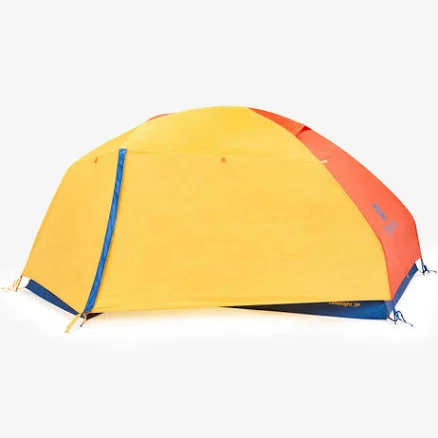
Marmot Limelight Tent
Tent uses water-repellent coating; Marmot does not disclose PFAS chemistry.
Marmot Limelight employs water-repellent treatment on nylon, typical for outdoor tents. Brand provides no PFAS disclosure or third-party verification of coating composition.
Still want this one anyway? Check the price on Amazon. We’d swap it.
Material
nylon ripstop with water-repellent coating
Lab data
No public lab test
You may also be interested in
Top-graded picks in the categories readers replace first, every one scored on the same rubric.

- polypropylene filter housing, carbon/sediment cartridge
- We found no PFAS statement from the brand
- Bacterial growth in spent cartridges
3 hazards checked on this product, all on its full breakdown.

Aquasure
Premier Series 75 GPD Under Sink Reverse Osmosis Water Filtration System
- RO membrane, carbon filters, stainless steel housing
- We found no PFAS statement from the brand
- Bacterial and microbial growth in housing and filters
4 hazards checked on this product, all on its full breakdown.

Avocado
Vegan Mattress
- organic cotton, natural latex, coconut coir, recycled steel coils
- The brand calls it PFAS-free, which we have not verified
- Heavy metals
2 hazards checked on this product, all on its full breakdown.
What Marmot Limelight Tent is made of, ingredients and materials
The Limelight uses nylon ripstop fabric, a lightweight polyamide weave common in expedition tents for its tear resistance and strength-to-weight ratio. The critical component is the water-repellent coating (water-repellent coating) coating applied to the exterior, which sheds water but historically relies on fluorinated compounds (PFAS). Marmot does not publicly specify whether this coating is fluorine-based or fluorine-free, creating uncertainty about long-term leaching into soil and waterways during use and after disposal.
What’s concerning
Waterproof / stain-resistant treatment
Water-repellent coating treatments have historically used PFAS.
Category baseline
The starting point for this type of product, before anything specific to this product is counted.
No PFAS disclosure
No public statement from the brand about PFAS in this product.
PFAS
Fluorinated water-repellent coating coatings are standard in this product class. Marmot's silence on chemistry and lack of fluorine-free claims suggests conventional PFAS-based chemistry, though not confirmed by public testing.
Source, ATSDR ↗Nylon microfiber shedding during use
Nylon ripstop, especially when abraded by body contact or packing, can shed microfibers. Direct contact (e.g., tent touching skin during sleep) is low-risk; ingestion is not a typical exposure route for tents.
Coating degradation and re-exposure over time
Water-repellent coating coatings degrade with UV exposure, washing, and use. Older Marmot tents may shed or flake dried coating particles; users should inspect annually and avoid inhaling dust during maintenance.
What’s reassuring
Formaldehyde / VOCs
No recalls or public reports of formaldehyde-treated nylon or azo-dye toxicity in Marmot tents. Nylon ripstop typically uses acid or disperse dyes; formaldehyde resins are uncommon in modern tent production.
Source, ATSDR ↗Flame retardants
Nylon has inherent flame resistance; fire retardant chemicals are not standard in outdoor tent fabrics unless explicitly marketed (the Limelight is not). No evidence of halogenated flame retardants in this product.
Source, EPA ↗How is this PFAS grade calculated?
The brand's record and disclosure
Marmot has not issued public statements on PFAS elimination or committed to fluorine-free water-repellent coating alternatives as of available records. The brand does not list PFAS certifications or third-party testing results on its website or product documentation. This silence contrasts with competitors (e.g., some Patagonia tents) that explicitly market PFAS-free or low-fluorine options, suggesting Marmot has not prioritized this as a consumer communication point.
How it compares in its category
Three-season nylon tents with water-repellent coating coatings are industry standard, and the Limelight is not an outlier in this regard. However, fluorine-free water-repellent coating alternatives (wax-based, polyurethane, silicone) are now commercially available from competitors and carry lower PFAS risk. The Limelight's lack of transparency places it in a middle tier, not worst-in-class, but behind brands offering documented low-PFAS or PFAS-free options at similar price points.
If you buy it
Store the tent dry and avoid prolonged contact with skin, especially for pregnant persons or children, to minimize water-repellent coating ingestion or absorption. Reapply water-repellent coating treatment sparingly and only as needed; each reapplication adds chemical exposure. Do not machine wash; use cool water rinse and air dry. At end of life, dispose through a recycling program if available; avoid landfill if possible to reduce soil contamination from the coating.
What is not known about PFAS in this product?
- Basis
- Model estimate, 45% confidence, not a lab result
- Lab test
- None on record for this exact product
- Brand statement
- Marmot has made a specific claim
Formulations change between production runs, so check the current label. How we grade.
More camping tents & tarps grades
How we score, every product runs through the same public 0-100 rubric based on materials, coatings, brand disclosure, lab findings, and recalls. See the full methodology → Spotted a mistake? Report an error.