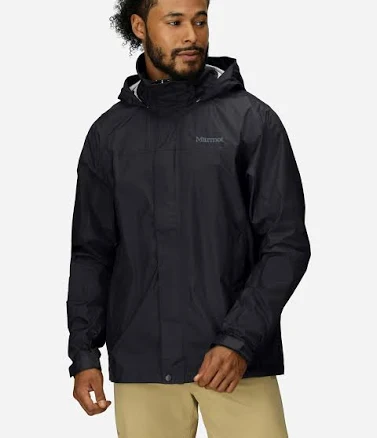
Marmot Men's PreCip Eco Jacket
Marmot's Eco line likely uses newer water-repellent coating; silent on PFAS specifics.
PreCip Eco uses water-repellent coating treatment for waterproofing, but Marmot provides no public PFAS disclosure. Coating chemistry unknown without lab testing or brand transparency.
Still want this one anyway? Check the price on Amazon. We’d swap it.
Material
polyester with water-repellent coating (Eco designation)
Lab data
No public lab test
You may also be interested in
Top-graded picks in the categories readers replace first, every one scored on the same rubric.

- polypropylene filter housing, carbon/sediment cartridge
- We found no PFAS statement from the brand
- Bacterial growth in spent cartridges
3 hazards checked on this product, all on its full breakdown.

Aquasure
Premier Series 75 GPD Under Sink Reverse Osmosis Water Filtration System
- RO membrane, carbon filters, stainless steel housing
- We found no PFAS statement from the brand
- Bacterial and microbial growth in housing and filters
4 hazards checked on this product, all on its full breakdown.

Avocado
Vegan Mattress
- organic cotton, natural latex, coconut coir, recycled steel coils
- The brand calls it PFAS-free, which we have not verified
- Heavy metals
2 hazards checked on this product, all on its full breakdown.
What Marmot Men's PreCip Eco Jacket is made of, ingredients and materials
The PreCip Eco is 100% polyester with a water-repellent coating (water-repellent coating) coating applied to the outer shell. Polyester itself is chemically stable and does not leach BPA, phthalates, or antimony under normal wear conditions. The water-repellent coating is where chemical risk concentrates, historically these have relied on long-chain PFAS (perfluorinated compounds), though Marmot's 'Eco' designation suggests a reformulation, likely toward shorter-chain alternatives or fluorine-free options that remain undisclosed.
What’s concerning
Waterproof / stain-resistant treatment
Water-repellent coating treatments have historically used PFAS.
Category baseline
The starting point for this type of product, before anything specific to this product is counted.
No PFAS disclosure
No public statement from the brand about PFAS in this product.
water-repellent coating degradation and reapplication risk
When water-repellent coating wears out, consumers often purchase commercial re-treatment sprays or services, many of which contain PFAS. Regular washing and proper storage extend water-repellent coating life; avoid unnecessary re-treatment to minimize cumulative PFAS exposure from this product lifecycle.
What’s reassuring
Formaldehyde / VOCs
Polyester textiles sometimes retain trace formaldehyde from manufacturing resins; no recalls or complaints specific to Marmot jackets. Standard polyester apparel is not a documented source of formaldehyde exposure under normal wear.
Source, ATSDR ↗Azo dyes
Marmot jackets typically use disperse dyes common in polyester; restricted azo dyes (those that cleave to carcinogenic amines) are rare in major branded apparel. No specific hazard reported for PreCip Eco colorways.
Off-gassing or volatiles from new synthetic fabric
New polyester items may smell strong initially due to residual dyes and finishes, not chemical hazard. Airing the jacket outdoors before first wear mitigates odor; no toxic off-gassing is documented for this product.
How is this PFAS grade calculated?
The brand's record and disclosure
Marmot has not published detailed breakdowns of which water-repellent coating chemistry it uses in the PreCip Eco line or committed to eliminating PFAS across its product range. The company has not achieved major third-party certifications (e.g., Bluesign, OEKO-TEX) that would independently verify chemical restrictions. This silence is typical among outdoor apparel brands but means consumers cannot verify whether the 'Eco' label reflects genuine chemistry change or marketing repositioning.
How it compares in its category
Rain jackets universally rely on water-repellent coating coatings; Marmot's approach is standard industry practice with no known ahead-of-category hazard reduction. Competitors like Patagonia and some Arc'teryx lines have moved toward PFAS-free or low-PFAS water-repellent coating systems and disclose this openly. The PreCip Eco sits in a middle position, branded as sustainable but without transparency that would distinguish it from conventionally treated polyester shells.
If you buy it
Wash in cool water with mild detergent; avoid high heat and dryers, which can degrade the water-repellent coating prematurely. water-repellent coating coatings decline over 50-100 wears; when water no longer beads, the jacket's water resistance fails but the garment remains wearable if re-treated. Do not dry-clean, as solvents can strip the coating. Store in a dry place; mildew and odor (not a chemical hazard but a comfort issue) can develop in damp storage.
What is not known about PFAS in this product?
- Basis
- Model estimate, 45% confidence, not a lab result
- Lab test
- None on record for this exact product
- Brand statement
- Marmot has made a specific claim
Formulations change between production runs, so check the current label. How we grade.
More rain jackets grades
How we score, every product runs through the same public 0-100 rubric based on materials, coatings, brand disclosure, lab findings, and recalls. See the full methodology → Spotted a mistake? Report an error.