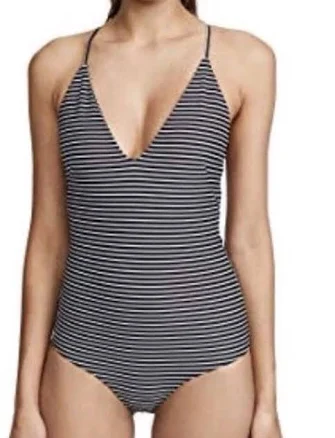
MIKOH Women's Las Palmas Classic Stripe One-Piece Swimsuit
Lower concern; basic swimsuit without water-repellent treatments is unlikely to contain PFAS, but brand discloses nothing.
Mikoh's Las Palmas is a standard nylon/polyester one-piece with no disclosed water-repellent or stain-resistant finishes, the typical sources of PFAS in apparel. The brand makes no PFAS claims or certifications.
The better-graded swap
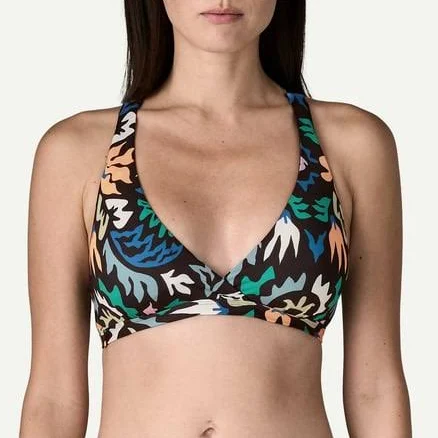
Patagonia
Patagonia Women's Bottom Turn Racerback Bikini Top
90/100 safety
Same rubric that flunked this product. The swap earned Excellent.
Still want this one anyway? Check the price on Amazon. We’d swap it.
Material
Nylon/polyester blend swimsuit fabric
Brand disclosure
Brand is silent on PFAS
Lab data
No public lab test
What MIKOH Women's Las Palmas Classic Stripe is made of, ingredients and materials
This swimsuit is constructed from a nylon/polyester blend, both synthetic polymers widely used in swimwear for durability and stretch recovery. Nylon and polyester themselves are chemically stable fabrics that do not leach monomers into skin during normal wear. The main exposure pathway in swimwear is contact with dyes, finishes applied during manufacturing, and any residual processing chemicals rather than the base polymers.
What’s concerning
Category baseline
The starting point for this type of product, before anything specific to this product is counted.
No PFAS disclosure
No public statement from the brand about PFAS in this product.
Azo dyes and disperse dyes
Swimwear fabrics are typically dyed with disperse dyes and may contain azo compounds; these can cause skin sensitization in individuals with dye allergies, though regulatory-compliant dyes present low risk for the general population. No specific testing or safety violations are on record for Mikoh colorfast products.
Formaldehyde / VOCs
Polyester swimwear sometimes receives wrinkle-resistance or easy-care finishes that release low levels of formaldehyde, particularly when new. Rinsing before first wear and allowing fabric to off-gas before extended wear minimizes exposure; no specific reports exist for this product.
Source, ATSDR ↗Fiber shedding and microplastic release
Nylon and polyester shed microfibers in water during washing and wear, which accumulate in aquatic ecosystems. While this is not a direct consumer health hazard, it represents an environmental concern common to all synthetic swimwear in this category.
Allergic contact dermatitis from dyes or finishes
Individuals with sensitive skin or known dye allergies may experience irritation from residual dyes or processing chemicals. This risk is not specific to Mikoh but applies broadly to un-certified swimwear; a patch test or pre-wear rinse can identify issues.
What’s reassuring
Base material not linked to PFAS
The main material recorded for this product is not one associated with PFAS.
Antimony in polyester
Antimony is sometimes used as a catalyst in polyester production and may remain as trace residue. EU and US regulations set strict limits; no documented excess levels have been reported in standard swimwear, including this brand. Skin contact with trace residues is not a recognized hazard.
The full breakdown
The brand's record and disclosure
Mikoh is a contemporary swimwear brand with no public disclosure of material certifications, supply chain testing, or chemical safety policies on record. No recalls, safety violations, or documented chemical contamination issues have been reported for Mikoh products. The brand's silence on PFAS and chemical safety is typical of mid-market swimwear manufacturers and does not indicate a problem, but suggests limited transparency compared to certified organic or safety-audited alternatives.
How it compares in its category
Standard nylon/polyester swimsuits like this one occupy the mainstream middle of the market in terms of chemical safety profile. They carry lower documented risk than vintage vintage polyester or untested imports, but less assurance than swimwear certified to Oeko-Tex or GOTS standards. Most major brands in this category (Lands' End, J.Crew, etc.) operate similarly without extensive public chemical disclosure.
If you buy it
Rinse the swimsuit in fresh water immediately after each use to remove chlorine, salt, and sunscreen residue that can degrade fibers and concentrates dyes. Wash by hand in cool water with mild detergent; avoid hot water and bleach, which can accelerate fading and fiber breakdown. Air dry away from direct heat or sunlight. Replace when elasticity noticeably declines, typically after 50-75 wears, to avoid prolonged contact with degraded fibers.
What we don’t know
- Basis
- Model estimate, 72% confidence, not a lab result
- Lab test
- None on record for this exact product
- Brand statement
- Mikoh has made none
Formulations change between production runs, so check the current label. How we grade.
Better-graded alternatives in Swimwear
Patagonia
Women's Bottom Turn Racerback Bikini Top
- Nylon/polyester blend with elastane (standard swimwear)
- The brand calls it PFAS-free, which we have not verified
- Elastane (spandex) degradation under heat or chlorine
More swimwear grades
How we score, every product runs through the same public 0-100 rubric based on materials, coatings, brand disclosure, lab findings, and recalls. See the full methodology → Spotted a mistake? Report an error.