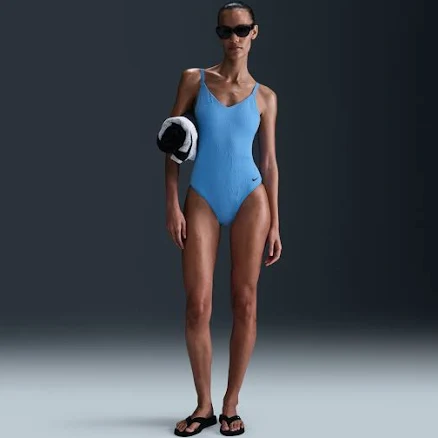
Nike Women's Water Texture Jacquard V-Neck One-Piece Swimsuit
High PFAS risk. Skip until Nike discloses water-repellent coating chemistry or commits to PFAS-free.
Nike's Water Texture swimsuit uses a jacquard nylon with water-repellent coating finish, a common flag for legacy PFAS-based water repellents. Nike hasn't disclosed the water-repellent coating chemistry or provided third-party verification.
The better-graded swap
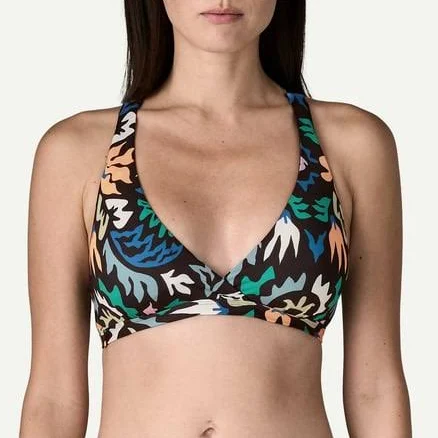
Patagonia
Patagonia Women's Bottom Turn Racerback Bikini Top
90/100 safety
Same rubric that flunked this product. The swap earned Excellent.
Still want this one anyway? Check the price on Amazon. We’d swap it.
Material
Nylon jacquard with water-repellent coating (water-repellent coating) finish
Lab data
No public lab test
You may also be interested in
Top-graded picks in the categories readers replace first, every one scored on the same rubric.

- polypropylene filter housing, carbon/sediment cartridge
- We found no PFAS statement from the brand
- Bacterial growth in spent cartridges
3 hazards checked on this product, all on its full breakdown.

Aquasure
Premier Series 75 GPD Under Sink Reverse Osmosis Water Filtration System
- RO membrane, carbon filters, stainless steel housing
- We found no PFAS statement from the brand
- Bacterial and microbial growth in housing and filters
4 hazards checked on this product, all on its full breakdown.

Avocado
Vegan Mattress
- organic cotton, natural latex, coconut coir, recycled steel coils
- The brand calls it PFAS-free, which we have not verified
- Heavy metals
2 hazards checked on this product, all on its full breakdown.
What Nike Women's Water Texture Swimsuit is made of, ingredients and materials
This swimsuit is nylon jacquard (a textured knit), which is a synthetic polyamide polymer. The critical component is the water-repellent coating (water-repellent coating) finish applied to the fabric surface to enhance water beading and quick-dry properties. water-repellent coating chemistry is where PFAS risk concentrates in modern swimwear; Nike has not publicly disclosed whether this product uses PFAS-based (e.g., fluorocarbon) or PFAS-free (e.g., fluorine-free polymer or wax-based) treatment. Nylon itself is generally stable and does not leach monomers under normal wear.
What’s concerning
Category baseline
The starting point for this type of product, before anything specific to this product is counted.
No PFAS disclosure
No public statement from the brand about PFAS in this product.
Waterproof / stain-resistant treatment
Water-repellent coating treatments have historically used PFAS.
Formaldehyde / VOCs
Some water-repellent coating finishes and fabric softening treatments can involve formaldehyde-releasing chemistry; however, most modern swimwear formulations have transitioned away from high-release formaldehyde. Nike does not disclose whether formaldehyde-donor resins are used in this product's finish. Off-gassing would be minimal after initial wear and washing.
Source, ATSDR ↗Microfiber shedding during laundering
Nylon knits shed microfibers, particularly with mechanical agitation in washers. This is documented as a general concern for synthetic textiles, not specific to Nike, and relates to environmental rather than direct consumer toxicity, but repeated washing can thin the fabric.
Coating degradation and leachables from water-repellent coating breakdown
As the water-repellent coating finish ages, UV exposure, laundering, and chlorine can cause it to flake or peel. If the finish is PFAS-based, degradation could theoretically increase skin contact; if PFAS-free, the risk is lower but still unclear without ingredient disclosure. Heat and bleach accelerate this process.
What’s reassuring
Azo dyes in nylon colorants
Nylon typically uses non-azo or low-release azo dyes in quality swimwear. No recalls or test failures on record for Nike swimsuits. Restricted azo compounds (those cleaving to carcinogenic amines) are prohibited in EU and most US consumer goods, and Nike complies with these standards.
Antimony in polyester blends
This product is nylon, not polyester, so antimony catalyst contamination does not apply. Nylon uses different polymerization routes that do not require antimony as a catalyst.
How is this PFAS grade calculated?
The brand's record and disclosure
Nike has not made public commitments to eliminate PFAS from water-repellent coating treatments in apparel, nor has it disclosed the chemistry of the water-repellent finish on this specific product. The company does not list swimwear on sustainability databases with water-repellent coating ingredient transparency. No recalls or documented safety incidents specific to this swimsuit model are on record. Nike's broader chemical management policy does not address fluorinated water repellents in consumer disclosure.
How it compares in its category
Most mainstream performance swimwear brands (Nike, Speedo, Roxy) apply water-repellent coating finishes, and most do not disclose PFAS status. Premium or eco-certified alternatives (e.g., Girlfriend Collective, Title Nine) increasingly market PFAS-free water-repellent coating or omit the treatment entirely. This Nike product sits in the middle, standard performance features with standard opacity on chemistry. If water-repellent coating is PFAS-based, the skin exposure is low but cannot be ruled out during repeated wear and laundering.
If you buy it
Wash in cool water and lay flat to dry; avoid heat (dryer, direct sun for prolonged periods), which can accelerate coating breakdown and potential release of finish chemicals. Inspect seams and coating annually for peeling, pilling, or degradation; if visible damage occurs, replace rather than repair. Do not bleach or use heavy detergents, which can degrade water repellency prematurely. Rinse after salt water or chlorine use to reduce polymer stress.
What is not known about PFAS in this product?
- Basis
- Model estimate, 42% confidence, not a lab result
- Lab test
- None on record for this exact product
- Brand statement
- Nike has made a specific claim
Formulations change between production runs, so check the current label. How we grade.
What are the PFAS-free alternatives to Nike Women's Water Texture Jacquard V-Neck One-Piece Swimsuit?
- Nylon/polyester blend with elastane (standard swimwear)
- The brand calls it PFAS-free, which we have not verified
- Elastane (spandex) degradation under heat or chlorine
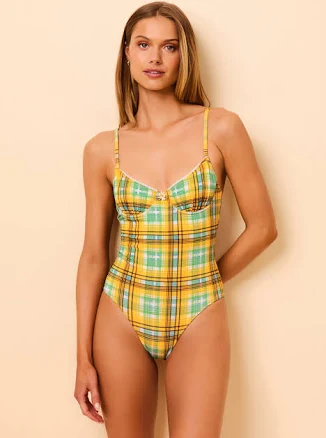
- Cotton/cotton-blend seersucker plaid
- We found no PFAS statement from the brand
- Azo dyes and colorfast stability
2 hazards checked on this product, all on its full breakdown.
Find an alternative on Amazon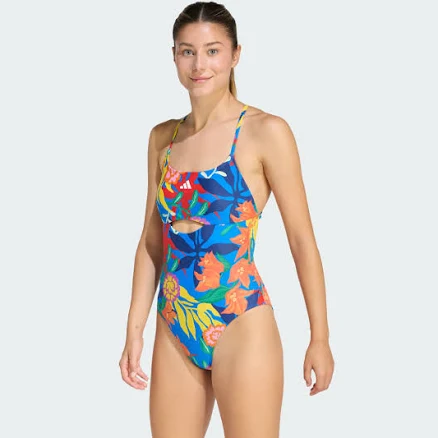
- Polyester/nylon swimsuit fabric, likely uncoated or standard finish
- Azo dyes and synthetic colorants
4 hazards checked on this product, all on its full breakdown.
Find an alternative on AmazonMore swimwear grades
How we score, every product runs through the same public 0-100 rubric based on materials, coatings, brand disclosure, lab findings, and recalls. See the full methodology → Spotted a mistake? Report an error.