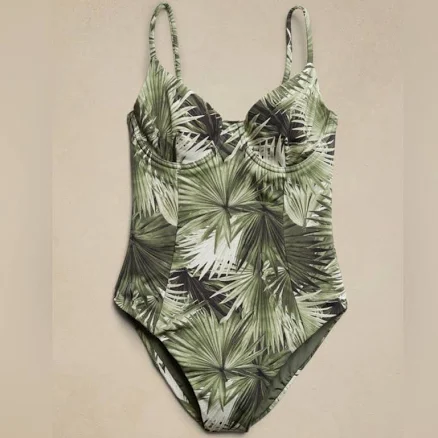
Onia NWT! Banana Republic Palm Print Isabella Swimsuit - Size Medium - New Women
Lower concern; standard swimwear without water-repellent coating claims carries minimal PFAS risk, but brand transparency is absent.
Onia hasn't disclosed PFAS use or made any public commitment to avoid them. Nylon/elastane blends don't inherently require PFAS, but some manufacturers use fluorocarbon water-repellent coating coatings on swim products.
The better-graded swap
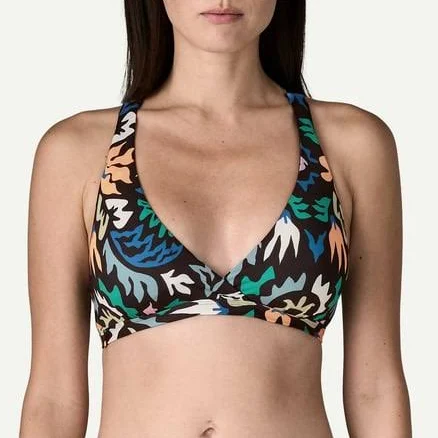
Patagonia
Patagonia Women's Bottom Turn Racerback Bikini Top
90/100 safety
Same rubric that flunked this product. The swap earned Excellent.
Still want this one anyway? Check the price on Amazon. We’d swap it.
Material
Nylon/polyamide swimwear (likely with elastane)
Brand disclosure
Brand is silent on PFAS
Lab data
No public lab test
What Onia NWT! Banana Republic Palm Print is made of, ingredients and materials
This swimsuit is nylon (polyamide) with elastane (spandex), the industry standard for swimwear construction. Nylon itself is a stable synthetic polymer with low leaching risk in water contact. Elastane provides stretch and recovery but can degrade under UV and chlorine exposure over time, potentially shedding microfibers into water, though the practical health impact remains under-quantified.
What’s concerning
Category baseline
The starting point for this type of product, before anything specific to this product is counted.
No PFAS disclosure
No public statement from the brand about PFAS in this product.
Azo dyes and color fastness
Banana Republic fabrics typically use reactive or disperse dyes; no specific non-compliance reports exist for Onia, but tropical prints like palm designs may use higher dye loads. Color bleeding into chlorinated water is aesthetic and environmental concern but not a direct health hazard at typical exposure.
Formaldehyde / VOCs
Nylon fabric finishing may involve formaldehyde-based resin treatments for wrinkle resistance or shape retention. Onia does not disclose finishing chemistry; new garments may off-gas small amounts, typical for synthetic swimwear. Rinsing before first wear reduces any volatile residue.
Source, ATSDR ↗Microplastic shedding from elastane
Elastane-blended swimwear sheds microfibers during washing and wear, confirmed in peer-reviewed textile studies. Magnitude increases with abrasion, chlorine exposure, and age. Individual health risk from incidental ingestion is not established, but environmental accumulation is documented.
Fragrance or dye allergens
Finished swimwear may carry residual dye allergens or processing chemicals. Individuals with sensitive skin or dye sensitivity should rinse thoroughly before wearing. No allergen-labeling requirement exists for apparel in most markets; brand does not list known sensitizers.
What’s reassuring
Base material not linked to PFAS
The main material recorded for this product is not one associated with PFAS.
Antimony in polyester/polyamide (if any)
Nylon does not inherently require antimony catalysts the way some polyester does. No industry-wide or Onia-specific antimony concerns are on record for nylon swimwear. Trace levels may exist depending on resin supplier, but exposure pathways are minimal in water-contact use.
The full breakdown
The brand's record and disclosure
Onia is a contemporary swimwear brand owned by Banana Republic (Gap Inc. subsidiary). The brand does not publicly disclose material sourcing, chemical processing, or dye composition. No recalls or chemical safety controversies are on record for Onia swimwear. Gap Inc. maintains a corporate sustainability framework but Onia-specific certifications (e.g., OEKO-TEX, GOTS) are not evident in public communications.
How it compares in its category
Nylon/elastane blends dominate mainstream swimwear and are linked to lower chemical concern than older PVC or vinyl options. This product carries no water-repellent coating (water-repellent coating) finish claim, which eliminates fluorinated PFAS exposure common in technical water-resistant swimwear. Relative to premium eco-certified brands (Patagonia, Reformation), Onia offers less transparency but comparable material safety for a standard mid-market offering.
If you buy it
Rinse after chlorine or salt water use to extend elastane durability and minimize microfiber shedding. Wash in cold water, avoid high-temperature drying, and do not tumble dry, which accelerates fiber breakdown. Replace when elastic loses recovery or seams show wear (typically 2-3 years of regular use). Store in a cool, dry place away from direct sunlight to slow UV-driven material degradation.
What we don’t know
- Basis
- Model estimate, 72% confidence, not a lab result
- Lab test
- None on record for this exact product
- Brand statement
- Onia has made none
Formulations change between production runs, so check the current label. How we grade.
Better-graded alternatives in Swimwear
Patagonia
Women's Bottom Turn Racerback Bikini Top
- Nylon/polyester blend with elastane (standard swimwear)
- The brand calls it PFAS-free, which we have not verified
- Elastane (spandex) degradation under heat or chlorine
More swimwear grades
How we score, every product runs through the same public 0-100 rubric based on materials, coatings, brand disclosure, lab findings, and recalls. See the full methodology → Spotted a mistake? Report an error.