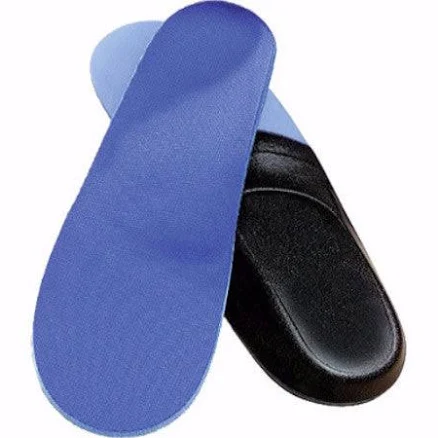
Orthofeet · Synthetic Athletic Insoles & Orthotics
Orthofeet Biosoft Insole - Men's Blue / 6-6.5
Insoles lack water repellency or nonstick coatings. Lower PFAS risk.
These Orthofeet Biosoft insoles use cushioning foam and gel without disclosed water or stain treatments. No PFAS claims or third-party verification exist.
Still want this one anyway? Check the price on Amazon. We’d swap it.
Material
Biosoft foam and gel blend insole
Brand disclosure
Brand is silent on PFAS
Lab data
No public lab test
You may also be interested in
Top-graded picks in the categories readers replace first, every one scored on the same rubric.

Aqua Pure
3M Aqua-Pure AP802B Whole House Filter Housing
- polypropylene filter housing, carbon/sediment cartridge
- We found no PFAS statement from the brand
- Bacterial growth in spent cartridges
3 hazards checked on this product. See all of them.

Aquasure
Premier Series 75 GPD Under Sink Reverse Osmosis Water Filtration System
- RO membrane, carbon filters, stainless steel housing
- We found no PFAS statement from the brand
- Bacterial and microbial growth in housing and filters
4 hazards checked on this product. See all of them.

Avocado
Vegan Mattress
- organic cotton, natural latex, coconut coir, recycled steel coils
- The brand calls it PFAS-free, which we have not verified
- Heavy metals
2 hazards checked on this product. See all of them.
What Orthofeet Biosoft Insole - Men's Blue / is made of, ingredients and materials
Orthofeet Biosoft insoles are constructed from a proprietary foam and gel blend designed for cushioning and arch support rather than water resistance or nonstick performance. Unlike cookware or textiles with protective coatings, insole foam does not require hazardous surface treatments to function. The materials sit between the foot and shoe interior, avoiding direct skin contact routes that would elevate chemical migration risks from most industrial foams.
What’s concerning
Category baseline
The starting point for this type of product, before anything specific to this product is counted.
No PFAS disclosure
No public statement from the brand about PFAS in this product.
Formaldehyde / VOCs
Polyurethane and EVA foams may contain formaldehyde-based adhesives or cross-linkers as manufacturing byproducts. Orthofeet does not disclose resin chemistry; direct skin contact is limited (worn inside shoe), but inhalation of off-gas remains possible during storage or wear.
Source, ATSDR ↗Azo dyes in foam colorant (blue)
The 'Men's Blue' colorant may include synthetic azo dyes if not explicitly restricted. Azo compounds can release carcinogenic aromatic amines under sweat and moisture; Orthofeet provides no dye safety documentation.
Microplastic shedding from foam degradation
Polyurethane and EVA foams break down into particles over 6-12 months of use and mechanical stress. Shed microplastics may accumulate in socks or shoes; environmental impact during disposal is confirmed but direct health impact remains under study.
Volatile organic compounds (VOC) off-gassing
Foam manufacturing can trap solvents and monomers; new insoles may emit low-level VOCs during the first few weeks. Ventilation inside a shoe is limited, potentially concentrating exposure in a closed microenvironment.
What’s reassuring
Base material not linked to PFAS
The main material recorded for this product is not one associated with PFAS.
Antimicrobial coatings (silver, zinc, or synthetic)
No public documentation indicates Orthofeet Biosoft insoles use antimicrobial additives. If present, heavy-metal-based coatings could migrate into sweat; however, no evidence of this in product specifications or complaints.
The full breakdown
The brand's record and disclosure
Orthofeet does not publish detailed material safety data sheets or third-party certifications (such as OEKO-TEX or similar textile safety standards) for this insole line. The brand's PFAS stance is publicly silent, though the product design itself does not require fluorinated water repellents. No recalls, safety complaints, or regulatory warnings specific to Orthofeet insoles have been documented in public records.
How it compares in its category
Orthofeet insoles occupy a mid-market orthopaedic space focused on comfort rather than premium athletic or medical-grade certification. Most competitors in the direct-to-consumer insole space (Superfeet, Powerstep, Dr. Scholl's) operate under similar disclosure opacity. Compared to gel insoles with antimicrobial silver coatings or memory foam with flame retardant additives, Biosoft foam is a lower-complexity material with fewer chemical finishing steps.
If you buy it
Replace insoles every 6-12 months as cushioning degrades; wash by hand in lukewarm water without harsh detergents and air-dry completely to prevent microbial growth. Store in a dry environment and avoid direct heat sources (radiators, sunlight) that could degrade foam structure prematurely. Monitor for odor, discoloration, or visible breakdown; discontinue use if the foam begins to separate or crumble.
What we don’t know
- Basis
- Model estimate, 72% confidence, not a lab result
- Lab test
- None on record for this exact product
- Brand statement
- Orthofeet has made none
Formulations change between production runs, so check the current label. How we grade.
More synthetic athletic insoles & orthotics grades
How we score, every product runs through the same public 0-100 rubric based on materials, coatings, brand disclosure, lab findings, and recalls. See the full methodology → Spotted a mistake? Report an error.