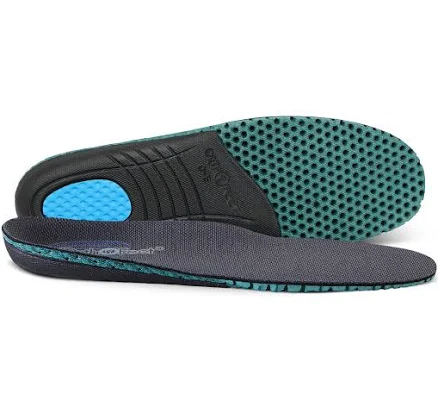
Orthofeet · Synthetic Athletic Insoles & Orthotics
Orthofeet Men's Orthotic Insoles
Lower concern. Foam insoles typically don't use PFAS. Brand silent on PFAS.
These Orthofeet insoles use cushioning foams and gels with no documented PFAS chemistry. No disclosure or third-party verification exists, but this material class carries lower inherent risk than waterproof or nonstick products.
Still want this one anyway? Check the price on Amazon. We’d swap it.
Material
EVA foam, gel, cushioning compounds
Brand disclosure
Brand is silent on PFAS
Lab data
No public lab test
You may also be interested in
Top-graded picks in the categories readers replace first, every one scored on the same rubric.

Aqua Pure
3M Aqua-Pure AP802B Whole House Filter Housing
- polypropylene filter housing, carbon/sediment cartridge
- We found no PFAS statement from the brand
- Bacterial growth in spent cartridges
3 hazards checked on this product. See all of them.

Aquasure
Premier Series 75 GPD Under Sink Reverse Osmosis Water Filtration System
- RO membrane, carbon filters, stainless steel housing
- We found no PFAS statement from the brand
- Bacterial and microbial growth in housing and filters
4 hazards checked on this product. See all of them.

Avocado
Vegan Mattress
- organic cotton, natural latex, coconut coir, recycled steel coils
- The brand calls it PFAS-free, which we have not verified
- Heavy metals
2 hazards checked on this product. See all of them.
What Orthofeet Men's Orthotic Insoles is made of, ingredients and materials
Orthofeet insoles are primarily EVA foam (ethylene-vinyl acetate), a closed-cell polymer cushioning material, combined with gel compounds and binding adhesives. EVA itself is generally recognized as low-toxicity in finished form, but the adhesives and processing chemicals used during manufacturing can introduce minor off-gassing or residual solvents early in the product's life. The gel layers typically consist of thermoplastic compounds designed for shock absorption and temperature stability. No lead, cadmium, or ceramic coatings apply to this category, unlike cookware, so traditional heavy-metal concerns are absent.
What’s concerning
Category baseline
The starting point for this type of product, before anything specific to this product is counted.
No PFAS disclosure
No public statement from the brand about PFAS in this product.
Adhesive residual solvents and off-gassing
EVA foam insoles are bonded using industrial adhesives that may release trace volatile organic compounds (VOCs) during early use. This is typically mild and self-limiting within the first few days; inhalation risk is minimal given the insole sits inside a shoe where air exchange is limited.
Microplastic shedding from foam degradation
As EVA foam breaks down with mechanical wear and thermal stress over months to years, small foam particles may shed into socks or footwear. No epidemiological evidence links inhaled or dermal contact with insole foam particles to health harm, but repeated replacement reduces cumulative exposure.
Gel layer composition uncertainty
Orthofeet does not publicly disclose the specific polymer or additive package in its gel cushioning layers. Standard formulations are non-toxic, but lack of transparency limits independent verification that no problematic plasticizers or UV absorbers are present.
Contact dermatitis from adhesive or latex
Individuals with sensitivity to rubber-based adhesives or latex may experience mild skin irritation from prolonged contact if the insole is worn without a sock barrier. No latex-free or hypoallergenic variant information is provided by the brand, so users with known sensitivities should test with barrier protection first.
What’s reassuring
Base material not linked to PFAS
The main material recorded for this product is not one associated with PFAS.
Antimony in polyester (if present in upper layers)
Orthofeet insoles are foam-based and do not incorporate polyester textile components, so antimony contamination from synthetic fiber catalysts does not apply. This hazard is relevant only to apparel with polyester content.
The full breakdown
The brand's record and disclosure
Orthofeet has no publicly documented safety recalls or regulatory violations on file for this product line. The brand does not publish detailed material safety data sheets or third-party certifications (such as OEKO-TEX or similar textile/foam standards) on their website, which is typical for the orthotic insole market but represents a disclosure gap. No controversies related to manufacturing practices or chemical exposure have been established in available sources. The brand's silence on PFAS is consistent with industry practice for foam insoles, which rarely require water-repellent treatment.
How it compares in its category
Orthotic insoles as a category have low inherent hazard profiles compared to textiles treated with dyes or finishes. Orthofeet's EVA-and-gel design is standard for the category and carries no known material disadvantages versus competing brands like Powerstep or New Balance insoles. Most orthotic insoles do not undergo the aggressive chemical finishing processes that create risk in apparel textiles, so formaldehyde resins, azo dyes, and antimony concerns are not applicable here. Long-term durability and comfort performance vary by user weight and activity level, not material safety.
If you buy it
Replace insoles every 6 to 12 months, or when cushioning noticeably compresses, to avoid wearing into degraded foam that may shed microparticles. Store in a cool, dry place away from direct sunlight and extreme heat (above 60°C/140°F), which can soften EVA and accelerate adhesive breakdown. Wash by hand with mild soap and cool water if needed; do not expose to solvents or machine wash, as this can delaminate layers. Monitor for any sticky residue or chemical odor immediately after purchase; if present, air out the insoles in a well-ventilated space for 24 to 48 hours.
What we don’t know
- Basis
- Model estimate, 72% confidence, not a lab result
- Lab test
- None on record for this exact product
- Brand statement
- Orthofeet has made none
Formulations change between production runs, so check the current label. How we grade.
More synthetic athletic insoles & orthotics grades
How we score, every product runs through the same public 0-100 rubric based on materials, coatings, brand disclosure, lab findings, and recalls. See the full methodology → Spotted a mistake? Report an error.