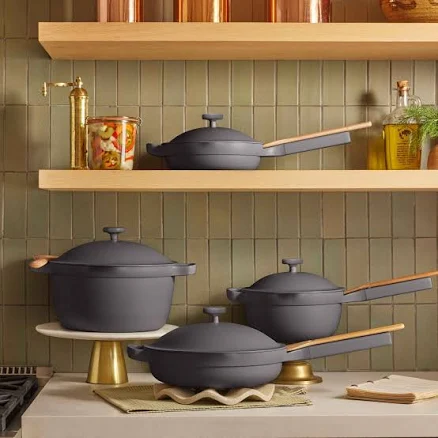
Our Place 13-Piece Ceramic Cookware Set, Is It Non-Toxic?
Named ceramic non-stick coating, with a brand PFAS statement we have not verified.
Our Place says its ceramic non-stick coating is made without PFAS, including Teflon-type coating and PFOA. We record that as an unverified brand claim.
Brand says: “Our Place says its ceramic non-stick coating is made without PFAS, including PTFE and PFOA.”
We flunk more products than we pass. This one earned its grade. How we grade
Material
Ceramic nonstick coating on aluminum core
Brand disclosure
Brand claims PFAS-free
Lab data
No public lab test
You may also be interested in
Top-graded picks in the categories readers replace first, every one scored on the same rubric.

- polypropylene filter housing, carbon/sediment cartridge
- We found no PFAS statement from the brand
- Bacterial growth in spent cartridges
3 hazards checked on this product, all on its full breakdown.

Aquasure
Premier Series 75 GPD Under Sink Reverse Osmosis Water Filtration System
- RO membrane, carbon filters, stainless steel housing
- We found no PFAS statement from the brand
- Bacterial and microbial growth in housing and filters
4 hazards checked on this product, all on its full breakdown.

Avocado
Vegan Mattress
- organic cotton, natural latex, coconut coir, recycled steel coils
- The brand calls it PFAS-free, which we have not verified
- Heavy metals
2 hazards checked on this product, all on its full breakdown.
Is Our Place 13-Piece Ceramic Cookware Set non-toxic? What it is made of
This set uses a ceramic nonstick coating applied over an aluminum core. Ceramic coatings avoid Teflon-type coating (Teflon) and its associated fume risks, and do not rely on PFAS chemistry to achieve nonstick properties. The aluminum substrate conducts heat well but requires the ceramic layer to prevent direct contact with food; once that coating degrades, leaching becomes a concern. Our Place markets this as a nonstick alternative with lower concern compared to traditional Teflon-type coating cookware.
What’s concerning
Disclosed non-fluorinated coating
Coating is named and the brand states it is made without PFAS.
Category baseline
The starting point for this type of product, before anything specific to this product is counted.
Ceramic coating degradation and aluminum leaching
Ceramic nonstick coatings are durable but not permanent. Once chipped or flaked, bare aluminum can contact acidic foods; aluminum leaching from uncoated aluminum cookware is generally low under normal conditions, but continued use of damaged pieces is not recommended.
What’s reassuring
Brand-stated PFAS-free
The brand states this product is PFAS-free. We have not verified the claim.
Lead
No public recalls or test results documenting lead or cadmium in Our Place ceramic cookware have been identified. Ceramic food-contact items sold in the US are subject to FDA limits, but independent testing is rare for commercial cookware.
Source, ATSDR ↗Teflon-type coating or other volatile fume risk
This product explicitly uses ceramic, not Teflon-type coating, so traditional nonstick fume hazards (overheating Teflon-type coating to polymer fume fever risk) do not apply. Ceramic coatings do not emit toxic fumes at normal cooking temperatures.
Manufacturing or off-gassing VOCs
No specific reports of volatile organic compounds or off-gassing from this cookware set have been published. Aluminum and ceramic are relatively inert; any odor on initial use typically dissipates after one or two wash cycles.
How is this PFAS grade calculated?
The brand's record and disclosure
Our Place has made explicit PFAS-free claims for this product line, positioning ceramic nonstick as part of a transparency-focused brand strategy. The company has not faced major public recalls or safety controversies tied to this cookware set as of available records. Independent verification of the PFAS-free claim has not been published, so you are relying on the brand's statement; certification from third parties (e.g., GREENGUARD, NSF) would strengthen confidence, but none are noted on this product.
How it compares in its category
Ceramic nonstick cookware sits between traditional nonstick (Teflon-type coating-based, higher fume risk) and stainless steel (no nonstick, higher oil use, heavier cleaning). Our Place's ceramic line is positioned as a health-conscious middle ground; it avoids Teflon-type coating and PFAS but trades some nonstick durability for perceived safety. Ceramic coatings generally show shorter lifespan than Teflon-type coating, typically 1-3 years under normal use before visible wear.
If you buy it
Use only low to medium heat; high heat accelerates ceramic coating breakdown and can degrade the nonstick layer. Hand wash or use gentle machine cycles to preserve the coating; abrasive scrubbers and high-heat drying shorten lifespan. Inspect the surface regularly for chips, cracks, or flaking; discard or avoid use of any piece showing visible coating damage. Replace pieces as the nonstick performance noticeably declines, rather than attempting restoration.
What is not known about PFAS in this product?
- Basis
- Model estimate, 78% confidence, not a lab result
- Lab test
- None on record for this exact product
- Brand statement
- Our Place has made a specific claim
Formulations change between production runs, so check the current label. How we grade.
What are the PFAS-free alternatives to Our Place 13-Piece Ceramic Cookware Set?
- Ceramic nonstick coating
- The brand calls it PFAS-free, which we have not verified
- Aluminum leaching
3 hazards checked on this product, all on its full breakdown.
- ceramic-coated aluminum cookware
- We found no PFAS statement from the brand
- Aluminum leaching
3 hazards checked on this product, all on its full breakdown.
More ceramic cookware grades
How we score, every product runs through the same public 0-100 rubric based on materials, coatings, brand disclosure, lab findings, and recalls. See the full methodology → Spotted a mistake? Report an error.