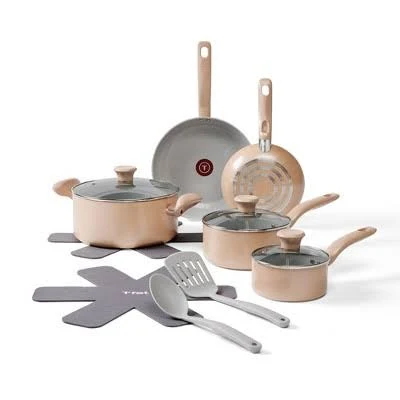
T-Fal Simply Cook Ceramic Cookware Set, Is It Non-Toxic?
Ceramic non-stick coating of unstated chemistry, and no PFAS statement from the brand.
T-fal's ceramic cookware uses ceramic-based nonstick rather than Teflon-type coating or Teflon-family coating, which is inherently lower-risk for PFAS. T-fal makes no public disclosure about PFAS.
The better-graded swap
GreenPan
Lima Hard Anodized Ceramic Nonstick 10 Inch Frying Pan
100/100 safety
Same rubric that flunked this product. The swap earned Excellent.
Still want this one anyway? Check the price on Amazon. We’d swap it.
Material
Ceramic non-stick coating
Lab data
No public lab test
You may also be interested in
Top-graded picks in the categories readers replace first, every one scored on the same rubric.

- polypropylene filter housing, carbon/sediment cartridge
- We found no PFAS statement from the brand
- Bacterial growth in spent cartridges
3 hazards checked on this product, all on its full breakdown.

Aquasure
Premier Series 75 GPD Under Sink Reverse Osmosis Water Filtration System
- RO membrane, carbon filters, stainless steel housing
- We found no PFAS statement from the brand
- Bacterial and microbial growth in housing and filters
4 hazards checked on this product, all on its full breakdown.

Avocado
Vegan Mattress
- organic cotton, natural latex, coconut coir, recycled steel coils
- The brand calls it PFAS-free, which we have not verified
- Heavy metals
2 hazards checked on this product, all on its full breakdown.
Is T-Fal Simply Cook Ceramic Cookware Set non-toxic? What it is made of
T-fal Simply Cook uses a ceramic-based non-stick coating applied over a metal (likely aluminum or steel) base. Ceramic coatings are marketed as Teflon-type coating-free, but T-fal has not publicly disclosed the specific binders, hardeners, or chemical composition of this ceramic formulation. The risk profile differs from Teflon (Teflon-type coating) but remains partly opaque without transparency on what polymers or additives stabilize the coating.
What’s concerning
Non-stick, chemistry undisclosed
Marketed as non-stick without stating the coating chemistry.
Category baseline
The starting point for this type of product, before anything specific to this product is counted.
No PFAS disclosure
No public statement from the brand about PFAS in this product.
Ceramic coating degradation and base metal exposure
Ceramic non-stick coatings are more brittle than Teflon-type coating and prone to chipping or peeling over time, especially with metal utensils or frequent washing. Once compromised, aluminum or steel substrates may leach into food.
Aluminum leaching (substrate)
If the cookware base is aluminum (common in T-fal products for heat conductivity) and the ceramic coating degrades, acidic or prolonged cooking could leach aluminum. No composition statement from T-fal confirms or rules out aluminum substrate.
Coating fume inhalation (overheating)
Ceramic coatings can off-gas volatile compounds if heated above recommended temperatures or left to preheat empty. The specific polymer binders in T-fal's ceramic are undisclosed, so the thermal stability profile is unclear.
PFAS
T-fal has issued no public statement that its ceramic coating is PFAS-free. Ceramic coatings can contain PFAS as water repellents or performance additives; without disclosure, residual PFAS risk remains unconfirmed.
Source, ATSDR ↗What’s reassuring
Lead
No recalls or test findings on record for T-fal Simply Cook ceramic cookware regarding heavy metals. However, absent third-party testing or brand certification, risk cannot be ruled out by published data.
Source, ATSDR ↗How is this PFAS grade calculated?
The brand's record and disclosure
T-fal (Groupe SEB subsidiary) has not issued a public PFAS statement or sustainability report addressing non-stick chemistry in their ceramic lines. The brand offers no third-party certification (e.g. This silence is notable given market competitors (e.g., GreenPan, Our Place) now routinely disclose PFAS-free status, suggesting T-fal has not prioritized transparency as a marketing differentiator.
How it compares in its category
Ceramic non-stick cookware sits between traditional Teflon-type coating (higher chemical risk) and uncoated stainless steel (no coating concerns). GreenPan and Caraway have published PFAS-free certifications; T-fal's silence puts it in a weaker disclosure posture. Price is typically lower than certified ceramic competitors, reflecting less R&D investment in verified chemistry.
If you buy it
Keep heat below medium-high to minimize coating stress and potential fume release; never preheat empty. Hand-wash gently to preserve the ceramic layer; avoid scouring pads and metal utensils. Inspect the coating annually for scratches, peeling, or wear; replace the set if damage exposes the base metal. Store with cloth separators between pieces to reduce friction damage.
What is not known about PFAS in this product?
- Basis
- Model estimate, 72% confidence, not a lab result
- Lab test
- None on record for this exact product
- Brand statement
- T-fal has made a specific claim
Formulations change between production runs, so check the current label. How we grade.
What are the PFAS-free alternatives to T-Fal Simply Cook Ceramic Cookware Set?
- Ceramic nonstick coating
- The brand calls it PFAS-free, which we have not verified
- Aluminum leaching
3 hazards checked on this product, all on its full breakdown.
- ceramic-coated aluminum cookware
- We found no PFAS statement from the brand
- Aluminum leaching
3 hazards checked on this product, all on its full breakdown.
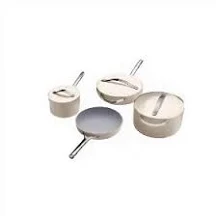
- ceramic nonstick coating (proprietary, PFAS-free)
- The brand calls it PFAS-free, which we have not verified
- Aluminum leaching (from core if coating fails)
3 hazards checked on this product, all on its full breakdown.
More ceramic cookware grades
How we score, every product runs through the same public 0-100 rubric based on materials, coatings, brand disclosure, lab findings, and recalls. See the full methodology → Spotted a mistake? Report an error.