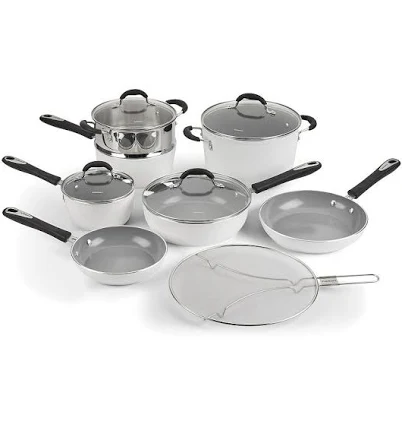
Cuisinart Ceramica XT Matte Collection Ceramic Nonstick Cookware Set, Is It Non-Toxic?
Lower concern ceramic cookware; coating source remains undisclosed, ask Cuisinart directly before buying.
Cuisinart's Ceramica XT uses ceramic nonstick, generally lower risk than Teflon-type coating, but the brand does not disclose coating composition or PFAS status. No lab data or verification is available.
The better-graded swap
GreenPan
Lima Hard Anodized Ceramic Nonstick 10 Inch Frying Pan
100/100 safety
Same rubric that flunked this product. The swap earned Excellent.
Still want this one anyway? Check the price on Amazon. We’d swap it.
Material
ceramic nonstick coating (composition unspecified)
Lab data
No public lab test
You may also be interested in
Top-graded picks in the categories readers replace first, every one scored on the same rubric.

- polypropylene filter housing, carbon/sediment cartridge
- We found no PFAS statement from the brand
- Bacterial growth in spent cartridges
3 hazards checked on this product, all on its full breakdown.

Aquasure
Premier Series 75 GPD Under Sink Reverse Osmosis Water Filtration System
- RO membrane, carbon filters, stainless steel housing
- We found no PFAS statement from the brand
- Bacterial and microbial growth in housing and filters
4 hazards checked on this product, all on its full breakdown.

Avocado
Vegan Mattress
- organic cotton, natural latex, coconut coir, recycled steel coils
- The brand calls it PFAS-free, which we have not verified
- Heavy metals
2 hazards checked on this product, all on its full breakdown.
Is Cuisinart Ceramica XT Matte Cookware Set non-toxic? What it is made of
Cuisinart Ceramica XT uses a ceramic nonstick coating applied over aluminum cookware bases. The exact composition of the ceramic coating is not publicly disclosed by Cuisinart, which is the core transparency gap. Ceramic coatings are generally considered lower-risk than traditional Teflon-type coating (Teflon) because they do not require fluorine-based chemistry, but the binder resins and any additives in the coating remain proprietary. The aluminum substrate itself is standard in nonstick cookware and poses minimal leaching risk under normal use if the coating remains intact.
What’s concerning
Category baseline
The starting point for this type of product, before anything specific to this product is counted.
No PFAS disclosure
No public statement from the brand about PFAS in this product.
Non-stick, chemistry undisclosed
Marketed as non-stick without stating the coating chemistry.
Ceramic coating degradation and particulate shedding
Ceramic nonstick coatings are known to chip and degrade faster than Teflon-type coating, particularly if scratched or exposed to high heat. No specific data on Cuisinart Ceramica XT coating durability is publicly available, but microscopic coating loss during normal use is a recognized characteristic of the material class.
Undisclosed coating binder chemistry and resin additives
The ceramic coating composition is proprietary and unspecified, meaning potential binder resins, cross-linking agents, or other additives are unknown to consumers. These resins could theoretically include formaldehyde or other volatile organics, but absence of disclosure does not confirm their presence.
Teflon-type coating or fluorine-based compounds in coating
Cuisinart has not confirmed the coating is Teflon-type coating-free, and ceramic coatings sometimes contain fluorinated additives as flow agents or water repellents. Graded separately under PFAS assessment, but worth noting as a known question mark for this specific product.
Lack of third-party certification or testing
No independent testing results, safety certifications (e.g., NSF, FDA, heavy metal/coating composition analysis), or PFAS documentation is publicly available for this product line. This information gap is not itself a hazard, but it increases consumer uncertainty and makes relative safety comparison difficult.
What’s reassuring
Aluminum substrate leaching under compromised coating
Aluminum leaching is minimal in intact nonstick cookware, but if the ceramic coating degrades significantly, acidic foods (tomato-based dishes, vinegar) could interact with exposed aluminum. This is a theoretical concern tied to coating longevity rather than a material defect.
How is this PFAS grade calculated?
The brand's record and disclosure
Cuisinart has not published a public PFAS commitment or coating composition statement for this product line. The company does not provide third-party test results or certifications (e.g., GOTS, Bluesign) confirming PFAS absence, which represents a notable disclosure gap in an era of increasing consumer scrutiny. Cuisinart is a long-established, reputable cookware manufacturer with no major safety recalls tied to nonstick coatings in recent years. However, silence on coating sourcing is not reassurance and leaves questions unanswered.
How it compares in its category
Ceramic nonstick cookware occupies a middle ground between traditional Teflon-type coating nonstick and stainless steel. Cuisinart's Ceramica line is competitively positioned but less transparent than some competitors (e.g., GreenPan, which explicitly markets PFAS-free coatings). Ceramic coatings generally have shorter lifespans than Teflon-type coating before degradation occurs, meaning replacement cycles are shorter. Price and brand recognition favor Cuisinart, but buyers prioritizing verified low-PFAS claims may prefer brands with public disclosures.
If you buy it
Use on low to medium heat only; ceramic coatings degrade faster at high temperatures and may shed particulates if overheated. Hand wash and avoid metal utensils, as the coating chips more readily than traditional nonstick. Expect the nonstick finish to diminish after 2 to 3 years of regular use, which is normal for ceramic and signals replacement timing. Contact Cuisinart directly before purchase to request the coating manufacturer and PFAS-free certification if that is a priority for your household.
What is not known about PFAS in this product?
- Basis
- Model estimate, 62% confidence, not a lab result
- Lab test
- None on record for this exact product
- Brand statement
- Cuisinart has made a specific claim
Formulations change between production runs, so check the current label. How we grade.
What are the PFAS-free alternatives to Cuisinart Ceramica XT Matte Collection Ceramic Nonstick Cookware Set?
- Ceramic nonstick coating
- The brand calls it PFAS-free, which we have not verified
- Aluminum leaching
3 hazards checked on this product, all on its full breakdown.
- ceramic-coated aluminum cookware
- We found no PFAS statement from the brand
- Aluminum leaching
3 hazards checked on this product, all on its full breakdown.
- ceramic nonstick coating (proprietary, PFAS-free)
- The brand calls it PFAS-free, which we have not verified
- Aluminum leaching (from core if coating fails)
3 hazards checked on this product, all on its full breakdown.
More ceramic cookware grades
How we score, every product runs through the same public 0-100 rubric based on materials, coatings, brand disclosure, lab findings, and recalls. See the full methodology → Spotted a mistake? Report an error.