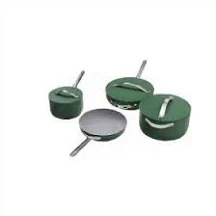
Caraway Deluxe Cookware Set, Is It Non-Toxic?
Named ceramic non-stick coating, with a brand PFAS statement we have not verified.
Caraway says its ceramic non-stick coating is made without Teflon-type coating, PFOA and PFAS. We record that as an unverified brand claim. Its record describes a non-stick coating of unstated type, which is still counted.
Brand says: “Caraway says its ceramic non-stick coating is made without PTFE, PFOA and PFAS.”
We flunk more products than we pass. This one earned its grade. How we grade
Material
Ceramic nonstick coating on aluminum core
Brand disclosure
Brand claims PFAS-free
Lab data
No public lab test
You may also be interested in
Top-graded picks in the categories readers replace first, every one scored on the same rubric.

- polypropylene filter housing, carbon/sediment cartridge
- We found no PFAS statement from the brand
- Bacterial growth in spent cartridges
3 hazards checked on this product, all on its full breakdown.

Aquasure
Premier Series 75 GPD Under Sink Reverse Osmosis Water Filtration System
- RO membrane, carbon filters, stainless steel housing
- We found no PFAS statement from the brand
- Bacterial and microbial growth in housing and filters
4 hazards checked on this product, all on its full breakdown.

Avocado
Vegan Mattress
- organic cotton, natural latex, coconut coir, recycled steel coils
- The brand calls it PFAS-free, which we have not verified
- Heavy metals
2 hazards checked on this product, all on its full breakdown.
Is Caraway Deluxe Cookware Set non-toxic? What it is made of
Caraway cookware uses a ceramic nonstick coating applied over an aluminum core. Ceramic coatings do not contain Teflon-type coating (Teflon) and present lower concern for fume release at high heat compared to Teflon-type coating-based coatings. The aluminum substrate itself is food-safe at normal cooking temperatures but can leach small amounts of aluminum into acidic foods if the ceramic layer degrades or chips. This product's brand explicitly claims PFAS-free formulation for the ceramic layer, which eliminates the primary chemical risk associated with traditional nonstick cookware.
What’s concerning
Disclosed non-fluorinated coating
Coating is named and the brand states it is made without PFAS.
Category baseline
The starting point for this type of product, before anything specific to this product is counted.
Aluminum leaching
Ceramic coating on aluminum core presents lower concern when intact, but any chipping or degradation exposes aluminum to acidic foods. Risk is low under normal use but increases over time as the coating wears.
Ceramic coating degradation and microchipping
Ceramic nonstick coatings are known to degrade after 3-5 years of regular use. Small ceramic chips or dust can enter food if the coating flakes; no ceramic toxicity hazard exists, but this triggers replacement for hygiene and aluminum contact reasons.
Off-gassing or volatile organic compounds from coating
All polymer-based nonstick coatings may release trace volatile organics during manufacturing or new-product use. Caraway does not publish VOC data; proper ventilation during first uses is a reasonable precaution, though no complaints or test results are on record.
What’s reassuring
Brand-stated PFAS-free
The brand states this product is PFAS-free. We have not verified the claim.
Teflon-type coating fume risk
Ceramic coating formulation avoids Teflon-type coating entirely, eliminating the risk of decomposition fumes at high temperatures that plague traditional Teflon cookware.
Lead
No lead or heavy-metal contamination has been reported in Caraway ceramic cookware. The ceramic coating is a synthetic polymer composite, not a traditional glaze, reducing risk of metallic pigment contamination.
Source, ATSDR ↗How is this PFAS grade calculated?
The brand's record and disclosure
Caraway is a direct-to-consumer cookware brand founded around sustainability and health transparency. The company has made a public PFAS-free commitment for its ceramic coating formulation, though this claim has not been independently lab-verified by third parties like NSF or a published testing audit. No recalls, contamination incidents, or regulatory violations are on record for Caraway cookware. The brand does disclose materials (aluminum core, ceramic coating, stainless-steel lids) in product specs, supporting traceability.
How it compares in its category
Ceramic nonstick cookware sits between traditional Teflon-coated pans and cast iron in safety profiles. Unlike Teflon-type coating cookware, ceramic poses no Teflon-type coating fume risk even if overheated. Unlike cast iron, it requires no seasoning and avoids iron leaching concerns. Caraway's pricing and PFAS-free stance position it as a premium alternative to mass-market ceramic brands (often sold by Amazon or Walmart), which rarely make explicit PFAS disclosures. Durability and nonstick longevity are comparable to mid-range ceramic, typically 3-5 years before coating wear.
If you buy it
Keep heat to medium or below to preserve the ceramic coating and avoid any risk of coating breakdown accelerating aluminum leaching. Avoid acidic foods (tomato sauce, vinegar, citrus) sitting in the pan for extended periods, as acidity plus bare aluminum (if coating chips) increases leaching slightly. Hand-wash rather than use a dishwasher to extend coating life. Replace pans if the ceramic visibly chips, peels, or flakes; at that point, the underlying aluminum may contact food. Use wooden or silicone utensils to minimize scratching.
What is not known about PFAS in this product?
- Basis
- Model estimate, 72% confidence, not a lab result
- Lab test
- None on record for this exact product
- Brand statement
- Caraway has made a specific claim
Formulations change between production runs, so check the current label. How we grade.
What are the PFAS-free alternatives to Caraway Deluxe Cookware Set?
- Ceramic nonstick coating
- The brand calls it PFAS-free, which we have not verified
- Aluminum leaching
3 hazards checked on this product, all on its full breakdown.
- ceramic-coated aluminum cookware
- We found no PFAS statement from the brand
- Aluminum leaching
3 hazards checked on this product, all on its full breakdown.
More ceramic cookware grades
How we score, every product runs through the same public 0-100 rubric based on materials, coatings, brand disclosure, lab findings, and recalls. See the full methodology → Spotted a mistake? Report an error.