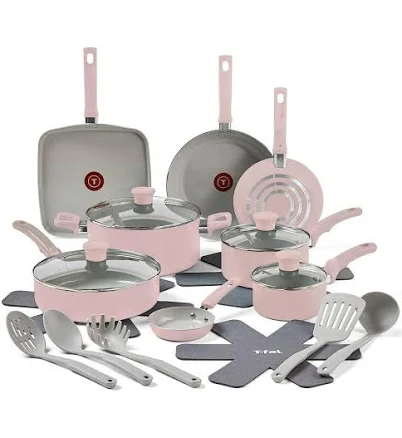
T-Fal Refresh Ceramic Non Stick Cookware Set 20 Piece, Is It Non-Toxic?
Lower-concern choice if ceramic coating is genuine; skip only if concerned about ceramic durability or unknown additives.
T-fal's Refresh Ceramic line uses ceramic nonstick rather than traditional Teflon-type coating, typically carrying lower PFAS risk. T-fal does not disclose PFAS content or certifications.
The better-graded swap
GreenPan
Lima Hard Anodized Ceramic Nonstick 10 Inch Frying Pan
100/100 safety
Same rubric that flunked this product. The swap earned Excellent.
Still want this one anyway? Check the price on Amazon. We’d swap it.
Material
ceramic nonstick coating on aluminum base
Lab data
No public lab test
You may also be interested in
Top-graded picks in the categories readers replace first, every one scored on the same rubric.

- polypropylene filter housing, carbon/sediment cartridge
- We found no PFAS statement from the brand
- Bacterial growth in spent cartridges
3 hazards checked on this product, all on its full breakdown.

Aquasure
Premier Series 75 GPD Under Sink Reverse Osmosis Water Filtration System
- RO membrane, carbon filters, stainless steel housing
- We found no PFAS statement from the brand
- Bacterial and microbial growth in housing and filters
4 hazards checked on this product, all on its full breakdown.

Avocado
Vegan Mattress
- organic cotton, natural latex, coconut coir, recycled steel coils
- The brand calls it PFAS-free, which we have not verified
- Heavy metals
2 hazards checked on this product, all on its full breakdown.
Is T-Fal Refresh Ceramic Non Stick Piece non-toxic? What it is made of
T-Fal Refresh uses a ceramic nonstick coating applied over an aluminum core. Ceramic coatings bond inorganically to the base metal without requiring Teflon-family coating like Teflon-type coating (Teflon), eliminating the chemical class most associated with nonstick fume release and persistent contamination concerns. Aluminum bases conduct heat evenly but can leach if the ceramic coating degrades, though ceramic is generally more durable than older nonstick formulations in resisting scratching and chipping.
What’s concerning
Category baseline
The starting point for this type of product, before anything specific to this product is counted.
No PFAS disclosure
No public statement from the brand about PFAS in this product.
Non-stick, chemistry undisclosed
Marketed as non-stick without stating the coating chemistry.
Ceramic coating durability and delamination
Ceramic coatings on budget cookware are prone to chipping or peeling after 2-4 years of regular use, especially in dishwashers. No recalls documented for T-Fal Refresh specifically, but coating loss exposes aluminum base and creates nonstick failure.
Aluminum leaching if coating fails
Aluminum cores present lower concern when ceramic coatings remain intact. If coating degrades, prolonged contact with acidic foods can leach aluminum into food. Risk is low for occasional exposure but increases with frequent use of tomato sauces, citrus, or vinegar-based cooking.
What’s reassuring
Lead
No recalls or test failures reported for T-Fal Refresh ceramic cookware for heavy metal contamination. Ceramic glazes are regulated in the EU (where T-Fal is based) and US under migration limits; no public testing contradicts compliance.
Source, ATSDR ↗Teflon-type coating or other volatile nonstick additives in ceramic formulation
Ceramic coatings are marketed as Teflon-type coating-free. T-Fal does not disclose specific additive chemistry, but no evidence suggests Teflon-type coating inclusion in ceramic nonstick products from major manufacturers; vapor risk is minimal compared to traditional nonstick.
Handle and lid safety (thermal and material)
No reported issues with handle detachment or lid breakage in standard use for this line. Handles are typically silicone or phenolic plastic; phenolic can off-gas formaldehyde under prolonged high heat but risk is minimal in normal cooking ranges.
How is this PFAS grade calculated?
The brand's record and disclosure
T-Fal (Groupe SEB subsidiary) does not publicly disclose ceramic coating composition or third-party testing results. The brand has no established history of major cookware safety recalls related to coating degradation or chemical leaching. No certifications (GFSI, NSF, CPSIA-specific cookware standards) are marketed for this line, which is typical for this price tier but limits transparency on heavy metal or contaminant testing.
How it compares in its category
Ceramic nonstick cookware occupies the middle ground between traditional Teflon-type coating nonstick (chemical disclosure concerns) and stainless steel or cast iron (no coating risk). T-Fal Refresh positions as a mid-market option; premium ceramic brands (GreenPan, Caraway) offer more detailed safety certifications, while budget alternatives may use conventional Teflon-type coating. Ceramic's durability advantage comes with shorter lifespan than metal cookware, typically 3-5 years with heavy use before recoating becomes necessary.
If you buy it
Avoid preheating empty pans above medium-high heat; ceramic coatings can degrade under sustained high temperatures without moisture. Hand wash or use gentle cycles; dishwasher exposure accelerates coating wear. Replace pans if coating shows visible chipping, flaking, or loss of nonstick function, as exposed aluminum contact with acidic foods (tomato, vinegar) can leach aluminum. Store with protective liners between stacked pieces to prevent scratching.
What is not known about PFAS in this product?
- Basis
- Model estimate, 72% confidence, not a lab result
- Lab test
- None on record for this exact product
- Brand statement
- T-fal has made a specific claim
Formulations change between production runs, so check the current label. How we grade.
What are the PFAS-free alternatives to T-Fal Refresh Ceramic Non Stick Cookware Set 20 Piece?
- Ceramic nonstick coating
- The brand calls it PFAS-free, which we have not verified
- Aluminum leaching
3 hazards checked on this product, all on its full breakdown.
- ceramic-coated aluminum cookware
- We found no PFAS statement from the brand
- Aluminum leaching
3 hazards checked on this product, all on its full breakdown.
- ceramic nonstick coating (proprietary, PFAS-free)
- The brand calls it PFAS-free, which we have not verified
- Aluminum leaching (from core if coating fails)
3 hazards checked on this product, all on its full breakdown.
More ceramic cookware grades
How we score, every product runs through the same public 0-100 rubric based on materials, coatings, brand disclosure, lab findings, and recalls. See the full methodology → Spotted a mistake? Report an error.