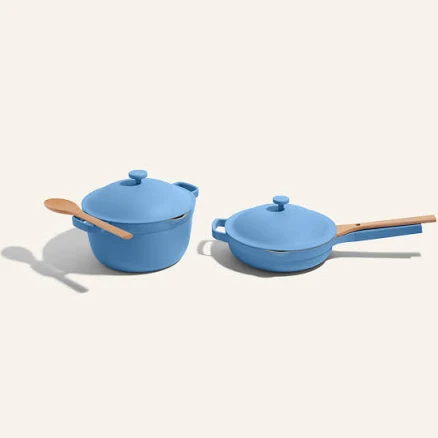
Our Place 7-Piece Ceramic Nonstick Cookware Duo, Is It Non-Toxic?
Named ceramic non-stick coating, with a brand PFAS statement we have not verified.
Our Place says its ceramic non-stick coating is made without PFAS, including Teflon-type coating and PFOA. We record that as an unverified brand claim.
Brand says: “Our Place says its ceramic non-stick coating is made without PFAS, including PTFE and PFOA.”
We flunk more products than we pass. This one earned its grade. How we grade
Material
ceramic nonstick coating
Brand disclosure
Brand claims PFAS-free
Lab data
No public lab test
You may also be interested in
Top-graded picks in the categories readers replace first, every one scored on the same rubric.

- polypropylene filter housing, carbon/sediment cartridge
- We found no PFAS statement from the brand
- Bacterial growth in spent cartridges
3 hazards checked on this product, all on its full breakdown.

Aquasure
Premier Series 75 GPD Under Sink Reverse Osmosis Water Filtration System
- RO membrane, carbon filters, stainless steel housing
- We found no PFAS statement from the brand
- Bacterial and microbial growth in housing and filters
4 hazards checked on this product, all on its full breakdown.

Avocado
Vegan Mattress
- organic cotton, natural latex, coconut coir, recycled steel coils
- The brand calls it PFAS-free, which we have not verified
- Heavy metals
2 hazards checked on this product, all on its full breakdown.
Is Our Place 7-Piece Ceramic Cookware Duo non-toxic? What it is made of
Our Place uses a ceramic nonstick coating applied over a base cookware body (typically aluminum or stainless steel underneath). Ceramic coatings are inorganic mineral-based surfaces that do not contain Teflon-type coating (Teflon) or traditional perfluorinated compounds, making them chemically distinct from older nonstick technologies. The ceramic layer itself does not off-gas toxic fumes under normal cooking temperatures (below 500F). Durability of ceramic nonstick depends heavily on coating thickness and adherence; it can chip or wear with abrasive use, potentially exposing base metal underneath.
What’s concerning
Disclosed non-fluorinated coating
Coating is named and the brand states it is made without PFAS.
Category baseline
The starting point for this type of product, before anything specific to this product is counted.
Coating degradation and base metal exposure
Ceramic nonstick coatings are inherently more fragile than Teflon-type coating; chipping or peeling can expose aluminum or steel underneath. No recalls on record for Our Place specifically, but this is an intrinsic risk of ceramic cookware over time, especially with dishwashing or metal utensils.
Aluminum leaching (if base layer exposed)
If the ceramic coating chips or wears, underlying aluminum can contact food, especially acidic dishes. This is not specific to Our Place but inherent to aluminum-core cookware; leaching levels are typically below health concern thresholds for occasional exposure but may accumulate with frequent use of damaged cookware.
What’s reassuring
Brand-stated PFAS-free
The brand states this product is PFAS-free. We have not verified the claim.
Lead
No published reports or recalls link Our Place ceramic cookware to lead or cadmium contamination. Reputable US-sold cookware brands typically comply with FDA limits, but ceramic coating composition is not always disclosed in detail by manufacturers.
Source, ATSDR ↗Teflon-type coating fume risk
Ceramic nonstick by design does not use Teflon-type coating, so fume inhalation risk associated with overheated Teflon-family coating coatings does not apply to this product.
Off-gassing or volatile organic compounds
No reports of VOC off-gassing from Our Place ceramic cookware. Ceramic itself is thermally stable and does not release organic volatiles under normal cooking; any odor on initial use is typically from manufacturing residue or applied oils and dissipates with washing.
How is this PFAS grade calculated?
The brand's record and disclosure
Our Place has made explicit public statements that their ceramic nonstick cookware is PFAS-free, aligning with consumer demand for alternatives to traditional Teflon-family coating coatings. The brand has not faced major recalls or regulatory actions specifically tied to heavy metal leaching or coating degradation in their cookware line. However, their PFAS-free claim has not been independently verified by third-party lab testing publicly available; consumers should treat this as a manufacturer commitment rather than certified proof. Our Place does not appear to hold NSF, GREENGUARD, or similar certifications that would provide third-party validation of material safety.
How it compares in its category
Ceramic nonstick cookware occupies a middle ground, it avoids Teflon-type coating-related concerns that plague traditional Teflon, but it is more prone to chipping and coating wear than cast iron or stainless steel, and nonstick performance degrades faster than Teflon-type coating under heavy use. Our Place's ceramic offering competes with brands like GreenPan, Caraway, and Xtrema, many of which also claim PFAS-free ceramic coatings. Ceramic products generally lack the longevity track record of established Teflon-type coating cookware, so real-world durability data is still accumulating. Price-wise, Our Place sits at a premium consumer level, suggesting heavier gauge materials and potentially more durable coating application than budget ceramic alternatives.
If you buy it
Hand-wash instead of using the dishwasher to extend coating life and minimize mechanical wear. Do not use metal utensils; stick to wood, silicone, or plastic tools to avoid scraping the ceramic surface. Keep heat below medium-high (roughly 400F on stovetop) because even ceramic can degrade or discolor if exposed to sustained high temperatures. If the coating begins to chip noticeably or peel, discontinue use of that piece, as exposed base metal (aluminum or steel) may leach into acidic foods; inspect cookware every 6-12 months depending on use frequency.
What is not known about PFAS in this product?
- Basis
- Model estimate, 78% confidence, not a lab result
- Lab test
- None on record for this exact product
- Brand statement
- Our Place has made a specific claim
Formulations change between production runs, so check the current label. How we grade.
What are the PFAS-free alternatives to Our Place 7-Piece Ceramic Nonstick Cookware Duo?
- Ceramic nonstick coating
- The brand calls it PFAS-free, which we have not verified
- Aluminum leaching
3 hazards checked on this product, all on its full breakdown.
- ceramic-coated aluminum cookware
- We found no PFAS statement from the brand
- Aluminum leaching
3 hazards checked on this product, all on its full breakdown.
More ceramic cookware grades
How we score, every product runs through the same public 0-100 rubric based on materials, coatings, brand disclosure, lab findings, and recalls. See the full methodology → Spotted a mistake? Report an error.