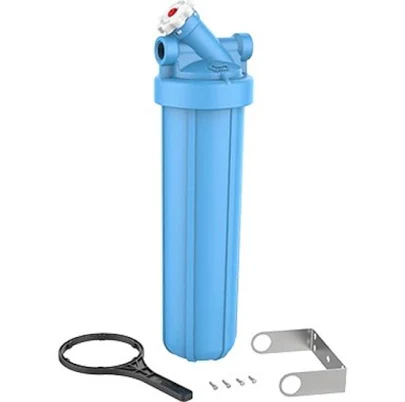
Pentair OMNIFilter Whole House Filter System
Lower-concern filter type, but Pentair has not disclosed PFAS stance; verify independently if critical.
Pentair OMNIFilter whole-house systems use activated carbon and polypropylene media, which are not inherently PFAS-prone materials. However, Pentair does not disclose whether their filter housings, seals, or specialty coatings contain PFAS.
We flunk more products than we pass. This one earned its grade. How we grade
Material
Activated carbon filter media, polypropylene housing
Brand disclosure
Brand is silent on PFAS
Lab data
No public lab test
You may also be interested in
Top-graded picks in the categories readers replace first, every one scored on the same rubric.

Aquasure
Premier Series 75 GPD Under Sink Reverse Osmosis Water Filtration System
- RO membrane, carbon filters, stainless steel housing
- We found no PFAS statement from the brand
- Bacterial and microbial growth in housing and filters
4 hazards checked on this product, all on its full breakdown.

Avocado
Vegan Mattress
- organic cotton, natural latex, coconut coir, recycled steel coils
- The brand calls it PFAS-free, which we have not verified
- Heavy metals
2 hazards checked on this product, all on its full breakdown.

- polyurethane foam
- We found no PFAS statement from the brand
- Volatile Organic Compound (VOC) Off-Gassing
4 hazards checked on this product, all on its full breakdown.
What Pentair OMNIFilter Whole Filter System is made of, ingredients and materials
The OMNIFilter uses activated carbon as the primary filtration media, which adsorbs chlorine, sediment, and some organic compounds through physical binding, not chemical reaction. The housing is food-grade polypropylene (PP), chosen because it resists corrosion and does not leach significant quantities of BPA or phthalates under normal cold-water pressure. The filter cartridge is a mechanical barrier system; activated carbon does not shed microplastics into water under standard residential pressure and flow rates.
What’s concerning
No PFAS disclosure
No public statement from the brand about PFAS in this product.
Activated carbon dust and microparticle release
New carbon filters can release fine black particles (activated carbon dust) into water for the first several liters; this is cosmetic and harmless but requires flushing. Actual microplastic shedding from polypropylene components under normal pressure is not reported for this system.
Bacterial biofilm growth in cartridge
Activated carbon can harbor bacteria if water sits stagnant or if cartridge replacement is delayed beyond 12 months; this is a maintenance issue, not a manufacturing defect. Regular replacement and weekly water use prevent meaningful biofilm risk.
Housing seal degradation and unfiltered water bypass
Polypropylene seals can weaken if exposed to temperatures above system rating or if connections are not hand-tightened correctly; improper installation allows unfiltered water to bypass the cartridge. This is installation and maintenance dependent, not a material defect.
What’s reassuring
Base material not linked to PFAS
The main material recorded for this product is not one associated with PFAS.
BPA & bisphenols
Food-grade polypropylene housings do not typically leach detectable BPA or BPS under cold-water residential pressure; no public incidents or testing reports of leaching from OMNIFilter housings. Trace antimony from polymerization catalysts is possible but would be minimal and is not documented as a concern for this product.
Source, FDA ↗Pressure or temperature exceedance causing plastic brittleness
OMNIFilter housings are rated for standard residential water pressure (40-60 psi) and cold water. No recalls or field failures related to housing fracture or leakage are publicly documented; exposure to hot water or high pressure would be user error.
How is this PFAS grade calculated?
The brand's record and disclosure
Pentair is a large, publicly traded water-treatment manufacturer with NSF/ANSI certification for many products, though specific OMNIFilter model certifications vary by region. The company has not made explicit public statements about PFAS removal or testing for PFAS in their whole-house cartridges; this silence is typical for activated carbon suppliers and does not indicate a problem, but independent lab verification is unavailable in public records. No significant product recalls or housing-leachate controversies are documented for this line.
How it compares in its category
Whole-house carbon filters like the OMNIFilter present lower concern because they use passive mechanical adsorption without electrical charge, ion exchange resins, or chemical additives that could leach. They are less specialized than reverse-osmosis units (which have different maintenance needs) and less prone to bacterial biofilm than some ceramic filters if cartridges are replaced on schedule. Polypropylene housings are more durable and leak-free than some lower-cost plastic alternatives, reducing risk of unfiltered water bypass.
If you buy it
Replace the filter cartridge every 6-12 months depending on water quality and household usage; activated carbon becomes saturated and loses adsorption capacity over time. Check housing connections and seals during installation to prevent unfiltered water from bypassing the cartridge. Do not expose the system to water temperatures above 100°F (38°C) or pressures above rated specs, as polypropylene can degrade and weaken seals under extreme conditions. Flush the system for several minutes after cartridge replacement to clear loose carbon dust.
What is not known about PFAS in this product?
- Basis
- Model estimate, 62% confidence, not a lab result
- Lab test
- None on record for this exact product
- Brand statement
- Pentair has made none
Formulations change between production runs, so check the current label. How we grade.
More whole-house filters grades
How we score, every product runs through the same public 0-100 rubric based on materials, coatings, brand disclosure, lab findings, and recalls. See the full methodology → Spotted a mistake? Report an error.