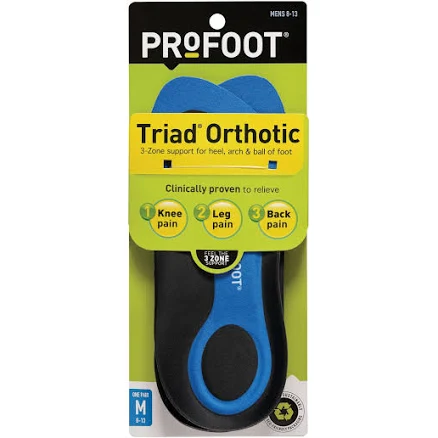
Profoot · Synthetic Athletic Insoles & Orthotics
Profoot Triad Orthotic Insoles for Knee, Leg & Back Pain
Lower PFAS concern; no known risk factors identified.
These orthotic insoles use foam, gel, and thermoplastic polymers without intentional fluorochemical coatings. The manufacturer has not disclosed PFAS information.
Still want this one anyway? Check the price on Amazon. We’d swap it.
Material
Foam, gel, or thermoplastic polymer insole with fabric covering
Brand disclosure
Brand is silent on PFAS
Lab data
No public lab test
You may also be interested in
Top-graded picks in the categories readers replace first, every one scored on the same rubric.

Aqua Pure
3M Aqua-Pure AP802B Whole House Filter Housing
- polypropylene filter housing, carbon/sediment cartridge
- We found no PFAS statement from the brand
- Bacterial growth in spent cartridges
3 hazards checked on this product. See all of them.

Aquasure
Premier Series 75 GPD Under Sink Reverse Osmosis Water Filtration System
- RO membrane, carbon filters, stainless steel housing
- We found no PFAS statement from the brand
- Bacterial and microbial growth in housing and filters
4 hazards checked on this product. See all of them.

Avocado
Vegan Mattress
- organic cotton, natural latex, coconut coir, recycled steel coils
- The brand calls it PFAS-free, which we have not verified
- Heavy metals
2 hazards checked on this product. See all of them.
What Profoot Triad Orthotic Insoles for Knee is made of, ingredients and materials
Profoot Triad insoles combine foam, gel, and thermoplastic elastomer (TPE) or similar polymers as the functional base, topped with fabric covering. These materials are chosen for cushioning and shock absorption rather than water resistance, so they do not require water-repellent coatings that might contain PFAS. The fabric layer is typically polyester or cotton blend; the gel and foam cores are inert when not heated or degraded, and pose minimal leaching risk under normal foot-temperature use.
What’s concerning
Category baseline
The starting point for this type of product, before anything specific to this product is counted.
No PFAS disclosure
No public statement from the brand about PFAS in this product.
Azo dyes in fabric layer
The fabric covering may be dyed with conventional azo colorants, which can release carcinogenic amines under skin moisture or abrasion. This is a category-wide risk in low-cost textiles but has not been specifically flagged for Profoot insoles; risk is mitigated by washability and the insole's position inside a shoe.
Antimony in polyester polymer
If the fabric or TPE base contains polyester, antimony trioxide may be present as a catalyst residue (typical in polyester manufacturing). Leaching via skin contact is considered minimal in normal use, though data specific to Profoot formulations is not public.
Volatile organic compound off-gassing from foam or TPE
New foam and thermoplastic elastomer insoles may emit low levels of chemical odors (amines, solvents) during the first few days of use. This is typically harmless and dissipates quickly, but individuals with chemical sensitivity may experience temporary respiratory or olfactory irritation.
Microbial contamination or fungal growth if wet
Foam and gel insoles trapped in a moist shoe create conditions for bacterial or fungal colonization, especially if not dried thoroughly after perspiration. This is a use and maintenance issue rather than a manufacturing hazard, but common enough in this product category to warrant user awareness.
What’s reassuring
Base material not linked to PFAS
The main material recorded for this product is not one associated with PFAS.
Formaldehyde / VOCs
Profoot Triad's fabric covering is not documented to use formaldehyde-based wrinkle-resist or antimicrobial finishes. Consumer orthotic fabrics rarely undergo finish treatment, but no published analysis of this brand's specific textile inputs exists.
Source, ATSDR ↗The full breakdown
The brand's record and disclosure
Profoot is a private-label orthotic brand with no major recalls or chemical safety controversies on public record. The company does not publish material safety data sheets or third-party certifications (such as Oeko-Tex or similar textile standards) that are publicly available. This silence is typical for consumer orthotic brands and does not indicate a problem, but it does mean independent verification of chemical inputs is unavailable.
How it compares in its category
Profoot Triad sits in the mainstream consumer orthotic market alongside brands like Powerstep, Dr. Scholl's, and Spenco. Unlike medical-grade orthotics prescribed by podiatrists, consumer insoles are not subject to FDA material premarket review. Profoot's reliance on common foam and TPE polymers is standard; no evidence suggests their formulations have lower concern than competitors, though all mass-market insoles lack detailed material transparency.
If you buy it
Replace insoles every 6-12 months or when cushioning visibly compresses or fabric separates, as degraded foam can lose structural integrity. Store in a cool, dry place and avoid prolonged heat exposure (above 140°F / 60°C) that could soften or warp TPE. If you notice skin irritation, odor, or color bleeding from the fabric, discontinue use and rinse feet; this may indicate dye bleed or microbial growth in a warm, moist environment. Hand-wash insoles periodically with mild soap and air-dry completely.
What we don’t know
- Basis
- Model estimate, 62% confidence, not a lab result
- Lab test
- None on record for this exact product
- Brand statement
- Profoot has made none
Formulations change between production runs, so check the current label. How we grade.
More synthetic athletic insoles & orthotics grades
How we score, every product runs through the same public 0-100 rubric based on materials, coatings, brand disclosure, lab findings, and recalls. See the full methodology → Spotted a mistake? Report an error.