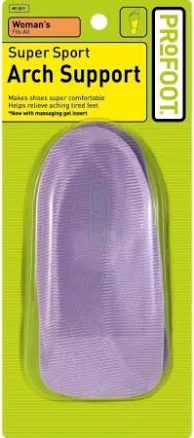
Profoot · Synthetic Athletic Insoles & Orthotics
ProFoot Women's Super Sport Arch Support
Likely lower risk, but Profoot offers no brand transparency on materials.
Arch support insoles typically use foam, fabric, and rubber without water-resistant coatings, making PFAS risk lower. However, Profoot does not disclose material details or PFAS stance.
Still want this one anyway? Check the price on Amazon. We’d swap it.
Material
foam, fabric blend, rubber
Brand disclosure
Brand is silent on PFAS
Lab data
No public lab test
You may also be interested in
Top-graded picks in the categories readers replace first, every one scored on the same rubric.

Aqua Pure
3M Aqua-Pure AP802B Whole House Filter Housing
- polypropylene filter housing, carbon/sediment cartridge
- We found no PFAS statement from the brand
- Bacterial growth in spent cartridges
3 hazards checked on this product. See all of them.

Aquasure
Premier Series 75 GPD Under Sink Reverse Osmosis Water Filtration System
- RO membrane, carbon filters, stainless steel housing
- We found no PFAS statement from the brand
- Bacterial and microbial growth in housing and filters
4 hazards checked on this product. See all of them.

Avocado
Vegan Mattress
- organic cotton, natural latex, coconut coir, recycled steel coils
- The brand calls it PFAS-free, which we have not verified
- Heavy metals
2 hazards checked on this product. See all of them.
What ProFoot Women's Super Sport Arch Support is made of, ingredients and materials
ProFoot Super Sport Arch Support is constructed from foam (likely polyurethane or EVA), fabric blend uppers, and rubber base. Foam in footwear can off-gas volatile organic compounds (VOCs) during manufacturing and early use, particularly if the foam was treated with flame retardants or antimicrobial coatings. The fabric blend and rubber components may contain synthetic dyes, adhesives, or processing chemicals that migrate with moisture and body heat. No public material safety data sheet or composition breakdown is available from the brand.
What’s concerning
Category baseline
The starting point for this type of product, before anything specific to this product is counted.
No PFAS disclosure
No public statement from the brand about PFAS in this product.
VOC off-gassing from foam
Polyurethane and EVA foams commonly release volatile organic compounds during curing and early use. Intensity depends on manufacturing process and thermal history; Profoot discloses neither, making assessment indirect. Typical exposure is mild but sustained in footwear worn directly against skin in a warm, moist microenvironment.
Azo dyes and synthetic fabric treatments
Fabric blend uppers are likely dyed with standard synthetic dyes; azo dyes restricted in regulated markets may be present if manufacture is in unregulated regions. Heat and moisture from feet can enhance migration of dyes to skin. No safety certifications are claimed by the brand to rule this out.
Adhesive leachables and breakdown
Foam insoles are typically glued to fabric and rubber backing using synthetic adhesives that may contain formaldehyde, toluene, or plasticizers. Adhesive degradation accelerates with heat, moisture, and mechanical stress; prolonged wear can allow these compounds to migrate. No adhesive standard or maintenance requirement is published by Profoot.
Microbial and fungal contamination
Foam is hygroscopic and traps moisture in the shoe microenvironment, creating conditions for bacterial and fungal growth if insoles are not dried regularly or replaced frequently. This is not a chemical hazard but a physical hygiene risk heightened by the material's absorbency and the brand's silence on care protocols.
What’s reassuring
Base material not linked to PFAS
The main material recorded for this product is not one associated with PFAS.
Flame retardants
Flame retardant chemicals (brominated or phosphate-based) are sometimes added to foam in footwear but are not mandatory for this product category. No public evidence or recall indicates Profoot uses them, but material composition data is unavailable for confirmation.
Source, EPA ↗The full breakdown
The brand's record and disclosure
Profoot maintains minimal public disclosure on material sourcing, chemical treatments, or third-party certifications (no OEKO-TEX, GOTS, or similar badges visible). The brand has no established record of chemical controversies or recalls, but also no track record of transparency commitments. Absence of disclosure does not mean absence of hazard; it indicates a precautionary knowledge gap that consumers cannot verify independently.
How it compares in its category
Foam arch supports are common in mass-market footwear and are generally lower-risk than gel or plastic inserts if manufactured to basic standards. Many competitors (including podiatry-grade brands) publish material certifications or chemical testing reports; Profoot does not. This product sits in the mid-market segment where safety standards are met but transparency is not prioritized, placing it in a middle-ground risk category relative to premium certified alternatives and budget generics.
If you buy it
Air out the insoles in a well-ventilated space for 24-48 hours before first wear to reduce initial VOC off-gassing. Inspect for odor, discoloration, or visible degradation monthly; replace if foam compresses unevenly, develops a chemical smell, or feels sticky (signs of breakdown or adhesive failure). Wash feet after use if sensitive skin or dermatitis develops. Replace every 6-12 months depending on use frequency, as foam loses support and may harbor bacterial or fungal growth if moisture is trapped.
What we don’t know
- Basis
- Model estimate, 72% confidence, not a lab result
- Lab test
- None on record for this exact product
- Brand statement
- Profoot has made none
Formulations change between production runs, so check the current label. How we grade.
More synthetic athletic insoles & orthotics grades
How we score, every product runs through the same public 0-100 rubric based on materials, coatings, brand disclosure, lab findings, and recalls. See the full methodology → Spotted a mistake? Report an error.