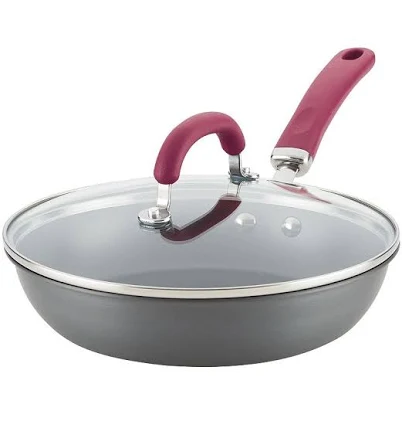
Rachael Ray · Nonstick Skillets
Rachael Ray Create Delicious Hard Anodized Aluminum Nonstick Deep Skillet, Is It Non-Toxic?
Nonstick coating chemistry not stated. Higher concern due to undisclosed formulation.
This hard anodized aluminum skillet has a nonstick coating, but its chemistry is not stated. The brand has no PFAS statement on record and no third-party certification for this product.
The better-graded swap
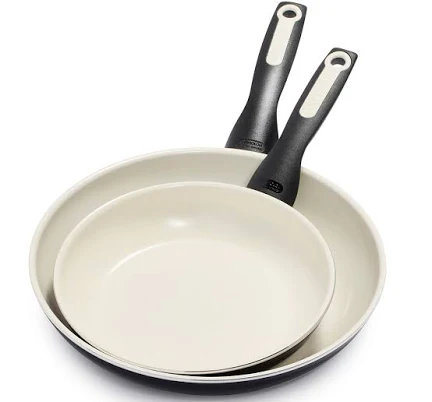
GreenPan
GreenPan Rio Ceramic Set
70/100 safety
Same rubric that flunked this product. The swap earned Good.
Still want this one anyway? Check the price on Amazon. We’d swap it.
Material
hard anodized aluminum with nonstick coating (unspecified type)
Brand disclosure
Brand is silent on PFAS
Lab data
No public lab test
You may also be interested in
Top-graded picks in the categories readers replace first, every one scored on the same rubric.

- polypropylene filter housing, carbon/sediment cartridge
- We found no PFAS statement from the brand
- Bacterial growth in spent cartridges
3 hazards checked on this product, all on its full breakdown.

Aquasure
Premier Series 75 GPD Under Sink Reverse Osmosis Water Filtration System
- RO membrane, carbon filters, stainless steel housing
- We found no PFAS statement from the brand
- Bacterial and microbial growth in housing and filters
4 hazards checked on this product, all on its full breakdown.

Avocado
Vegan Mattress
- organic cotton, natural latex, coconut coir, recycled steel coils
- The brand calls it PFAS-free, which we have not verified
- Heavy metals
2 hazards checked on this product, all on its full breakdown.
Is Rachael Ray Create Delicious Deep Skillet non-toxic? What it is made of
This skillet uses hard anodized aluminum as its substrate, a durable electrochemical process that creates a sealed oxide layer resistant to corrosion and leaching. Hard anodization itself is considered stable and does not pose aluminum leaching risk under normal cooking conditions because the oxide barrier prevents direct contact between food and base metal. The nonstick coating layered on top is the critical unknown, Rachael Ray does not publicly specify whether it contains Teflon-type coating (Teflon), ceramic, or proprietary polymer, which directly determines safety hazards around thermal breakdown and PFAS exposure.
What’s concerning
Category baseline
The starting point for this type of product, before anything specific to this product is counted.
No PFAS disclosure
No public statement from the brand about PFAS in this product.
Non-stick, chemistry undisclosed
Marketed as non-stick without stating the coating chemistry.
Teflon-type coating thermal degradation / nonstick fume risk
If the coating is Teflon-type coating-based (not disclosed), heating above 500F can degrade the polymer and release perfluorooctanoic acid (PFOA) precursors and other volatile compounds. Rachael Ray does not specify the safe temperature ceiling, forcing users to guess and assume standard nonstick caution (avoid preheating empty, keep below medium-high).
Nonstick coating degradation and microflake inhalation
Normal wear, stacking, and utensil contact can cause the nonstick surface to flake or peel over time. Ingesting small coating fragments is generally considered low toxicity, but inhaling fumes from degradation or scratching in high-heat scenarios carries unknown respiratory risk, especially in unventilated kitchens.
Coating adhesion loss and substrate exposure
Dishwasher use, metal utensils, and thermal cycling can weaken the bond between the anodized layer and nonstick coating over months or years. Once coating separates, the aluminum substrate beneath is exposed; while anodization resists some leaching, aged or damaged anodization may allow minor aluminum migration at acidic pH (tomato sauces, vinegar).
Unknown nonstick polymer composition
Rachael Ray's silence on coating type means consumers cannot assess specific chemical hazards, shelf life, or thermal safety. Multiple industry reports (FDA guidance, CPSC notices) have flagged lack of transparency as a consumer protection gap; this product exemplifies that problem.
What’s reassuring
Hard anodized aluminum leaching
The hard anodization process creates a robust oxide barrier that prevents aluminum migration into food under normal pH and cooking conditions. No documented cases of aluminum leaching from hard anodized cookware exist in the scientific literature; this hazard is not a concern for this specific substrate type.
How is this PFAS grade calculated?
The brand's record and disclosure
Rachael Ray cookware marketing emphasizes durability and ease of cleaning but provides no transparency regarding nonstick chemistry, PFAS content, or thermal stability thresholds. The brand has not published third-party certifications (such as GOTS, OEKO-TEX for textiles, or NSF for cookware) and maintains no public commitment to PFAS-free manufacturing. No significant recalls or health controversies specific to Rachael Ray cookware are documented in FDA or CPSC databases, but the absence of disclosure is itself a compliance gap given current nonstick industry standards.
How it compares in its category
Hard anodized aluminum nonstick skillets occupy the mid-market segment; Rachael Ray pricing and construction are typical for this category. Competitors such as Calphalon and T-fal offer similar hard anodized bases but also fail to disclose PFAS status consistently; premium brands like GreenPan and Our Place explicitly market ceramic or Teflon-type coating-free coatings. The lack of transparency is industry-wide but does not excuse individual brands from clearer labeling, making this product neither exceptional nor uniquely problematic in its class.
If you buy it
Keep heat below medium-high to minimize risk of nonstick coating degradation and potential fume release (thermal threshold depends on the unspecified coating type). Hand wash rather than use dishwasher to extend coating life and reduce exposure to coating particles. Replace the skillet if the nonstick surface visibly peels, flakes, or becomes sticky, as these are signs of breakdown. Store with a protective liner between stacked pans to prevent scratching, which can compromise the anodized seal and coating integrity.
What is not known about PFAS in this product?
- Basis
- Model estimate, 35% confidence, not a lab result
- Lab test
- None on record for this exact product
- Brand statement
- Rachael Ray has made none
Formulations change between production runs, so check the current label. How we grade.
What are the PFAS-free alternatives to Rachael Ray Create Delicious Hard Anodized Aluminum Nonstick Deep Skillet?
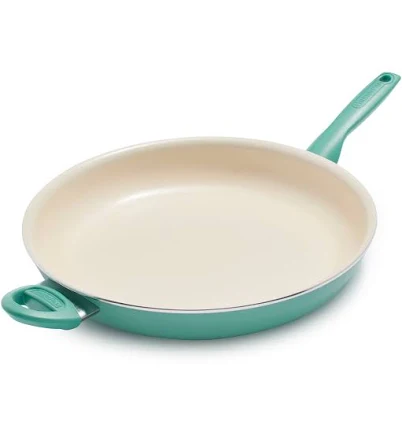
- ceramic nonstick coating
- The brand calls it PFAS-free, which we have not verified
- Coating degradation and particulate release
3 hazards checked on this product, all on its full breakdown.
- ceramic non-stick coating
- The brand calls it PFAS-free, which we have not verified
- Coating degradation and aluminum leaching
3 hazards checked on this product, all on its full breakdown.
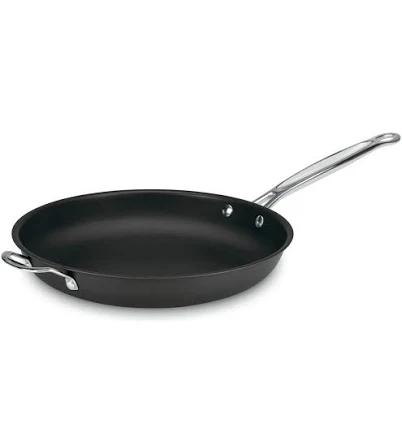
- anodized aluminum (hard-coat anodic oxidation)
- Coating degradation and leachables from breakdown
More nonstick skillets grades
How we score, every product runs through the same public 0-100 rubric based on materials, coatings, brand disclosure, lab findings, and recalls. See the full methodology → Spotted a mistake? Report an error.