
Reformation Campo Bikini Bottom
Lower concern; basic bikini bottom with no known PFAS triggers.
This recycled nylon swimwear piece shows no documented PFAS-heavy coatings or treatments. Reformation does not publicly disclose whether water-resistant finishes on swimwear contain PFAS, and no third-party environmental certifications are claimed.
The better-graded swap
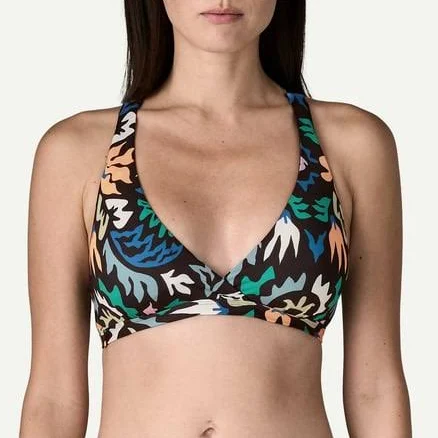
Patagonia
Patagonia Women's Bottom Turn Racerback Bikini Top
90/100 safety
Same rubric that flunked this product. The swap earned Excellent.
Still want this one anyway? Check the price on Amazon. We’d swap it.
Material
Recycled nylon (primary); standard swimwear construction
Brand disclosure
Brand is silent on PFAS
Lab data
No public lab test
What Reformation Campo Bikini Bottom is made of, ingredients and materials
The Campo Bikini Bottom is constructed from recycled nylon, a synthetic polymer derived from post-consumer or post-industrial waste streams. Recycled nylon retains the same chemical backbone as virgin nylon but avoids the energy-intensive polymerization step. Nylon itself is stable in normal use and does not leach monomers or plasticizers into skin or water under typical swimming conditions. The material's durability and low moisture absorption make it suitable for repeated wet/dry cycling without degradation that would release breakdown products.
What’s concerning
Category baseline
The starting point for this type of product, before anything specific to this product is counted.
No PFAS disclosure
No public statement from the brand about PFAS in this product.
Spandex/elastane sensitization and degradation
Spandex components in swimwear elastic can degrade under UV and chlorine exposure, potentially releasing oligomers. Reformation does not publicly specify elastane source or treatment; risk is typical for the product category but not elevated for this brand.
Microplastic shedding from synthetic fiber
All nylon swimwear sheds microfibers when washed. Recycled nylon does not shed more than virgin nylon, but the environmental impact of repeated washing remains. This is a water-pollution concern, not a direct health hazard to the wearer.
Allergic contact dermatitis from dyes or residual surfactants
Some individuals report sensitivity to synthetic dyes or laundry-detergent residues in new swimwear. Pre-washing in plain water mitigates risk; no specific allergen profile is documented for this product.
What’s reassuring
Base material not linked to PFAS
The main material recorded for this product is not one associated with PFAS.
Heavy metals
No public reports of azo-dye contamination or heavy-metal pigment use in Reformation swimwear. Standard commercial nylon bikini bottoms rarely disclose dye chemistry, but no specific safety alert exists for this product.
Source, FDA ↗Formaldehyde / VOCs
No public disclosure of formaldehyde-resin finishes or wrinkle-resistance treatments on the Campo bottom. Nylon rarely requires such finishes, and no recall or testing alert has targeted Reformation swimwear on this front.
Source, ATSDR ↗The full breakdown
The brand's record and disclosure
Reformation has built its brand identity on sustainability and transparency, publishing annual impact reports and material sourcing disclosures. However, the brand has not made explicit public commitments to PFAS avoidance or third-party chemical testing for its swimwear line, and maintains a generally silent stance on PFAS "forever chemicals". No recalls or documented chemical safety controversies specific to Reformation swimwear have been established in public records. The use of recycled nylon aligns with the brand's circular-economy positioning but does not inherently guarantee absence of legacy contaminants in feedstock.
How it compares in its category
Recycled nylon swimwear sits in the middle-to-upper tier of conventional swimwear safety. Most mass-market bikini bottoms use virgin nylon or nylon-spandex blends with minimal disclosure; Reformation's recycled material choice is a transparency signal but not a guaranteed safety advantage. Natural-fiber swimwear (wool, cotton blends) exists but is uncommon and may require higher maintenance. The Campo's construction appears standard for the price point, with no evidence of unusual dyes, finishes, or coatings that would elevate chemical risk.
If you buy it
Wash in cool water before first wear to remove any residual dyes or finishing agents from manufacturing. Cold-water rinses after saltwater or chlorinated swimming extend fabric life and prevent salt/chlorine buildup that can degrade fibers over years. Air-dry away from direct heat or sunlight; avoid machine dryers and hot water, which accelerate nylon breakdown and polymer chain scission. Replace the bottom if elastic degrades, seams separate, or the fabric develops visible brittleness, as these are signs of structural failure rather than chemical contamination but indicate end of usable life.
What we don’t know
- Basis
- Model estimate, 72% confidence, not a lab result
- Lab test
- None on record for this exact product
- Brand statement
- Reformation has made none
Formulations change between production runs, so check the current label. How we grade.
Better-graded alternatives in Swimwear
Patagonia
Women's Bottom Turn Racerback Bikini Top
- Nylon/polyester blend with elastane (standard swimwear)
- The brand calls it PFAS-free, which we have not verified
- Elastane (spandex) degradation under heat or chlorine
More swimwear grades
How we score, every product runs through the same public 0-100 rubric based on materials, coatings, brand disclosure, lab findings, and recalls. See the full methodology → Spotted a mistake? Report an error.