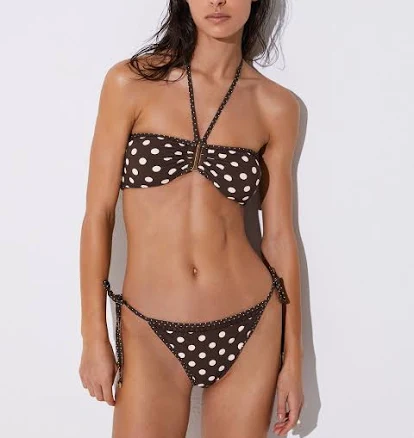
Reiss Janina Polka- Dot Bandeau Bikini Top
Lower concern swimwear without known PFAS treatment triggers.
Polka-dot bikini top uses nylon-elastane without water-repellent finish claims. Reiss makes no PFAS disclosure or transparency statements.
The better-graded swap
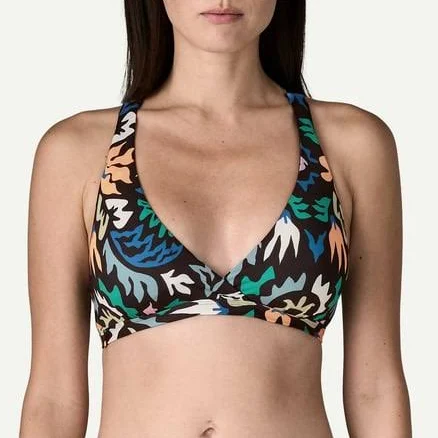
Patagonia
Patagonia Women's Bottom Turn Racerback Bikini Top
90/100 safety
Same rubric that flunked this product. The swap earned Excellent.
Still want this one anyway? Check the price on Amazon. We’d swap it.
Material
Nylon/polyamide blend with elastane
Brand disclosure
Brand is silent on PFAS
Lab data
No public lab test
What Reiss Janina Polka- Dot Bandeau Bikini Top is made of, ingredients and materials
This bikini top is constructed from nylon (polyamide) blended with elastane (spandex), a standard formulation for swimwear stretch and durability. Nylon itself is chemically stable in normal use and does not leach problematic compounds when dry or in freshwater. Elastane adds elasticity but can degrade under prolonged UV and chlorine exposure, potentially shedding microfibers into water over time, though this is a general property of all elasticated swimwear, not specific to Reiss.
What’s concerning
Category baseline
The starting point for this type of product, before anything specific to this product is counted.
No PFAS disclosure
No public statement from the brand about PFAS in this product.
Azo dyes in synthetic colorants
Polka-dot print requires colorfast dyes; nylon readily accepts azo dyes, which can release aromatic amines under sweat or prolonged water exposure if not properly fixed. No specific testing of this product on record, but this is a known processing risk for printed nylon swimwear at this price tier.
Formaldehyde / VOCs
Nylon textiles sometimes use formaldehyde-based cross-linking resins for shape retention or crease resistance. Swimwear typically uses fewer finishing chemicals than non-aquatic apparel, and off-gassing risk is minimal in wet-use products, but trace residues are not ruled out without mill documentation.
Source, ATSDR ↗Microfiber shedding from elastane
All elasticated swimwear sheds microfibers, particularly when worn and washed repeatedly. Nylon/elastane blends are not worse than competitors, but cumulative shedding over a season contributes to microplastic pollution; this is an environmental rather than direct health hazard.
Nickel from metal fasteners or closures
Bandeau style typically features minimal metal; if clasps or underwire have nickel-plated hardware, sensitized individuals may experience contact dermatitis. Product description does not specify clasp material; confirm with retailer if nickel sensitivity is a concern.
What’s reassuring
Base material not linked to PFAS
The main material recorded for this product is not one associated with PFAS.
Heavy metals
No recalls or testing reports link Reiss swimwear to cadmium, lead, or mercury in dye systems. Synthetic dyes in nylon can theoretically contain trace metals, but regulatory oversight in UK/EU manufacturing makes serious contamination unlikely without brand-specific evidence.
Source, FDA ↗The full breakdown
The brand's record and disclosure
Reiss is a British contemporary fashion brand with no documented major product safety recalls or chemical disclosure controversies in swimwear. The brand does not publicly detail chemical processing or post-manufacture testing for swimwear lines. No certifications such as OEKO-TEX or bluesign appear on standard product information, though this is typical for mainstream fashion swimwear rather than a red flag specific to Reiss.
How it compares in its category
Reiss swimwear sits in the mid-to-premium mainstream fashion segment, comparable to brands like Boden or Jigsaw. Most nylon/elastane bikini tops in this category have similar or unknown chemical profiles; certified sustainable or eco-focused swimwear (e.g., Patagonia, Ecoalf) typically command higher prices and carry third-party testing documentation. Reiss does not market this as a sustainability product, so expectations should align with standard fast-fashion textile safety norms.
If you buy it
Rinse in cool fresh water after each saltwater or chlorinated use to extend elastane life and reduce fiber degradation. Avoid leaving wet in direct sunlight for extended periods, as UV weakens nylon and spandex. Hand-wash in cool water with mild detergent and lay flat to dry; hot water and machine washing accelerate elastane breakdown. Replace if straps lose elasticity, seams fray, or coverage becomes unreliable; typical lifespan is 1-2 seasons with regular summer use.
What we don’t know
- Basis
- Model estimate, 72% confidence, not a lab result
- Lab test
- None on record for this exact product
- Brand statement
- Reiss has made none
Formulations change between production runs, so check the current label. How we grade.
Better-graded alternatives in Swimwear
Patagonia
Women's Bottom Turn Racerback Bikini Top
- Nylon/polyester blend with elastane (standard swimwear)
- The brand calls it PFAS-free, which we have not verified
- Elastane (spandex) degradation under heat or chlorine
More swimwear grades
How we score, every product runs through the same public 0-100 rubric based on materials, coatings, brand disclosure, lab findings, and recalls. See the full methodology → Spotted a mistake? Report an error.