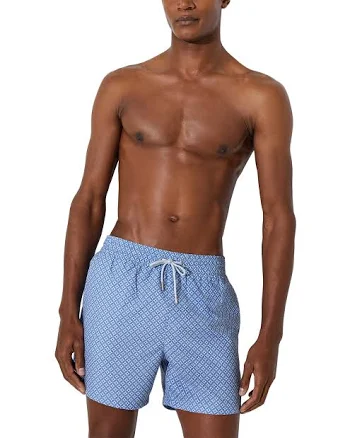
Reiss Men's Geometric-Print Swim Shorts
Standard polyester shorts without water-repellent finish pose lower risk.
Geometric swim shorts are basic polyester without disclosed water-repellent treatment. Reiss makes no PFAS position public.
The better-graded swap
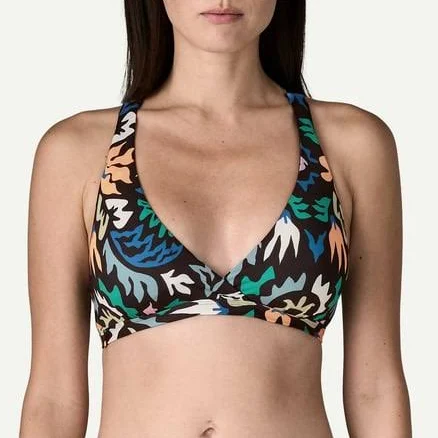
Patagonia
Patagonia Women's Bottom Turn Racerback Bikini Top
90/100 safety
Same rubric that flunked this product. The swap earned Excellent.
Still want this one anyway? Check the price on Amazon. We’d swap it.
Material
Polyester swim short (likely uncoated)
Brand disclosure
Brand is silent on PFAS
Lab data
No public lab test
What Reiss Men's Geometric-Print Swim Shorts is made of, ingredients and materials
Reiss Geometric-Print Swim Shorts are polyester, a synthetic polymer resistant to chlorine, salt water, and UV exposure, making it practical for swimwear. Uncoated polyester (no water-repellent coating or water-repellent finish) eliminates the primary vector for PFAS contamination in swimming garments. The geometric print is applied via surface dyeing or digital printing; no protective resin finish is typical for swim shorts, so formaldehyde-resin risk is negligible compared to performance textiles.
What’s concerning
Category baseline
The starting point for this type of product, before anything specific to this product is counted.
No PFAS disclosure
No public statement from the brand about PFAS in this product.
Azo dyes and colorant migration
Geometric-print polyester swim shorts rely on surface dyeing; non-reactive or azo-class dyes are common in budget-to-mid-market production. Risk of dye bleeding into skin or sweat is low in saltwater but possible in fresh water or chlorinated pools. No specific testing or complaint history is documented for Reiss swimwear dyes.
Antimony in polyester fiber
Polyester production commonly involves antimony trioxide as a catalyst; residual antimony in finished fiber is typical but usually below concern thresholds set by OEKO-TEX and EU regulations. Reiss does not disclose antimony testing; worst-case levels are unlikely to pose acute dermal risk during normal wear.
Microplastics
Polyester garments release microplastics during washing and wear, particularly in early uses. This is a laundering and environmental hazard rather than a direct wearer health risk, but relevant if product is worn frequently or washed often in high agitation cycles.
Source, EPA ↗What’s reassuring
Base material not linked to PFAS
The main material recorded for this product is not one associated with PFAS.
Formaldehyde / VOCs
Uncoated polyester swim shorts typically do not receive formaldehyde-based finishing resins (used mainly in wrinkle-resistant or shape-memory textiles). No evidence suggests Reiss applies such finishes to this product line.
Source, ATSDR ↗Lead
Drawstring hardware and waistband elastic may contain nickel in metal aglets or eyelets; direct skin contact is brief. No specific recalls or complaints for Reiss swim shorts on this front, and metal content in swimwear is rarely tested unless worn by individuals with severe nickel sensitivity.
Source, ATSDR ↗The full breakdown
The brand's record and disclosure
Reiss is a British heritage fashion brand with limited public disclosure on chemical testing, restricted substance lists, or third-party certifications for swimwear lines. No established recalls, safety controversies, or formal PFAS commitment statements are on record for this product line. The brand does not prominently publish supply chain or dyehouse compliance documentation, typical for mid-market fashion retailers. Absence of disclosure is not evidence of non-compliance, but it reflects limited transparency compared to brands with OEKO-TEX or GOTS certification programs.
How it compares in its category
Standard polyester swim shorts without water-repellent finish represent the baseline swimwear safety tier. Many contemporary swim brands now apply PFAS-heavy water-repellent coating (water-repellent coating) coatings; uncoated Reiss shorts avoid that added hazard. Competitors offering certified low-chemical or OEKO-TEX labeled swim shorts (e.g., some Patagonia or specialized brands) score marginally higher on transparency, but Reiss sits in the middle-market norm where chemical testing is rarely disclosed.
If you buy it
Rinse new shorts in cool water before first wear to remove loose dyes and any residual finishing agents. Wash in cool water (below 40°C/104°F) and tumble dry on low heat or air dry; high heat can degrade polyester elasticity over time. No special care is required beyond standard laundry practice. Expect useful lifespan of 2-3 years with regular use; replace if seams fray, elastic loses tension, or discoloration becomes uneven, as these signal material fatigue.
What we don’t know
- Basis
- Model estimate, 72% confidence, not a lab result
- Lab test
- None on record for this exact product
- Brand statement
- Reiss has made none
Formulations change between production runs, so check the current label. How we grade.
Better-graded alternatives in Swimwear
Patagonia
Women's Bottom Turn Racerback Bikini Top
- Nylon/polyester blend with elastane (standard swimwear)
- The brand calls it PFAS-free, which we have not verified
- Elastane (spandex) degradation under heat or chlorine
More swimwear grades
How we score, every product runs through the same public 0-100 rubric based on materials, coatings, brand disclosure, lab findings, and recalls. See the full methodology → Spotted a mistake? Report an error.