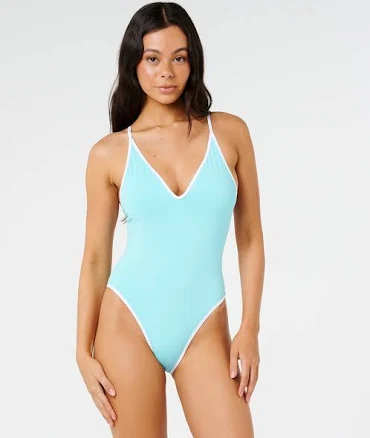
Women's Rip Curl Classic Surf Swimsuit
Moderate concern; typical surf swimsuit with nondisclosed water-repellent treatment.
Rip Curl does not publicly disclose PFAS use or avoidance in this swimsuit. Surf apparel commonly uses water-repellent coating finishes historically often PFAS-based, though some brands now switched to fluorine-free options, leaving PFAS impossible to rule out without brand transparency.
The better-graded swap
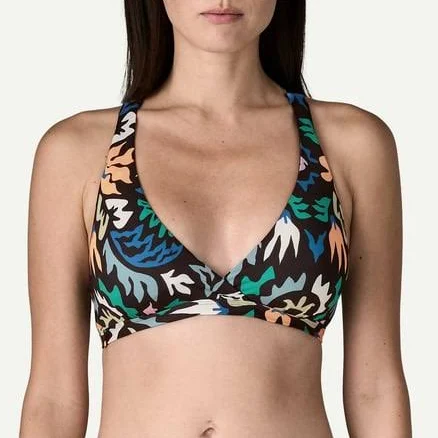
Patagonia
Patagonia Women's Bottom Turn Racerback Bikini Top
90/100 safety
Same rubric that flunked this product. The swap earned Excellent.
Still want this one anyway? Check the price on Amazon. We’d swap it.
Material
Nylon/polyester blend with water-repellent coating finish
Brand disclosure
Brand is silent on PFAS
Lab data
No public lab test
You may also be interested in
Top-graded picks in the categories readers replace first, every one scored on the same rubric.

- polypropylene filter housing, carbon/sediment cartridge
- We found no PFAS statement from the brand
- Bacterial growth in spent cartridges
3 hazards checked on this product, all on its full breakdown.

Aquasure
Premier Series 75 GPD Under Sink Reverse Osmosis Water Filtration System
- RO membrane, carbon filters, stainless steel housing
- We found no PFAS statement from the brand
- Bacterial and microbial growth in housing and filters
4 hazards checked on this product, all on its full breakdown.

Avocado
Vegan Mattress
- organic cotton, natural latex, coconut coir, recycled steel coils
- The brand calls it PFAS-free, which we have not verified
- Heavy metals
2 hazards checked on this product, all on its full breakdown.
What Women's Rip Curl Classic Surf Swimsuit is made of, ingredients and materials
This swimsuit is a nylon/polyester blend, standard for performance swimwear because both fibers resist water absorption and dry quickly. The water-repellent coating (water-repellent coating) finish is the chemical wild card, Rip Curl does not publicly disclose whether this treatment uses PFAS-based or PFAS-free chemistry. Nylon itself is stable and non-toxic when intact, but the coating that makes it water-shedding is where environmental and potential health questions live.
What’s concerning
Category baseline
The starting point for this type of product, before anything specific to this product is counted.
No PFAS disclosure
No public statement from the brand about PFAS in this product.
Waterproof / stain-resistant treatment
Water-repellent coating treatments have historically used PFAS.
PFAS
Fluorocarbon water-repellent coating finishes on textiles are known to shed into wash water and skin contact over time. Rip Curl's specific chemistry is undisclosed, so whether this uses legacy PFOA-type compounds or newer alternatives cannot be verified from public information.
Source, ATSDR ↗Formaldehyde / VOCs
Nylon and polyester swimwear often undergo resin-based finishing for durability and shape retention. Rip Curl does not publish finishing chemistry. Residual formaldehyde is not typically an acute risk in well-rinsed swimwear, but sensitivity or prolonged contact (wet against skin for hours) poses theoretical concern.
Source, ATSDR ↗Azo dyes in color fastness
Nylon/polyester blends often use azo dyes for color intensity. While restricted azo dyes are banned in EU and regulated elsewhere, not all manufacturers exceed minimum standards. Rip Curl does not declare dye chemistry; some color lots may contain lower-concern dyes, others uncertain.
Microplastic shedding from fiber degradation
Nylon and polyester release microfibers in normal washing and wear. This swimsuit is not unique in this regard, but the water-repellent coating may accelerate fiber breakdown over time. Microplastics from garment shedding are an environmental rather than direct-to-wearer health hazard based on current evidence.
What’s reassuring
Elastic degradation (spandex/elastane)
Spandex in the leg and waist performs well in chlorinated and salt water if well-rinsed post-swim. No specific degradation or toxicity reports tied to Rip Curl's elastic formulation; standard care (rinse, air dry, avoid heat) mitigates risk.
How is this PFAS grade calculated?
The brand's record and disclosure
Rip Curl, an Australian surf-apparel company, has maintained silence on PFAS use in their water-repellent coating treatments as of available public records. The brand has not published a PFAS phase-out commitment or disclosed which water-repellent chemistry they use. This contrasts with competitors (e.g., Patagonia) who explicitly market PFAS-free alternatives. Absence of disclosure does not confirm PFAS presence, but it does mean you cannot verify whether the product uses lower-concern water-repellent coating alternatives.
How it compares in its category
Most conventional surf and swim brands use legacy fluorocarbon water-repellent coating finishes, making Rip Curl typical rather than outlying. Some competitors now offer water-repellent coating finishes with lower concern regarding PFAS (wax-based, paraffin, or newer fluorine-free polymers), but these command higher prices and narrower availability. Rip Curl's lack of transparency places this product in the middle of the market's trust spectrum, not flagged for violations, but not voluntarily transparent either.
If you buy it
Wash in cool to warm water before first wear to shed any loose finish residue. Avoid high heat (hot water, dryer) as this can degrade nylon fibers and potentially accelerate release of finish particles. Replace or retire the suit when elastic fails or seams degrade; degraded coating may shed into water more readily. If PFAS concern is high for you, contact Rip Curl directly to request water-repellent coating chemistry disclosure, or choose a brand with published PFAS-free commitment.
What is not known about PFAS in this product?
- Basis
- Model estimate, 42% confidence, not a lab result
- Lab test
- None on record for this exact product
- Brand statement
- Rip Curl has made none
Formulations change between production runs, so check the current label. How we grade.
What are the PFAS-free alternatives to Women's Rip Curl Classic Surf Swimsuit?
- Nylon/polyester blend with elastane (standard swimwear)
- The brand calls it PFAS-free, which we have not verified
- Elastane (spandex) degradation under heat or chlorine
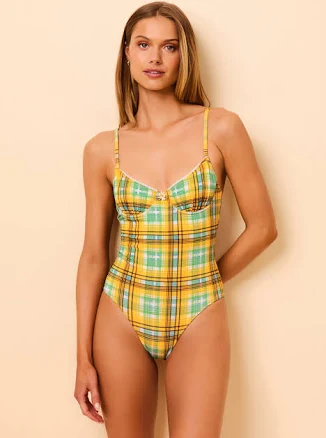
- Cotton/cotton-blend seersucker plaid
- We found no PFAS statement from the brand
- Azo dyes and colorfast stability
2 hazards checked on this product, all on its full breakdown.
Find an alternative on Amazon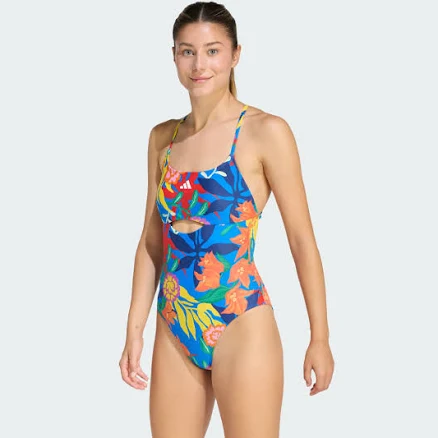
- Polyester/nylon swimsuit fabric, likely uncoated or standard finish
- Azo dyes and synthetic colorants
4 hazards checked on this product, all on its full breakdown.
Find an alternative on AmazonMore swimwear grades
How we score, every product runs through the same public 0-100 rubric based on materials, coatings, brand disclosure, lab findings, and recalls. See the full methodology → Spotted a mistake? Report an error.