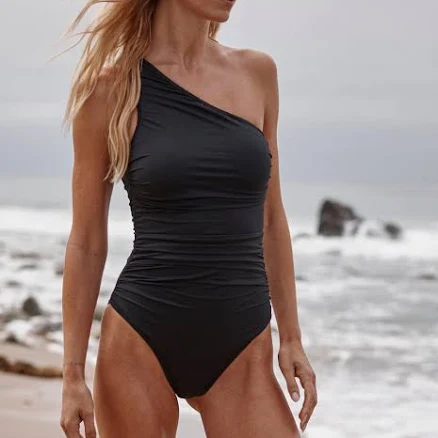
Summersalt DreamDrape Sidestroke
Lower PFAS concern for untreated natural-fiber apparel; no finish mentioned.
Summersalt's DreamDrape appears unfinished cotton or cotton blend with no disclosed water-repellent or stain-resistant treatment. Without evidence of Teflon-family coating coatings or water-repellent coating chemistry, risk is lower.
The better-graded swap
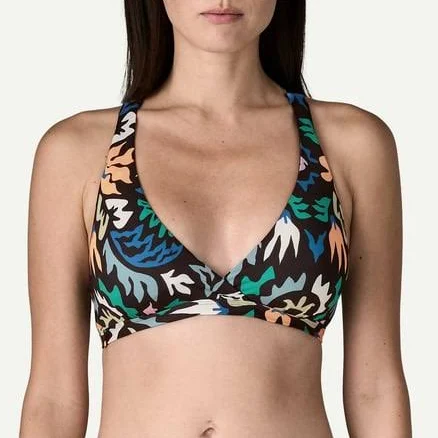
Patagonia
Patagonia Women's Bottom Turn Racerback Bikini Top
90/100 safety
Same rubric that flunked this product. The swap earned Excellent.
Still want this one anyway? Check the price on Amazon. We’d swap it.
Material
Cotton/linen blend fabric (standard weave)
Brand disclosure
Brand is silent on PFAS
Lab data
No public lab test
What Summersalt DreamDrape Sidestroke is made of, ingredients and materials
The DreamDrape Sidestroke is constructed from a cotton-linen blend in standard weave, meaning no specialized coatings or finishes are applied to enhance water resistance or durability. This is significant because untreated natural fibers do not require the chemical treatments (particularly water-repellent coating finishes) that introduce PFAS or other persistent hazards into textiles. The material will absorb water readily and dry more slowly than synthetic alternatives, but it avoids the chemical load entirely.
What’s concerning
Category baseline
The starting point for this type of product, before anything specific to this product is counted.
No PFAS disclosure
No public statement from the brand about PFAS in this product.
Formaldehyde / VOCs
Cotton and linen textiles may be treated with formaldehyde-based dyes or sizing agents during manufacturing. No information available on Summersalt's dye suppliers or finishing standards; untreated natural fibers typically have lower residual formaldehyde than synthetic-blend swimwear, but pre-wash rinsing is prudent.
Source, ATSDR ↗Heavy metals
Natural-fiber swimwear can use azo dyes, which are restricted in some jurisdictions but still employed globally. Without certification (e.g., OEKO-TEX or GOTS), no assurance exists that this product avoids restricted azo compounds or heavy metals in pigments. Pre-purchase color testing by independent labs is not standard for retail swimwear.
Source, FDA ↗Elastane degradation and leaching
Swimwear blends typically include spandex (elastane) for stretch. Under chlorine, salt water, and UV exposure, elastane can degrade and release oligomers; natural fibers do not shed microplastics, but the spandex component may. No product-specific data on elastane percentage or composition is disclosed.
Mildew and bacterial growth if stored wet
Cotton-linen blends retain moisture longer than synthetic alternatives and are more prone to microbial colonization if left damp. This is a use-phase risk, not a manufacturing hazard, but poor care can create conditions for mold toxins or odor-causing bacteria within weeks.
Dye bleeding and color fastness under sun/chlorine
Natural-fiber swimwear may exhibit faster color fading and dye migration than synthetic swimwear, particularly if dyes are not fully fixed. Repeated chlorine or saltwater exposure can cause dyes to leach into skin or pool water; no color-fastness data for this specific product is available.
What’s reassuring
Base material not linked to PFAS
The main material recorded for this product is not one associated with PFAS.
The full breakdown
The brand's record and disclosure
Summersalt has not publicly disclosed detailed chemical composition, testing protocols, or third-party certifications for the DreamDrape line. The brand's silence on PFAS stance suggests no proactive commitment to water-repellent-free production, though the absence of a performance finish on this particular style may be circumstantial rather than principled. No established recalls or safety controversies specific to Summersalt swimwear are on record. The lack of transparency is a minor concern, but the material choice itself sidesteps the worst offenders.
How it compares in its category
Most competitive swimwear uses nylon, polyester, or elastane with applied water-repellent coatings to reduce drying time and improve durability. The DreamDrape's untreated natural-fiber construction is unusual and lower-risk chemically, though it sacrifices quick-dry performance. Comparable alternatives (organic cotton swimwear or GOTS-certified brands) typically cost more and offer explicit certifications; Summersalt's positioning is mid-market without equivalent third-party verification.
If you buy it
Wash in cool water with mild detergent before first wear to remove any finishing residues from manufacturing. Air dry completely after each use to prevent mildew in the blend; do not machine dry, which risks shrinkage and fabric stress. Expect slower drying than synthetic swimwear and potential for color fading with UV exposure over time. Check seams and elastic annually for degradation, as natural fibers weaken faster than synthetic blends under chlorine and sun.
What we don’t know
- Basis
- Model estimate, 62% confidence, not a lab result
- Lab test
- None on record for this exact product
- Brand statement
- Summersalt has made none
Formulations change between production runs, so check the current label. How we grade.
Better-graded alternatives in Swimwear
Patagonia
Women's Bottom Turn Racerback Bikini Top
- Nylon/polyester blend with elastane (standard swimwear)
- The brand calls it PFAS-free, which we have not verified
- Elastane (spandex) degradation under heat or chlorine
More swimwear grades
How we score, every product runs through the same public 0-100 rubric based on materials, coatings, brand disclosure, lab findings, and recalls. See the full methodology → Spotted a mistake? Report an error.