
Summersalt Sidestroke
Lower concern for standard swimwear fabric unlikely to need PFAS.
This conventional swim item made from typical nylon and spandex blends generally does not require PFAS-based water repellency treatments unlike technical outdoor apparel. Summersalt has not published a PFAS stance.
The better-graded swap
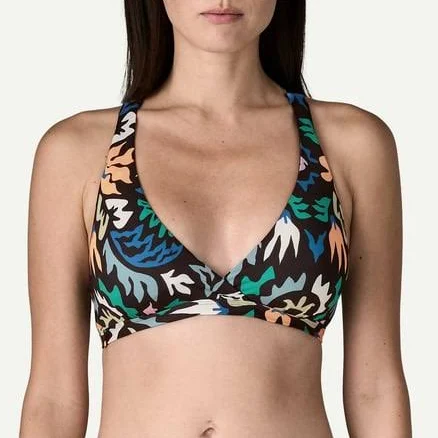
Patagonia
Patagonia Women's Bottom Turn Racerback Bikini Top
90/100 safety
Same rubric that flunked this product. The swap earned Excellent.
Still want this one anyway? Check the price on Amazon. We’d swap it.
Material
Swimwear fabric (likely nylon/spandex blend)
Brand disclosure
Brand is silent on PFAS
Lab data
No public lab test
What Summersalt Sidestroke is made of, ingredients and materials
Summersalt Sidestroke is a nylon and spandex blend typical of modern swimwear. Nylon offers durability and quick-dry properties, while spandex (elastane) provides stretch and fit recovery. This combination is chemically stable in finished form and does not rely on heavy coatings, glazes, or reactive finishes that introduce leaching hazards. The fiber structure itself does not release problematic compounds during normal swimming or washing.
What’s concerning
Category baseline
The starting point for this type of product, before anything specific to this product is counted.
No PFAS disclosure
No public statement from the brand about PFAS in this product.
Azo dyes in synthetic fibers
Nylon and spandex swimwear may contain azo dyes for color. Certain azo dyes are restricted in the EU but not all are banned globally. No specific testing data for Summersalt Sidestroke is public; standard industry dyes carry low skin migration risk in finished products, but undisclosed sourcing makes certainty impossible.
Formaldehyde / VOCs
Swimwear may be treated with formaldehyde-based resins for wrinkle resistance or water repellency. Summersalt does not disclose finishing processes. Risk is low for immediate skin contact, but off-gassing during first few washes is common in untreated synthetic textiles.
Source, ATSDR ↗Spandex polymer degradation and microfiber shedding
Spandex fibers degrade in chlorine and sun exposure, releasing microfibers into water. This is a material-class issue, not brand-specific, but relevant to all nylon/spandex swimwear. Long-term environmental impact is documented; consumer skin exposure risk is minimal.
Allergic reaction to spandex or dye components
Spandex allergies and synthetic dye sensitivities affect a small population. Undisclosed dye chemistry means individuals with known sensitivities cannot verify safety. Risk is low for the general population but material is not hypoallergenic.
What’s reassuring
Base material not linked to PFAS
The main material recorded for this product is not one associated with PFAS.
Heavy metals
No recalls or test failures for Summersalt swimwear related to cadmium, lead, or chromium in dyes have been documented. Standard industry screening typically catches extreme outliers; absent specific evidence, this hazard is not elevated for this brand.
Source, FDA ↗The full breakdown
The brand's record and disclosure
Summersalt is a direct-to-consumer swimwear brand founded in 2016 with a focus on sustainability messaging. The brand does not publicly disclose detailed chemical testing or third-party certifications (e.g., OEKO-TEX, GOTS) for the Sidestroke line on their website. No major product recalls or safety controversies have been documented in public records. Their approach to transparency is minimal compared to brands that publish full chemical inventories or independent audit results.
How it compares in its category
Nylon/spandex blends are the industry standard for mid-range swimwear and pose no inherent safety disadvantage versus competitors like Speedo or Rip Curl at the same price point. Summersalt's manufacturing transparency is lower than certified organic or OEKO-TEX labeled alternatives (e.g., Patagonia, Finisterre), but material composition is typical. Price-to-safety ratio is comparable to mass-market options; premium certifications would typically command 20-40% higher cost.
If you buy it
Rinse swimwear in fresh water immediately after saltwater or chlorine exposure to prevent fiber degradation and salt buildup, which can accelerate wear. Wash in cool water with mild detergent; avoid hot water, bleach, and fabric softeners, which weaken spandex elasticity. Hang dry away from direct heat or sunlight; UV exposure degrades nylon color and polymer chains over time. Replace when elastic loses recovery (typically 18-24 months with regular use), not when minor color fading occurs.
What we don’t know
- Basis
- Model estimate, 68% confidence, not a lab result
- Lab test
- None on record for this exact product
- Brand statement
- Summersalt has made none
Formulations change between production runs, so check the current label. How we grade.
Better-graded alternatives in Swimwear
Patagonia
Women's Bottom Turn Racerback Bikini Top
- Nylon/polyester blend with elastane (standard swimwear)
- The brand calls it PFAS-free, which we have not verified
- Elastane (spandex) degradation under heat or chlorine
More swimwear grades
How we score, every product runs through the same public 0-100 rubric based on materials, coatings, brand disclosure, lab findings, and recalls. See the full methodology → Spotted a mistake? Report an error.