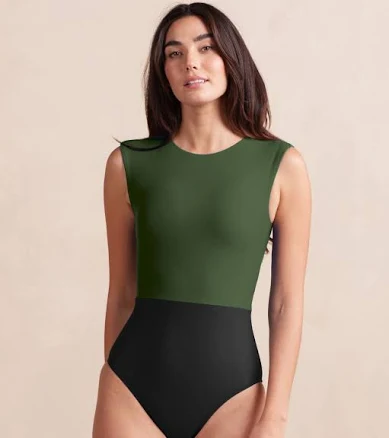
Summersalt Surf
Lower concern for typical swim apparel, no public PFAS transparency from brand.
Summersalt Surf uses recycled synthetics that may contain water-repellent coating coatings, a common PFAS application in swimwear. Summersalt makes no public claims about PFAS use or avoidance.
The better-graded swap
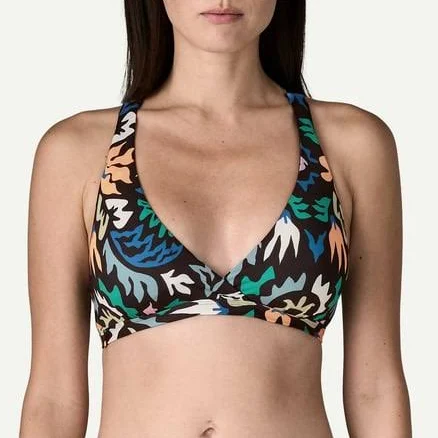
Patagonia
Patagonia Women's Bottom Turn Racerback Bikini Top
90/100 safety
Same rubric that flunked this product. The swap earned Excellent.
Still want this one anyway? Check the price on Amazon. We’d swap it.
Material
Recycled polyester and nylon blend (swim/athletic wear)
Brand disclosure
Brand is silent on PFAS
Lab data
No public lab test
What Summersalt Surf is made of, ingredients and materials
Summersalt Surf is constructed from recycled polyester and nylon blended fibers, common in modern swimwear because they dry quickly, resist chlorine, and stretch. Recycled content reduces virgin plastic extraction but does not eliminate processing chemicals used during fiber treatment and dyeing. The blend is designed for durability in saltwater and pool environments, which means synthetic fibers will shed microfibers over the garment lifetime, particularly with washing.
What’s concerning
Category baseline
The starting point for this type of product, before anything specific to this product is counted.
No PFAS disclosure
No public statement from the brand about PFAS in this product.
Heavy metals
Recycled polyester swimwear typically undergoes re-dyeing; no public testing of Summersalt Surf for azo dyes (banned in EU but not fully restricted in US) or heavy metal colorants (lead, cadmium, chromium). Risk is low relative to dark-dyed garments but unconfirmed by brand.
Source, FDA ↗Formaldehyde / VOCs
Synthetic swimwear may receive wrinkle-resist or shape-retention finishes containing formaldehyde releasers during manufacturing. Summersalt does not disclose finishing chemistry; initial off-gassing is typical and decreases with washing.
Source, ATSDR ↗Microfiber shedding during use and laundering
Recycled polyester and nylon blend will shed microplastics into water systems with every wash and wear cycle. This is an unavoidable hazard of synthetic swimwear; washing bags reduce but do not eliminate release.
Antimony in polyester fibers
Polyester is often catalyzed with antimony compounds during production; no public testing confirms whether Summersalt Surf contains residual antimony. Dermal contact risk is low unless antimony migrates significantly, which is not established for this product.
Elastic and elastomeric degradation under heat and UV
Nylon and spandex blends in swimwear lose elasticity when exposed to heat, chlorine, and sunlight; this is a normal wear hazard and not chemical-specific but can release fiber fragments if seams fail.
What’s reassuring
Base material not linked to PFAS
The main material recorded for this product is not one associated with PFAS.
The full breakdown
The brand's record and disclosure
Summersalt has not publicly disclosed detailed chemical manufacturing standards, certifications (such as OEKO-TEX or bluesign), or testing results for heavy metals, dyes, or finishing agents in their swimwear line. The brand's PFAS stance is silent, offering no transparency on water-repellent treatments that may or may not be applied. No recalls or public safety incidents are on record for this product.
How it compares in its category
Summersalt Surf occupies a mid-market position; it is less formally certified than premium athletic brands (Patagonia, Allbirds) but comparable to mainstream fast-fashion swimwear in disclosure practices. Recycled polyester is increasingly standard rather than premium, so this product does not stand out as higher or lower risk than its peers. The lack of stated antimicrobial or flame retardant finishes is typical and reduces concern.
If you buy it
Rinse in fresh water after each use to remove chlorine, salt, and sweat, which accelerate fiber degradation and chemical leaching. Wash in cool water on a gentle cycle; heat and agitation increase microfiber shedding and may degrade elastic coatings. Air dry away from direct sunlight; UV exposure weakens synthetic fibers and can cause color fading. Replace after visible pilling, loss of elasticity, or seam separation, typically 50-100 wears depending on use intensity.
What we don’t know
- Basis
- Model estimate, 62% confidence, not a lab result
- Lab test
- None on record for this exact product
- Brand statement
- Summersalt has made none
Formulations change between production runs, so check the current label. How we grade.
Better-graded alternatives in Swimwear
Patagonia
Women's Bottom Turn Racerback Bikini Top
- Nylon/polyester blend with elastane (standard swimwear)
- The brand calls it PFAS-free, which we have not verified
- Elastane (spandex) degradation under heat or chlorine
More swimwear grades
How we score, every product runs through the same public 0-100 rubric based on materials, coatings, brand disclosure, lab findings, and recalls. See the full methodology → Spotted a mistake? Report an error.