
Summersalt Swim Summersalt The Sidestroke One Piece Swimsuit
Lower PFAS concern for base fabric, though brand silence on water-repellent coating creates ambiguity.
This standard nylon/polyester one-piece has no disclosed water-repellent or stain-resistant treatments in public materials. Summersalt makes no PFAS claims, leaving modest ambiguity about water-repellent coating processes.
The better-graded swap
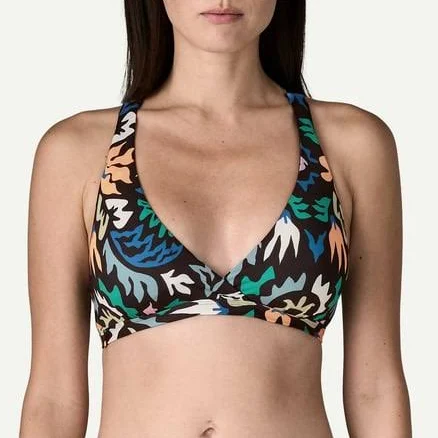
Patagonia
Patagonia Women's Bottom Turn Racerback Bikini Top
90/100 safety
Same rubric that flunked this product. The swap earned Excellent.
Still want this one anyway? Check the price on Amazon. We’d swap it.
Material
nylon/polyester blend swimsuit fabric
Brand disclosure
Brand is silent on PFAS
Lab data
No public lab test
What Summersalt Swim Summersalt The Sidestroke is made of, ingredients and materials
This swimsuit is a nylon/polyester blend, the standard base chemistry for modern competitive and recreational swimwear. Neither nylon nor polyester itself leaches known toxins into skin or water under normal wear conditions. The blend provides stretch, chlorine resistance, and durability typical of quality swimwear. The hazard profile depends entirely on dyes, finishes, and any water-repellent (water-repellent coating) coatings applied during manufacturing, which Summersalt does not publicly disclose.
What’s concerning
Category baseline
The starting point for this type of product, before anything specific to this product is counted.
No PFAS disclosure
No public statement from the brand about PFAS in this product.
Heavy metals
Nylon and polyester swimwear commonly use metal-complex dyes (e.g., chromium, copper) to achieve color fastness. Summersalt does not publish metal testing or dye specifications; industry norms suggest levels are within acceptable limits, but absence of disclosure prevents certainty.
Source, FDA ↗Microfiber shedding
All synthetic swimwear sheds microfibers during wear and washing. Nylon/polyester blends shed at typical rates; the hazard is environmental and cumulative rather than acute to wearer, but replacement every 1-2 years minimizes exposure.
Water-repellent (water-repellent coating) coating chemistry
Summersalt does not disclose whether this swimsuit includes a water-repellent coating finish or which chemistry is used. If present, older fluorocarbon water-repellent coating poses higher PFAS risk; newer alternatives exist but are not confirmed. Brand silence is the primary concern here.
What’s reassuring
Base material not linked to PFAS
The main material recorded for this product is not one associated with PFAS.
Azo dyes
No safety incidents or tests on record for Summersalt swimwear. Azo dye chemistry is standard in nylon/polyester textiles; hazard arises only if arylamines are released, which is rare in finished garments and not documented for this brand.
Formaldehyde / VOCs
No evidence of formaldehyde-releasing finishes in modern swimwear from reputable brands. Swimwear is not typically treated with wrinkle-resist resins common in casual apparel. Risk is low but unconfirmed by Summersalt transparency.
Source, ATSDR ↗The full breakdown
The brand's record and disclosure
Summersalt is a swim-focused brand that markets sustainability and transparency, yet does not publicly specify dye chemistry, heavy-metal testing, or water-repellent coating chemistry on this product. No major recalls or safety controversies are on record for Summersalt swimwear. The brand's silence on manufacturing details (particularly water-repellent coating agents) is a transparency gap, though not evidence of hazard. Third-party certifications (such as GOTS or Bluesign) are not advertised for this specific product.
How it compares in its category
Nylon/polyester swimwear is the baseline for the category; Summersalt's material choice is standard and has lower concern than cheap polyester blends that may use fugitive dyes or improper finishes. Brands with explicit certifications (Patagonia, AEXS with Bluesign finishing) offer marginally better disclosure, but Summersalt's position is middle-of-market, not exceptional or alarming. No established evidence distinguishes this product as higher-risk than comparable one-piece suits from mainstream brands.
If you buy it
Wash in cold water before first wear to remove excess dyes and finishes. Rinse thoroughly after each saltwater or chlorine exposure to extend life and reduce skin contact with residual chemicals. Do not wring or bleach; hang dry away from direct heat. Replace after 1-2 years of regular use or when elasticity degrades, as aging synthetic fabrics may shed microfibers more readily.
What we don’t know
- Basis
- Model estimate, 72% confidence, not a lab result
- Lab test
- None on record for this exact product
- Brand statement
- Summersalt has made none
Formulations change between production runs, so check the current label. How we grade.
Better-graded alternatives in Swimwear
Patagonia
Women's Bottom Turn Racerback Bikini Top
- Nylon/polyester blend with elastane (standard swimwear)
- The brand calls it PFAS-free, which we have not verified
- Elastane (spandex) degradation under heat or chlorine
More swimwear grades
How we score, every product runs through the same public 0-100 rubric based on materials, coatings, brand disclosure, lab findings, and recalls. See the full methodology → Spotted a mistake? Report an error.